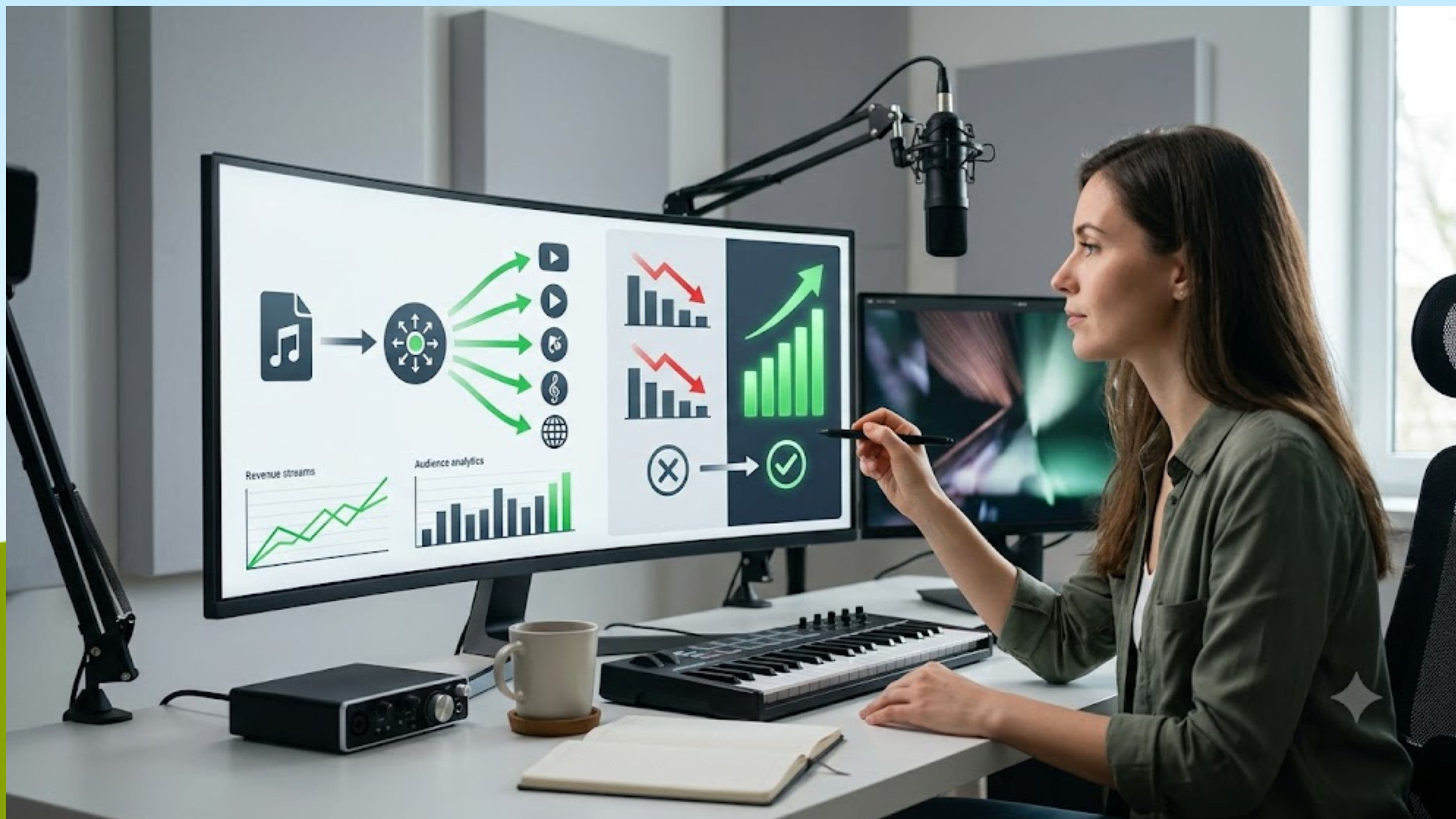
The honest truth is that most artists don't need ten tools. They need two or three that address the specific growth stage they're in right now. This list filters out the noise and focuses on the tools that earn their cost by actually doing something measurable — more reach, better data, real fan connections, or time you get back.
1. DistroKid, TuneCore, or CD Baby – Your Distribution Platform
What it does: Gets your music onto Spotify, Apple Music, Amazon, Tidal, YouTube Music, and every other major streaming platform. Without a distributor, your music isn't available where listeners are.
Why it's worth paying for: There is no meaningful free alternative for this. Some platforms like Amuse offer limited free tiers, but for any artist releasing music consistently, a paid distributor is a non-negotiable foundation. DistroKid charges around $22.99 per year for unlimited releases and keeps 0% of your royalties. TuneCore charges per release but gives you 100% of royalties. CD Baby charges a one-time fee per release and takes a small percentage of streaming income.
Who it's for: Every releasing artist. This is the first paid tool to set up, before anything else.
What to watch out for: Read the terms carefully on any platform you choose — particularly around what happens to your catalog if you cancel or don't renew. DistroKid removes music if you stop paying; CD Baby's one-time fee keeps music live indefinitely, which is worth considering for artists who want catalog stability.
2. Submithub – Playlist and Blog Pitching
What it does: Lets you pitch your music directly to curators, blogs, and independent playlist owners through a structured platform where curators commit to giving feedback.
Why it's worth paying for: Getting onto playlists — even small editorial or independent ones — is one of the most effective ways to reach listeners who don't already know you exist. Submithub's premium credits (around $0.20 per pitch) give your submission priority and guarantee a response, which is more than cold email pitching offers. The feedback, even when negative, tells you how curators are actually receiving your music, which is genuinely useful.
Who it's for: Artists actively releasing music who want to build listener growth beyond their existing network. Most useful for those with a properly produced, finished track ready to submit.
Realistic expectations: Submithub is not a guaranteed pathway to millions of streams. Most artists get a 10–30% acceptance rate from curators that match their genre well. A strong campaign might add a few thousand streams through smaller placements. It's a slow-build tool, not a shortcut.
What to watch out for: Don't pitch to curators outside your genre just to use up credits. Targeted pitching to well-matched curators produces far better results than blasting broadly.
3. Chartmetric – Streaming Analytics and Career Tracking
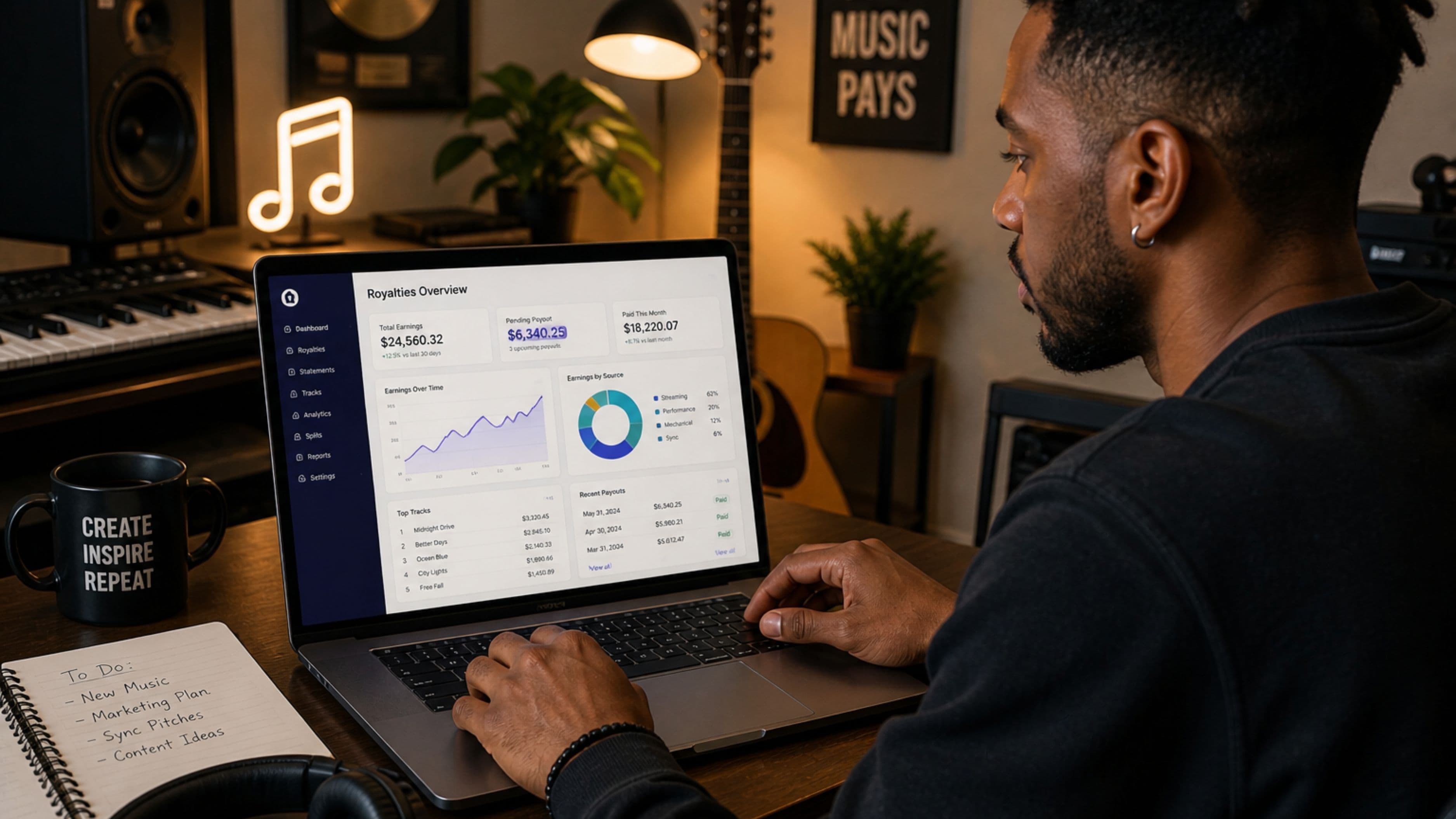
What it does: Aggregates data from Spotify, Apple Music, TikTok, YouTube, Instagram, and more into one platform so you can track your growth, see which playlists are driving streams, find comparable artists, and analyze what's working.
Why it's worth paying for: Spotify for Artists and Apple Music for Artists give you basic platform-specific data. Chartmetric gives you the full picture — cross-platform, with historical trending, playlist tracking, and the ability to research how comparable artists are growing. If you're making marketing decisions based on data, Chartmetric gives you the data worth acting on. The Pro plan starts around $10/month, which is reasonable for any artist releasing regularly.
Who it's for: Artists who release music consistently and want to understand their audience and trajectory beyond raw play counts. Also useful for managers, labels, and anyone working with multiple artists.
What to watch out for: The free tier is genuinely limited for serious use. The paid tier is where the useful features live. If you're not yet releasing music consistently, this investment is premature.
4. Mailchimp or ConvertKit – Email List Building
What it does: Manages your email subscriber list and lets you send newsletters, announcements, and automated sequences to fans who've opted in to hear from you.
Why it's worth paying for: An email list is the only marketing asset you fully own. Your social following lives on platforms that change their algorithms, ban accounts, and limit reach. Your email list doesn't. For most independent artists, building an email list is one of the most underused and highest-value long-term growth actions available — and a proper email platform makes that manageable at scale.
Mailchimp has a free tier up to 500 contacts, which covers most artists early on. ConvertKit (now rebranded to Kit) starts free up to 1,000 subscribers with slightly better tools for creators. Most artists won't need to pay for email marketing until their list exceeds a few thousand subscribers.
Who it's for: Any artist serious about direct fan relationships. Particularly valuable for artists selling merch, tickets, or exclusive content where you need reliable reach to a committed audience.
What to watch out for: An email list is only as valuable as you make it through consistent, worthwhile communication. Collecting addresses and never emailing anyone accomplishes nothing. Commit to at least a monthly update before building the list.
5. Link.tree or Koji – Link-in-Bio Platform
What it does: Consolidates all your important links — Spotify, YouTube, merch store, mailing list signup, tour dates, social profiles — into one clean landing page that fits in a single bio link on Instagram, TikTok, or Twitter.
Why it's worth paying for: The free tiers of Linktree and Koji cover the basics adequately. Paid tiers ($6–$10/month) add analytics on which links get clicked, custom domain support, and more branding flexibility. For artists who actively direct traffic through social bio links, the click analytics alone are worth the paid tier — knowing that 70% of your clicks go to Spotify but almost nobody clicks your email signup tells you something actionable about where to focus.
Who it's for: Any artist active on social media. This is a low-cost, high-utility tool even at the paid tier.
What to watch out for: Don't overload your link page with ten links. Three to five well-chosen destinations perform better than a scrolling menu of everything you've ever created.
6. Splice – Sample and Sound Library Access
What it does: Gives producers and beatmakers access to a library of millions of royalty-free samples, loops, and one-shots — available via a subscription model where you use credits to download.
Why it's worth paying for: If you're producing original music and regularly need high-quality drum loops, synth patches, vocal samples, or atmospheric textures, Splice saves a significant amount of time compared to recording or synthesizing every element from scratch. The basic plan runs around $9.99/month for 100 credits, which covers a reasonable production volume. The samples are cleared for commercial use, which matters if you're releasing music commercially.
Who it's for: Producers, beatmakers, and composers who need a reliable, legally cleared library of sounds. Less relevant for artists who rely on live instruments or work with producers who handle their own sound sourcing.
What to watch out for: Splice can become a crutch if you lean on the same trending samples that everyone else is using. The most overused samples on the platform sound immediately recognizable to anyone who spends time in production communities — build unique sound palettes where you can.
7. Show.co or Feature.fm – Paid Promotional Tools
What it does: These platforms run paid promotional campaigns specifically designed for music — pre-save campaigns, Spotify ad campaigns, social video ads targeted to music listeners, and follow-up campaigns to new listeners after a release.
Why it's worth paying for: If you have a release budget and you're ready to amplify an already-solid track, Show.co and Feature.fm give independent artists access to promotional infrastructure that used to require a label or a marketing agency. Pre-save campaigns in particular are useful for building momentum ahead of a release — they notify subscribers automatically on release day, which drives day-one streams and improves algorithmic positioning. Feature.fm's Spotify ads start around $10/day and reach targeted audiences by comparable artist.
Who it's for: Artists with a marketing budget, a polished release, and an existing baseline of listeners. Running paid promotion on a first release with no audience rarely produces a return. The tool multiplies momentum; it doesn't create it.
What to watch out for: Paid promotion drives streams, not fans. Streams from promotional campaigns often have lower save rates and skip rates than organic discovery — the listeners are passively exposed rather than actively seeking you out. Build organic discovery alongside any paid activity.
What to Skip (For Now)
A few tools that come up frequently in artist marketing conversations but often aren't worth paying for at the early stages:
Playlist submission services that promise guaranteed placements. Any service guaranteeing placement on specific playlists — particularly "editorial" playlists that are actually managed by fake or bot-inflated accounts — is a waste of money and potentially a terms-of-service violation on Spotify. Real organic placement comes from Spotify for Artists pitch submissions and legitimate services like Submithub.
Social media management platforms for artists with small followings. Tools like Buffer or Hootsuite are genuinely useful for managing high-volume social content, but if you're posting two to three times a week on two platforms, scheduling them manually takes five minutes. The paid overhead isn't justified until you're managing a real content operation.
Marketing courses that cost hundreds of dollars. There's a thriving market for courses teaching independent artists how to market their music. Some are good. Most are priced far above their information value, and the core strategies are available in free content from creators like Andrew Southworth, Kamara Thomas, and others who publish openly on YouTube. Spend the course budget on actual promotion before spending it on learning about promotion.
FAQ
How much should an independent artist budget for marketing tools monthly? A functional baseline – distribution plus analytics plus a link page – costs around $35–$45 per month. Adding email marketing, submission credits, and a sample library brings it to $60–$100 depending on your activity level. That's a reasonable monthly investment for an artist releasing two to three singles per year and actively working on growth.
Are Spotify for Artists and Apple Music for Artists enough for analytics? For basic stream counts and audience demographics, yes – and both are free. They become limiting when you want to track playlist placements, compare your growth trajectory to similar artists, or analyze cross-platform trends. That's when Chartmetric or a similar third-party tool adds genuine value.
Do I need all of these tools at once? No. Start with distribution (essential), then add tools as your actual needs grow. An artist releasing their first few singles doesn't need a paid analytics platform yet. Build the toolkit as your releases build momentum.
What's the single highest-leverage marketing tool for a new artist? The answer almost universally is your distribution platform combined with Spotify for Artists' direct pitch submission feature, which is free. Pitching your music to Spotify's editorial team for playlist consideration before your release date is the highest-value no-cost action available, and most artists either don't use it or use it wrong (submitting after release rather than before). Get that right before spending on anything else.
The best marketing setup for an independent artist isn't the most expensive one – it's the one that matches where you actually are. Start lean, invest in the tools that address your specific bottlenecks, and add more as your career earns the complexity.
📚 Sources
DistroKid – Pricing and Features: https://distrokid.com/features
Submithub – How It Works: https://www.submithub.com/about
Chartmetric – Platform Overview: https://app.chartmetric.com/about
Mailchimp – Free and Paid Plan Comparison: https://mailchimp.com/pricing/
Splice – Subscription Plans for Producers: https://splice.com/sounds
Feature.fm – Artist Marketing Tools: https://feature.fm/artist
Spotify for Artists – Pitch Your Music: https://artists.spotify.com/help/article/music-release-submission