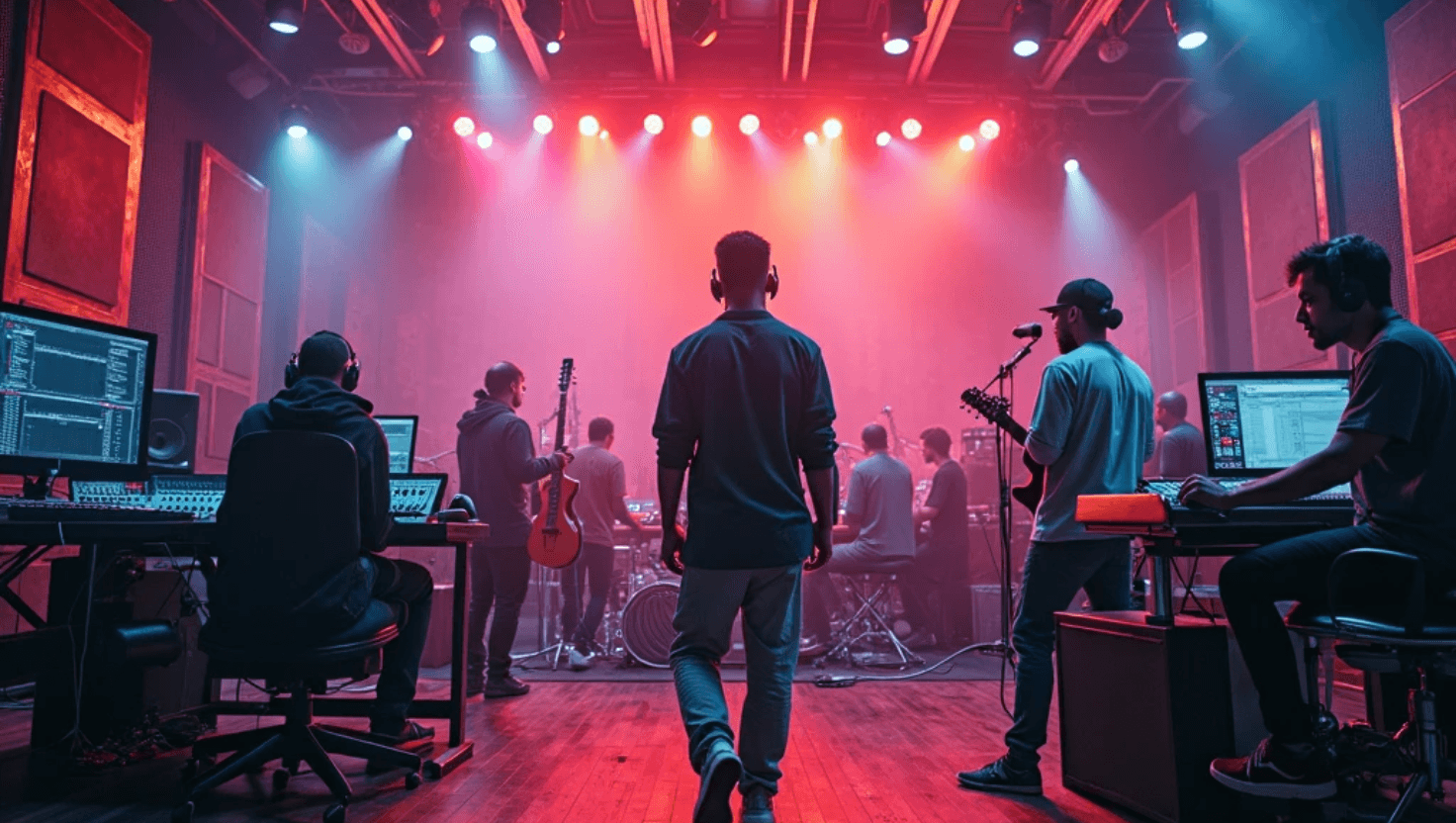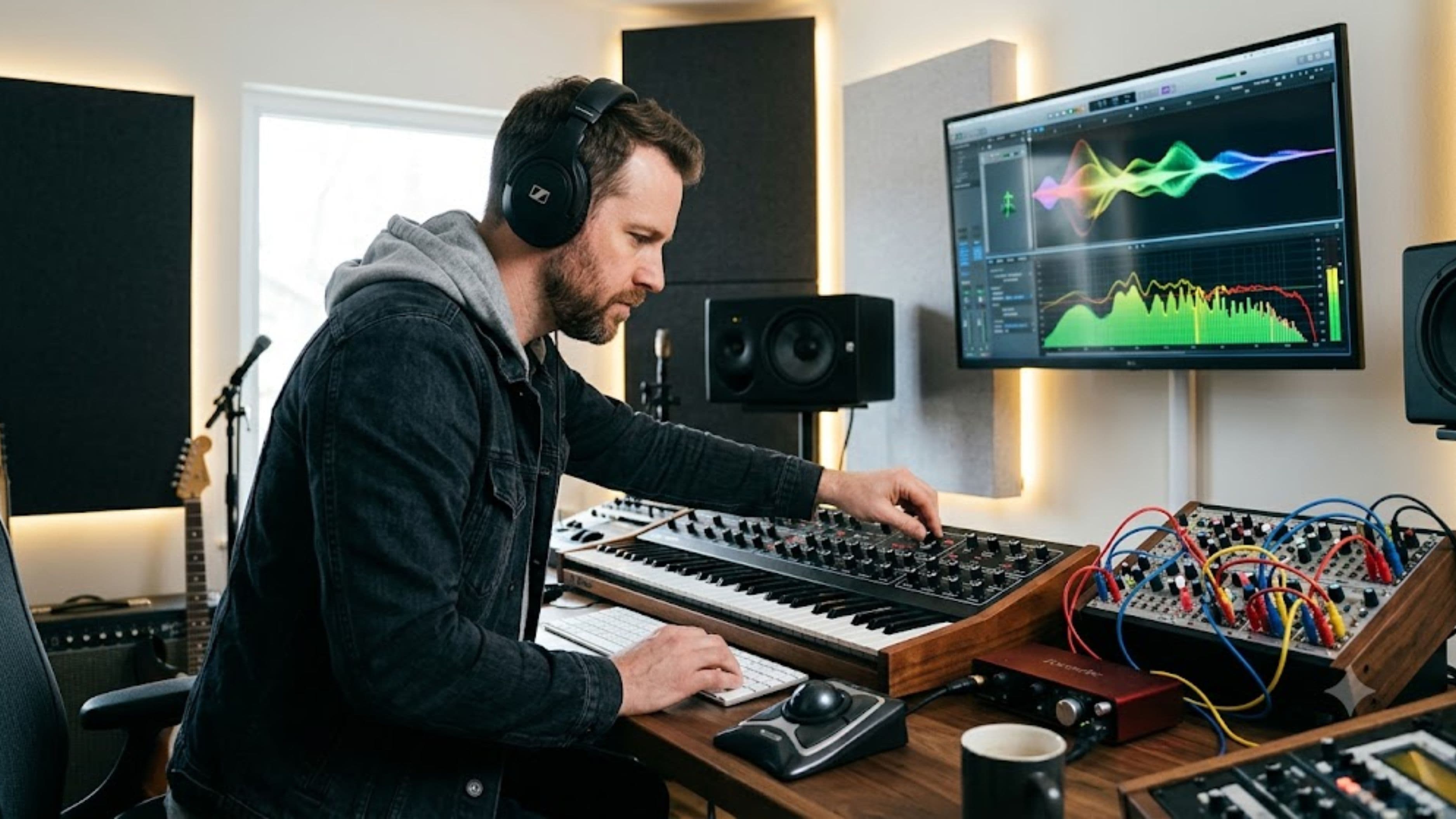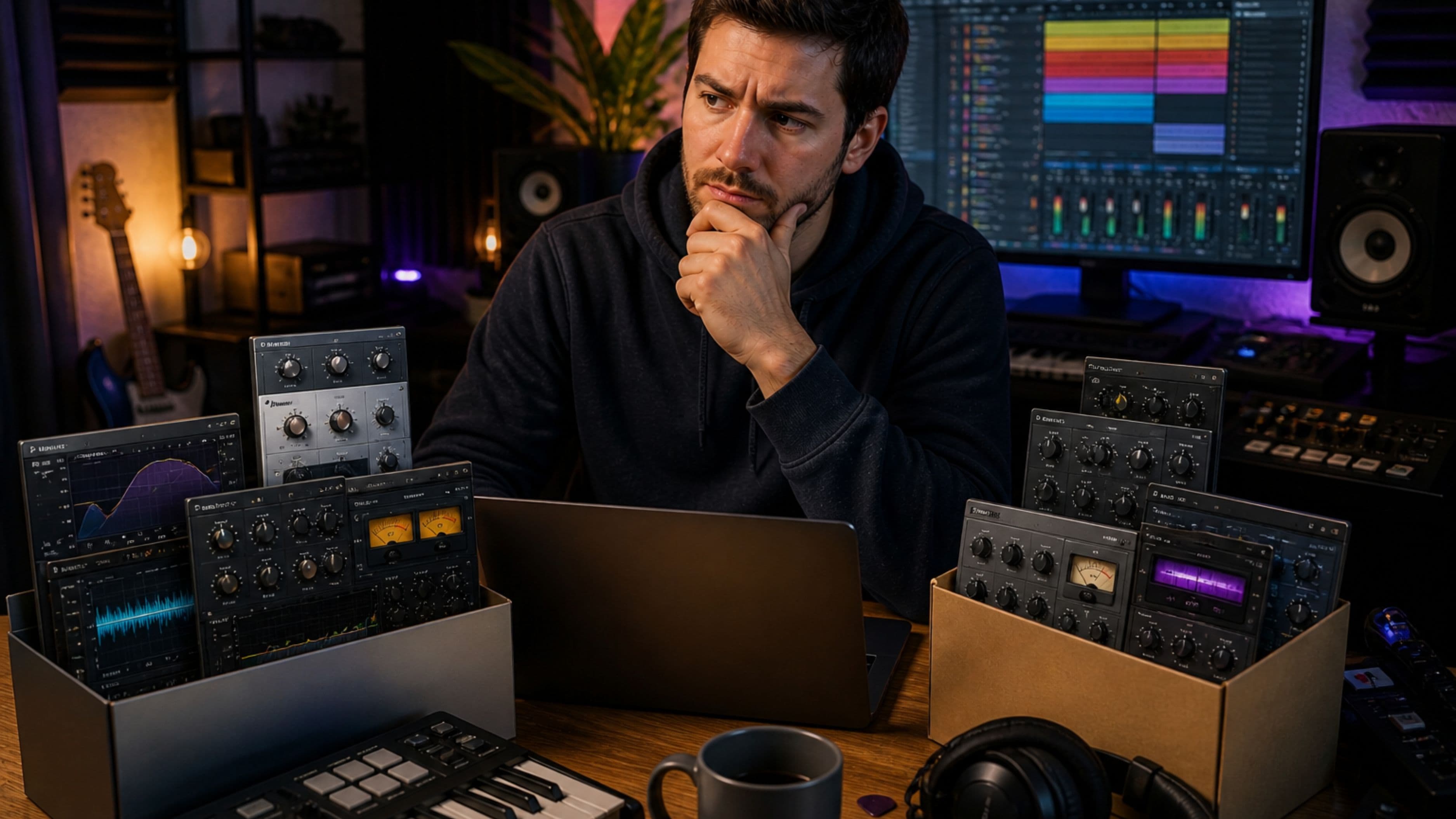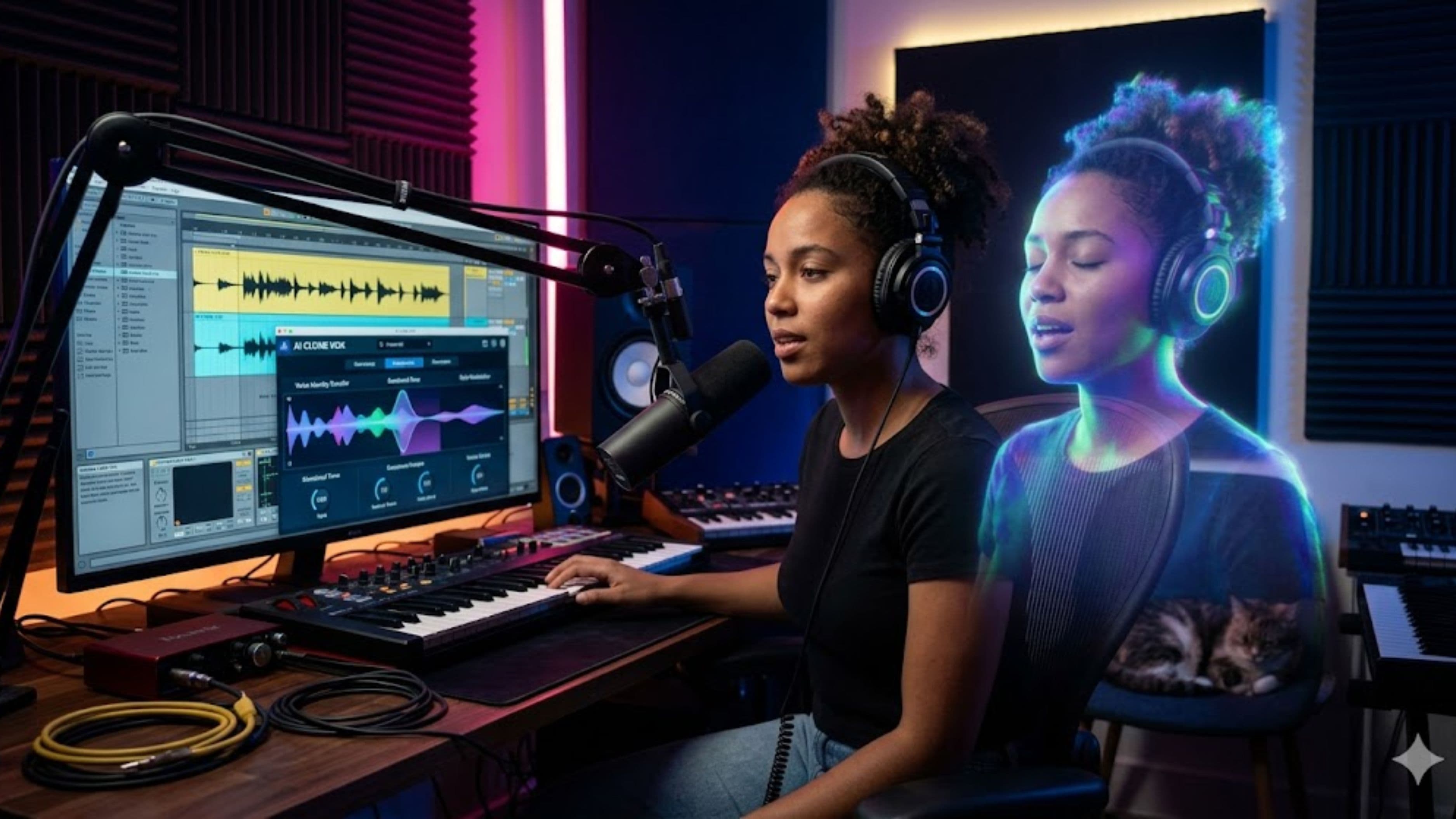
What's clear already is that AI music generation isn't replacing producers the way early headlines suggested. What it is doing is changing the parts of the job that consume the most time, lowering the barrier to entry for certain kinds of production work, and creating new questions about ownership, originality, and what it means to make music in the first place.
What AI Music Generators Actually Do
The tools worth understanding fall into a few distinct categories, because they're not all doing the same thing.
Text-to-music generation is what most people mean when they talk about AI music tools. Platforms like Suno and Udio take a text prompt – "upbeat lo-fi hip hop with soft piano and a vinyl crackle" or "dark cinematic orchestral score with building tension" – and generate a full audio track, complete with instrumentation, rhythm, and in some cases vocals. The output quality has improved dramatically in 2024 and 2025, to the point where the results are genuinely usable in many contexts without post-processing.
Stem separation and audio manipulation tools use machine learning to do things like isolate vocals from a mixed track, extract individual instruments, or separate drums from a full mix. Tools like Moises and Lalal.ai operate in this space. These are used heavily by producers who want to work with existing audio in ways that weren't previously feasible without specialized studio equipment.
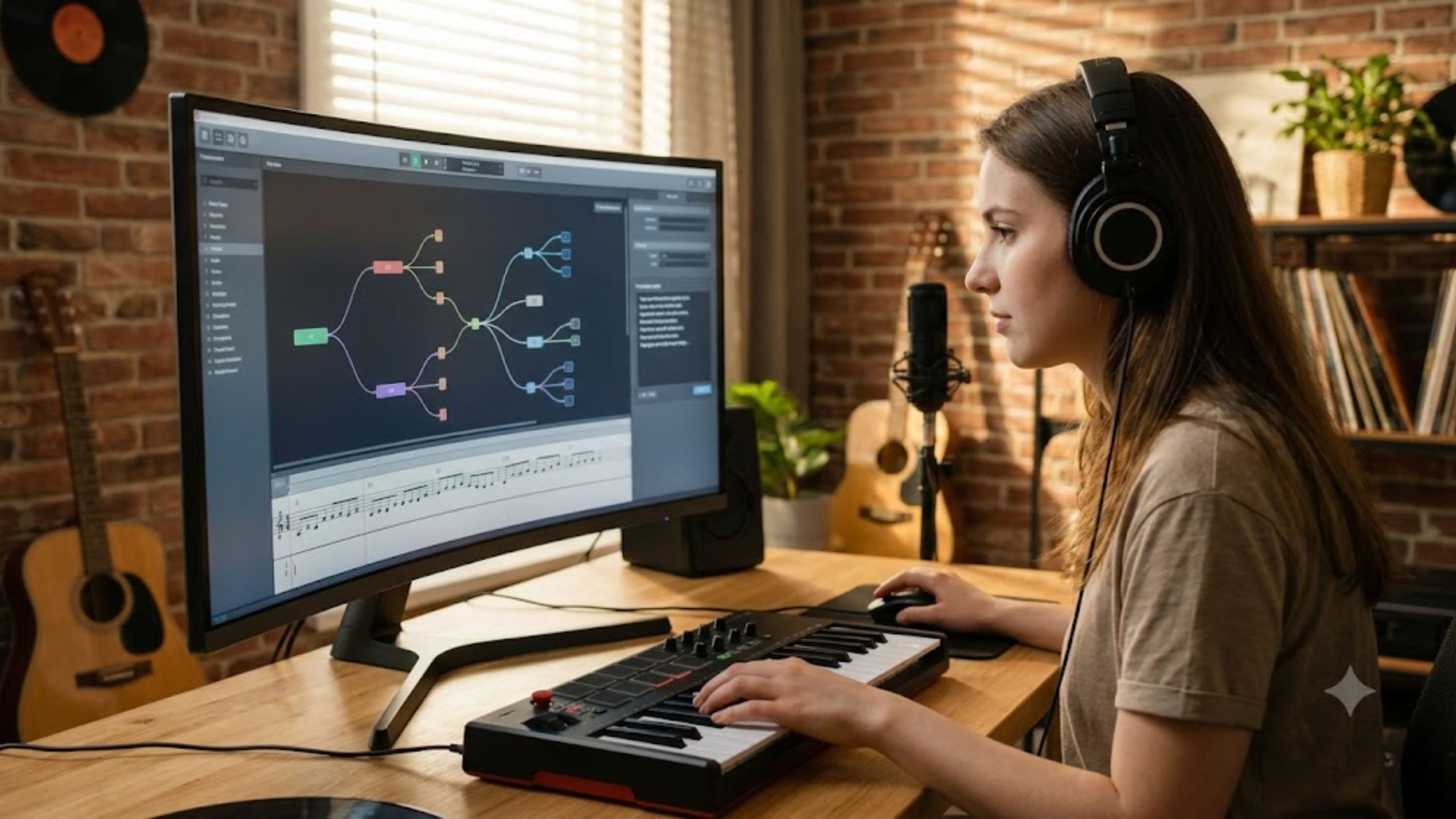
AI-assisted composition and arrangement tools sit inside or alongside traditional DAWs and help with tasks like suggesting chord progressions, generating counter-melodies, or auto-arranging sections. These tools – including features built into newer versions of Logic Pro, and standalone tools like Orb Producer Suite – are more collaborative in nature. They augment rather than replace the human's compositional decisions.
Style transfer and audio transformation tools allow producers to take audio in one style and shift it toward another – changing the perceived genre, instrumentation, or tonal character of a recording. This is a more experimental space but one where several tools have made rapid progress.
How Producers Are Actually Using These Tools
The narrative of "AI will replace producers" misses how the technology is actually being integrated into real workflows. The more accurate picture is that producers are finding specific nodes in their process where AI tools either save meaningful time or open up possibilities that weren't previously accessible.
For producers who create background music, sync music, or stock music for licensing, AI generation tools have become a significant productivity multiplier. The work of generating twenty variations of a corporate background track – different tempos, different moods, slight instrumentation changes – that used to take a full day can now be explored in a few hours, with the producer focusing time on selection, refinement, and the final touches that make something licensable. Platforms like Artlist, Musicbed, and Pond5 are actively navigating how to handle AI-generated content in their libraries, and some producers working in this space are using AI generation as a starting point that they then heavily edit and layer.
For artists and producers making original music for release, the picture is more nuanced. Very few artists are releasing AI-generated tracks wholesale. What's more common is using AI tools for specific problems – generating a drum loop to start from when writer's block hits, using stem separation to reference-mix against a track you don't have stems for, or using a generation tool to explore a mood or direction quickly before committing to a full production. These are workflow accelerators, not workflow replacements.
Beatmakers working in hip hop, trap, and electronic production have found certain AI tools useful for generating texture layers, ambient samples, and transitional elements that would previously require either licensing existing samples or recording original audio. The ability to generate a specific sonic texture on demand – a particular kind of string stab, a specific lo-fi atmosphere – without clearing rights is genuinely valuable in a production context where sample clearance is a persistent friction point.
Why This Matters for Independent Producers Specifically
The impact of AI music tools is not felt equally across the industry. For major label productions with full teams, significant budgets, and established processes, AI tools are one option among many and don't fundamentally change the economics of how work gets done. For independent producers and solo artists, the changes are more significant.
The cost of high-quality music production has historically been a meaningful barrier. Studio time, session musicians, specialized plugins, and the years of skill development required to produce at a competitive level represented real costs that filtered who could make music that sounded professional. AI tools compress some of those barriers. A producer who is strong at arrangement and taste but less experienced with sound design can now access a wider palette of generated sounds and textures than their technical skills alone would permit.
This doesn't mean the quality ceiling has been raised – human expertise in music production still produces results that AI generation can't replicate for most nuanced work. What's changed is the floor. The gap between what a capable independent producer can achieve and what required a full studio team five years ago has narrowed, which shifts the competitive landscape in ways that are still playing out.
The other significant implication for independents is the question of differentiation. If AI tools become widely adopted, the value of music production shifts further toward vision, taste, and distinctive creative voice – the things the tools can't generate on command. Producers who use AI efficiently while maintaining a clear artistic identity are likely to benefit from the productivity gains without losing the differentiation that makes their work worth listening to.
The Ownership and Licensing Questions That Aren't Resolved Yet
The legal and commercial landscape around AI-generated music is genuinely unsettled, and producers working with these tools should understand the risks.
The training data question sits at the center of most of the legal uncertainty. AI music generation tools are trained on large datasets of existing music, and multiple major record labels have filed lawsuits against AI music companies alleging copyright infringement in the training process. These cases are working through the courts and the outcomes will meaningfully shape what's permissible. Until clearer precedent is established, the legal exposure of generating music with tools whose training data provenance is unclear remains a real consideration.
The copyright status of AI-generated output is also unresolved in most jurisdictions. In the US, the Copyright Office has taken the position that work generated entirely by an autonomous system without meaningful human creative input is not copyrightable – which means a fully AI-generated track with no human creative contribution may not be protectable. For producers who heavily edit, arrange, and layer AI-generated elements with original work, the copyright picture is clearer. For work that's closer to raw AI output with minimal human intervention, the protectability is less certain.
Distribution platforms have added their own policies in response. Spotify, Apple Music, and DistroKid have updated terms requiring disclosure of AI-generated content in varying forms. Some platforms are blocking fully AI-generated content; others are permitting it with disclosure. If you're distributing music that uses AI-generated elements, checking the current policy of each platform you're distributing through is necessary, not optional.
What to Watch Out For
The most practical risk for producers integrating AI tools is the quality plateau. Current text-to-music generation is impressive but identifiable as AI output at close listening – there are specific artifacts, textural inconsistencies, and structural limitations that experienced listeners notice. Using AI-generated elements without meaningful curation and processing can result in music that sounds generically "AI" in a way that's becoming more recognizable as listeners are exposed to more of it.
The productivity gain is real, but so is the risk of using it as a substitute for the slower work of developing taste and craft. Producers who use these tools as shortcuts rather than accelerators risk developing workflows that are efficient but creatively shallow. The strongest results come from producers who bring a clear vision to what they're generating and are willing to spend significant time selecting and refining output rather than treating the first generation as finished work.
There's also a practical risk around tool stability. Several AI music platforms launched, gained traction, and either shut down, pivoted, or changed their pricing significantly within a short period. Building a workflow around a specific tool that disappears or becomes unaffordable creates disruption. Diversifying across multiple tools and keeping your core workflow in established software is sensible risk management.
The Practical Takeaway
For independent producers, the honest guidance is to experiment with these tools in low-stakes contexts before incorporating them into primary workflows. Use generation tools to explore ideas, break creative blocks, and accelerate work in categories like background music, sync, and stock content where speed-to-market matters. Use stem separation and audio analysis tools where they solve specific technical problems. Stay informed about the legal landscape, particularly around distribution requirements and the ongoing litigation involving training data.
The producers who will benefit most from AI music tools are those who use them to do more of what they're already good at – faster, with more options available – rather than those who use them to avoid developing the underlying craft that makes production decisions worth making.
FAQ
Can I copyright music that was made with AI tools?
It depends on how much human creative input is involved. Work that consists substantially of human creative decisions – composition, arrangement, selection, editing, sound design – with AI tools as one part of the process is likely protectable. Work that is primarily AI-generated with minimal human creative intervention is not protectable under current US Copyright Office guidance. If this is important to your workflow, consulting with an entertainment attorney or following the Copyright Office's ongoing guidance on AI is advisable.
Are AI-generated tracks allowed on Spotify and Apple Music?
Both platforms allow AI-assisted music with human creative input, but both have policies that restrict or require disclosure for purely AI-generated content. The policies are evolving, and distribution aggregators like DistroKid and TuneCore have their own requirements on top of the platform policies. Check current terms with your specific distributor before uploading content that uses AI generation.
Which AI music tools are most useful for producers right now?
Suno and Udio are the most capable text-to-music generators for exploring ideas quickly. Moises and Lalal.ai are the most practical stem separation tools for producers who work with existing audio. For DAW-integrated assistance, Logic Pro's updated AI features and tools like Orb Producer Suite address specific composition and arrangement workflows. The landscape is changing fast enough that checking current reviews before committing to a paid subscription is worth the time.
Will AI replace session musicians?
For certain categories of work – repetitive parts, basic rhythm tracks, textural backgrounds – AI tools have already reduced demand for some session work. For nuanced performances, genre-specific feel, and anything where the human element is the point, session musicians remain irreplaceable. The most honest answer is that the impact varies significantly by genre, context, and what the music is for.
AI music generation isn't a single trend – it's a set of capabilities that are being absorbed into music production workflows at different rates and in different ways depending on who's using them and what they're making. The producers adapting most effectively aren't treating it as a threat or a magic solution. They're treating it as a new set of tools that work best when used with intention, taste, and a clear understanding of what the tools can and can't do on their own.
📚 Sources
US Copyright Office – Copyright and artificial intelligence guidance – https://www.copyright.gov/ai/
Billboard – AI music tools and the producer workflow shift – https://www.billboard.com/pro/ai-music-tools-producers-workflow/
Suno – platform overview – https://suno.com/about
Moises – stem separation tool overview – https://moises.ai/features
Spotify for Artists – AI-generated music policy – https://artists.spotify.com/en/blog/our-evolving-approach-to-ai-generated-content
RIAA – Copyright litigation involving AI training data – https://www.riaa.com/resources-learning/ai-music/
Google MusicFX – overview and access – https://aitestkitchen.withgoogle.com/tools/music-fx