That moment opened a conversation that the music industry is still having. For independent creators and producers, the technology raises genuinely interesting possibilities and genuinely serious questions at the same time. Understanding both sides – what AI voice cloning actually does, how creators are using it, and where the risks and limits are – is the more useful frame than either uncritical excitement or reflexive alarm.
What AI Voice Cloning Actually Does
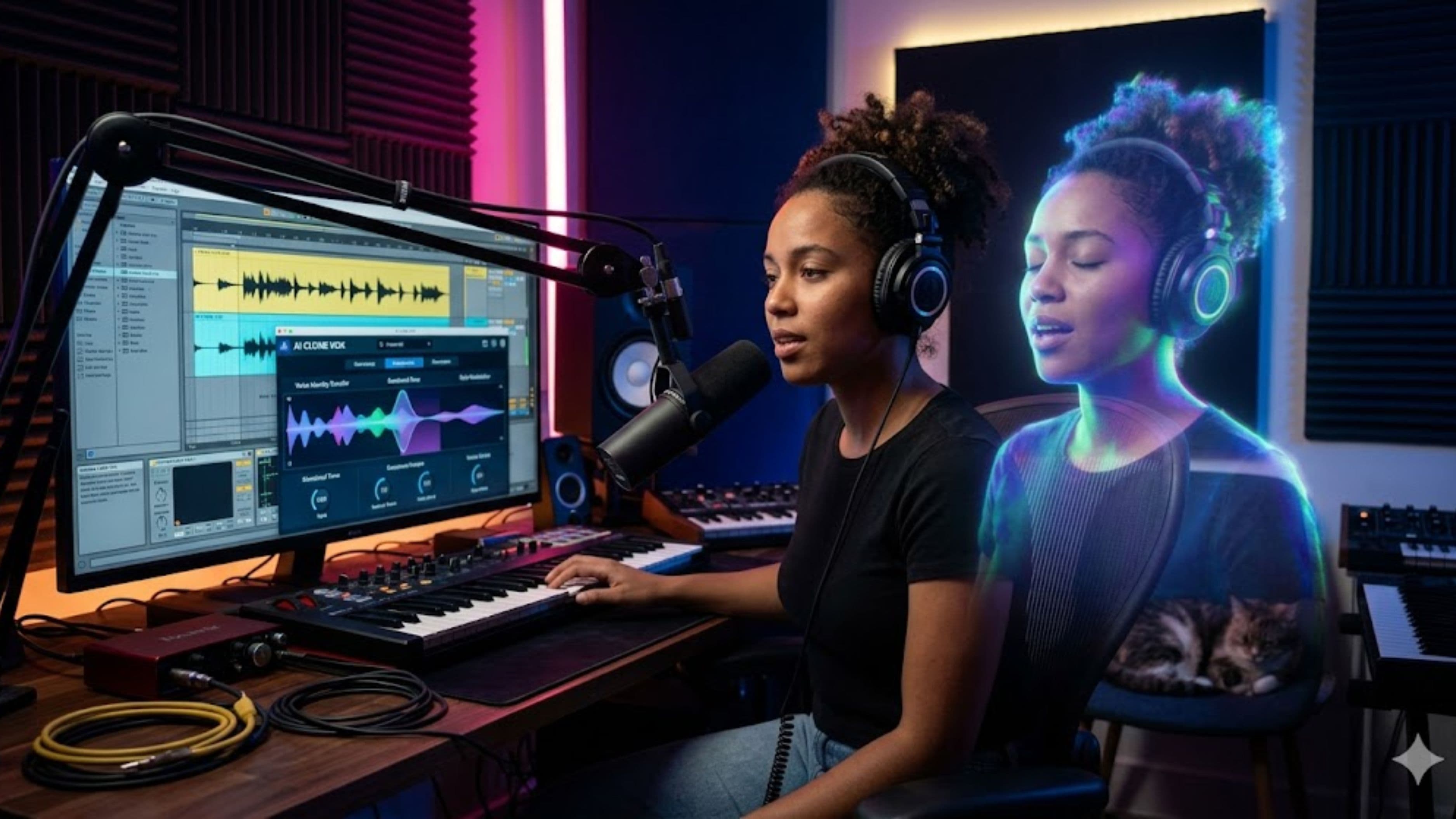
Voice cloning is the process of training a model on audio samples of a specific voice and then using that model to generate new speech or vocals in that voice from text or audio input. The quality of the clone depends on the volume and quality of the training data, the sophistication of the model, and how far the generated output deviates from the speech patterns the model learned on.
Earlier generations of this technology produced recognizable but obviously synthetic output – the kind of thing that sounded like a slightly off impression rather than the real voice. Current tools, particularly those using diffusion-based audio models, produce output that can be genuinely difficult to distinguish from authentic recordings in many contexts. The barrier in terms of audio samples needed to create a functional clone has also dropped significantly. Some platforms can generate a usable voice model from as little as 30 seconds of clean audio, though more training data generally produces more convincing and versatile results.
There are a few distinct use cases that matter differently for creators. One is cloning a specific person's voice to generate new content in that voice without their participation – which is the category that raises the most serious legal and ethical concerns. Another is creating a synthetic vocal persona that doesn't represent any real individual – a unique voice built entirely from generative models that the creator owns and controls. A third is using voice conversion tools to shift characteristics of an existing recording without wholesale cloning – adjusting pitch, tone, or timbre in ways that go beyond traditional pitch correction.
How Creators Are Using These Tools Right Now
The practical adoption of voice cloning among independent creators is more varied than the headlines suggest, and most of it is happening in contexts that are considerably less legally fraught than the Drake/Weeknd incident.
Podcasters and video content creators have been among the early adopters, primarily for voiceover work and content localization. Tools like ElevenLabs allow creators to build a custom voice model from their own recorded samples and then use that model to generate narration, dubbing, or translated versions of their content without needing to re-record everything. A creator whose primary language is English can produce a Spanish-language version of their podcast using a cloned version of their own voice speaking Spanish – a capability that previously required hiring native-speaking voice talent. For content creators trying to reach global audiences without the budget for full localization teams, this is a genuine workflow shift.
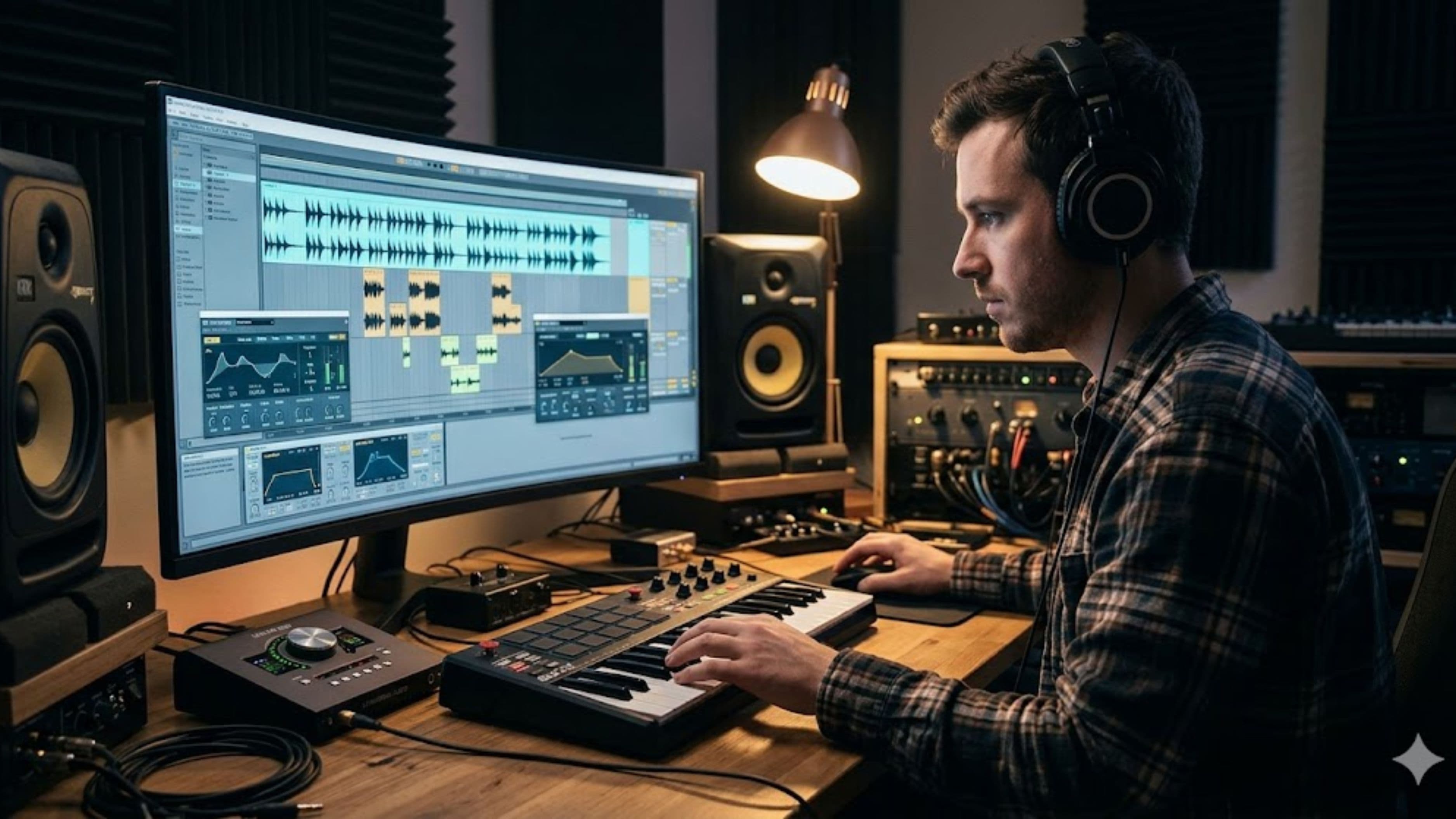
In music production specifically, voice conversion tools are being used to pitch-correct and transform vocal performances in ways that traditional pitch correction can't achieve. Bringing a recorded vocal performance into a different key without the artifacts of conventional pitch-shifting, or subtly modifying vocal character to better fit a production, are tasks that a handful of audio-focused voice tools now handle with fewer unwanted side effects than older approaches.
Producers working in pop, R&B, and electronic music are also experimenting with synthetic vocal personas – essentially building a unique AI vocalist that no one has heard before and using that voice as an instrument in their productions. Some have registered these AI vocal identities as part of their brand and are releasing music under those personas. This is legally cleaner than cloning real voices, and it gives producers access to a vocal element in their productions without requiring session singers or the complications of splitting royalties with a human vocalist.
The sampling and interpolation side of hip hop and pop production is another area where voice tools are beginning to appear. Rather than clearing an actual sample of a legacy artist – which can involve years of negotiation and significant licensing fees – some producers have experimented with creating voice-cloned interpretations. This is legally complicated in ways that make it risky territory for anyone planning to release commercially, but it's happening in the production phase of work that never becomes a finished release.
Why This Changes the Vocal Production Workflow
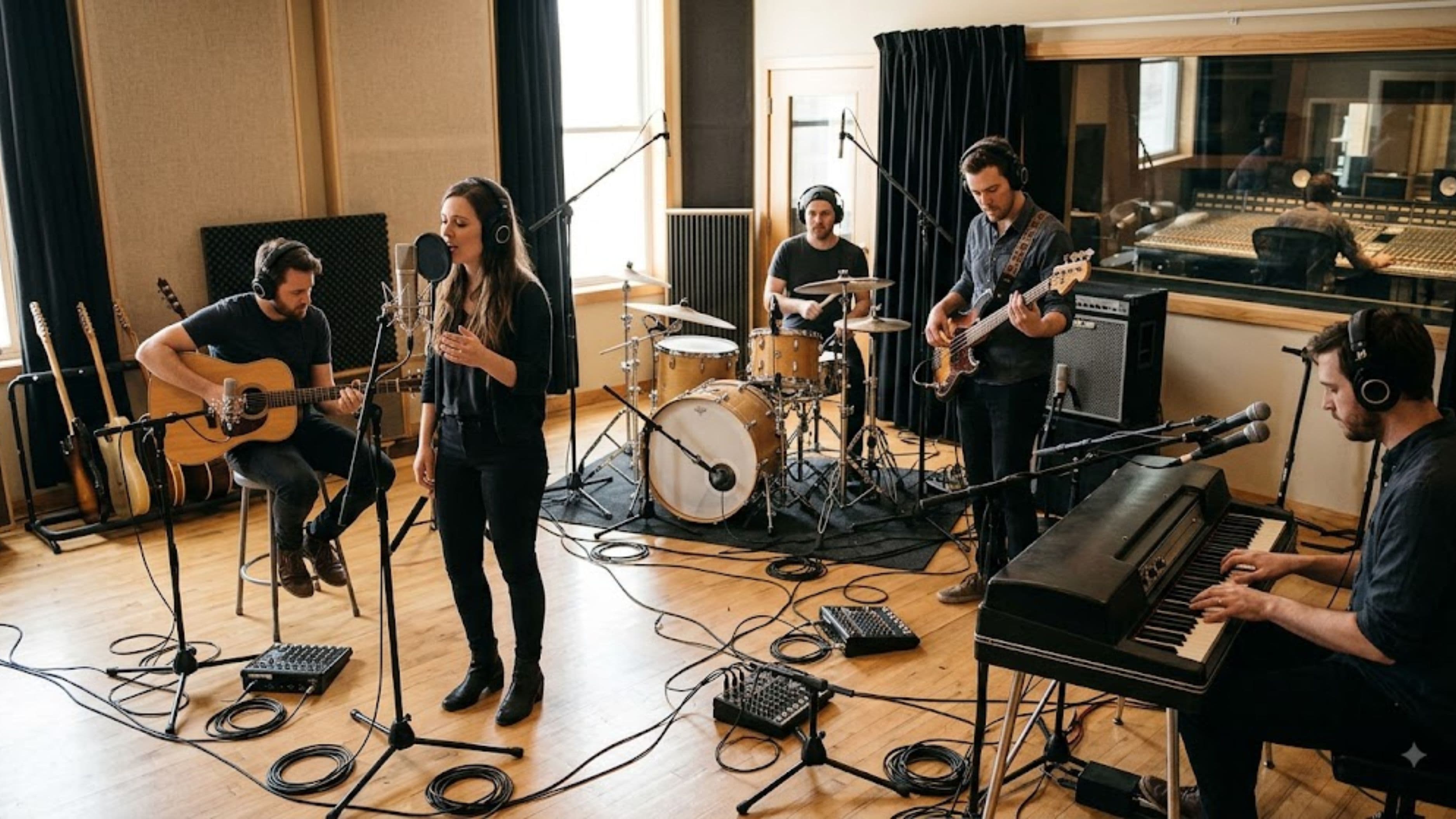
The traditional vocal production process involves booking studio time with a vocalist, capturing the performance, spending additional time editing and comping the best takes, applying pitch correction and timing adjustments, and then mixing the result into the track. For an independent producer without a network of session singers and without the budget for multiple studio sessions, vocal production has historically been the most difficult element to execute at a professional level.
Voice cloning doesn't eliminate that process, but it does create alternatives at specific points. A producer who has a vocal melody in mind but no vocalist available can now generate a placeholder performance from a synthetic or cloned voice to demo the production and share it with potential collaborators or labels. That demo now sounds considerably more finished than a producer humming over a beat, which changes how the work is received before a real vocalist is involved.
For artists who produce their own music and also perform on it, the ability to generate additional vocal elements – harmonies, backing vocals, spoken transitions – from a model trained on their own voice means they can expand the vocal texture of their recordings without booking additional sessions. Several artists have used this approach to thicken their live recordings with arrangements that would be logistically complex to produce with live vocalists.
The pace of iteration in the production process also changes. When generating a vocal line from a synthetic model takes seconds rather than hours of session booking, producers can explore more directions in the same amount of time. The result isn't necessarily better music – the quality of the vocal idea still comes from the producer's taste and musical judgment – but the removal of friction in testing vocal ideas changes how quickly a production can move through its development stages.
The Consent, Rights, and Legal Reality
The most important thing any creator using voice cloning tools should understand is that using someone else's voice without their consent – for commercial music, for public content, or for any context where the output is presented as or could be confused with that person – creates real legal exposure.
The legal framework around voice cloning is developing rapidly. Several US states have enacted or are actively legislating personality rights laws that protect individuals from having their voice likeness used without consent. Tennessee's ELVIS Act, which went into effect in 2024, explicitly extends personality rights protections to voice, making it one of the first state laws to directly address AI voice cloning. Federal legislation is also moving, with the No Fakes Act having been introduced in Congress, though as of 2025 it has not yet passed into law.
Beyond state and federal law, the major music streaming platforms are updating their policies in response to the landscape. Spotify, Apple Music, and others have added provisions around AI-generated content, including requirements for disclosure when AI is used in a significant way in the production process. Several platforms have stated explicitly that content generated using a real person's voice without their consent will be removed.
The record labels themselves have taken formal positions. In 2024, Universal Music Group, Sony Music, and Warner Music Group collectively sent letters to major AI platform companies demanding that their artists' voices not be used in training data. Several of these companies are now in the early stages of developing opt-in licensing frameworks that would allow licensed use of artist voice models – a potential path toward a structured market for voice licensing that doesn't currently exist in a mature form.
For creators working with their own voice, the legal picture is much simpler. Building and using a model trained entirely on your own recordings, for your own productions, is clearly within your rights. The complexity arises when other voices are involved.
What to Watch Out For
The speed of development in voice cloning tools means that the platform you use today may look very different in six months. Several tools in this space have changed their terms of service, pricing, and capabilities rapidly, and some have added retroactive restrictions on how voice models created on their platform can be used. Reading the terms of service carefully – particularly around ownership of models you create and commercial use rights – is worth the time before building a workflow around a specific platform.
Voice fingerprinting technology is advancing alongside voice cloning. Several companies, including those working with major platforms and labels, are developing tools to detect AI-generated or AI-cloned vocals in audio content. As these detection tools become more widely deployed, content containing cloned voices may be flagged or removed from platforms regardless of the creator's intent. For commercial releases, understanding how the platforms you distribute through are approaching this is necessary due diligence.
There's also a craft consideration worth naming. The ease of generating vocals artificially can create a temptation to bypass the harder work of finding and developing real vocal talent, of collaborating with singers who bring something to a production that a model can't generate, or of developing your own vocal performance skills if that's part of your creative vision. The tools are most useful when they augment genuine creative decisions rather than substitute for them.
The Practical Takeaway for Creators
The most defensible and practical path for creators right now is to use voice cloning technology in contexts where consent and ownership are unambiguous – primarily your own voice, for your own productions. Build synthetic vocal personas if you want access to AI-generated vocals that you fully control. Use voice conversion and pitch manipulation tools where they solve specific problems in your existing workflow. Approach any use of another person's voice with extreme caution and, if the output is intended for release, with legal guidance.
The technology is real, the capabilities are impressive, and the use cases that are legally and ethically straightforward are worth exploring. The use cases that involve other people's voices without their knowledge are moving from a gray area toward a clearly demarcated legal boundary, and that boundary is tightening, not loosening.
FAQ
Is it legal to use a voice clone of a famous artist in a song I release?
In most cases, no – and the risk is increasing, not decreasing. Using another person's voice likeness without consent can violate personality rights laws (which now exist in several US states), potentially infringe on copyright depending on jurisdiction, and will likely result in takedown from major platforms. It also exposes you to civil liability. This is territory that requires legal advice before any commercial use, and the general trajectory of both law and platform policy is toward stricter enforcement.
Can I clone my own voice for commercial use?
Yes, with attention to the terms of service of the specific platform you use to create and deploy the clone. Some platforms restrict commercial use to higher-tier plans or require specific licensing for distribution. If you build a voice model on a platform that retains rights to that model in its terms, the commercial picture becomes more complicated. Read the terms before building, not after.
What tools are currently leading in voice cloning quality?
ElevenLabs is consistently cited as producing the most natural-sounding synthetic voices for both speech and singing contexts. Kits.ai is designed specifically for music vocal cloning and has built an opt-in consent model into its platform structure. Adobe's Project Music GenAI Control is in development and integrates with Adobe's existing audio tools. The landscape is changing quickly enough that comparing current outputs from multiple tools before committing to one is worthwhile.
How do streaming platforms detect AI-cloned vocals?
The detection methods are still developing. Currently, platforms rely heavily on disclosure requirements and flagging from rights holders rather than fully automated technical detection. However, voice fingerprinting and AI audio detection tools are actively being developed, and the major platforms have invested in improving their detection capabilities. The honest answer is that detection is imperfect now but improving significantly, and treating the current imperfect detection as a safe window for unconsented voice use is the kind of short-term thinking that creates significant problems later.
Voice cloning technology is moving faster than the frameworks designed to govern it, which is both the opportunity and the risk for creators right now. The window where this technology is genuinely accessible but still poorly understood is narrowing as platforms, legislators, and artists themselves get more specific about where they stand. For creators who use it intentionally, within clear boundaries, and in service of genuine creative goals, it's a meaningful addition to the production toolkit. For creators who use it carelessly or without understanding the landscape, it's a liability waiting to materialize.
📚 Sources
Tennessee General Assembly – ELVIS Act (SB 2096) – https://wapp.capitol.tn.gov/apps/BillInfo/Default.aspx?BillNumber=SB2096
US Congress – No Fakes Act – https://www.congress.gov/bill/118th-congress/senate-bill/2971
ElevenLabs – platform and voice cloning overview – https://elevenlabs.io/voice-cloning
Kits.ai – AI vocal cloning for music producers – https://kits.ai/about
Spotify for Artists – AI-generated content policy update – https://artists.spotify.com/en/blog/our-evolving-approach-to-ai-generated-content
RIAA – Statement on AI voice cloning and artist rights – https://www.riaa.com/resources-learning/ai-music/
Billboard – Universal, Sony, Warner letters to AI companies – https://www.billboard.com/pro/major-labels-ai-music-companies-letters-training-data/