What Algorithmic Playlists Actually Are
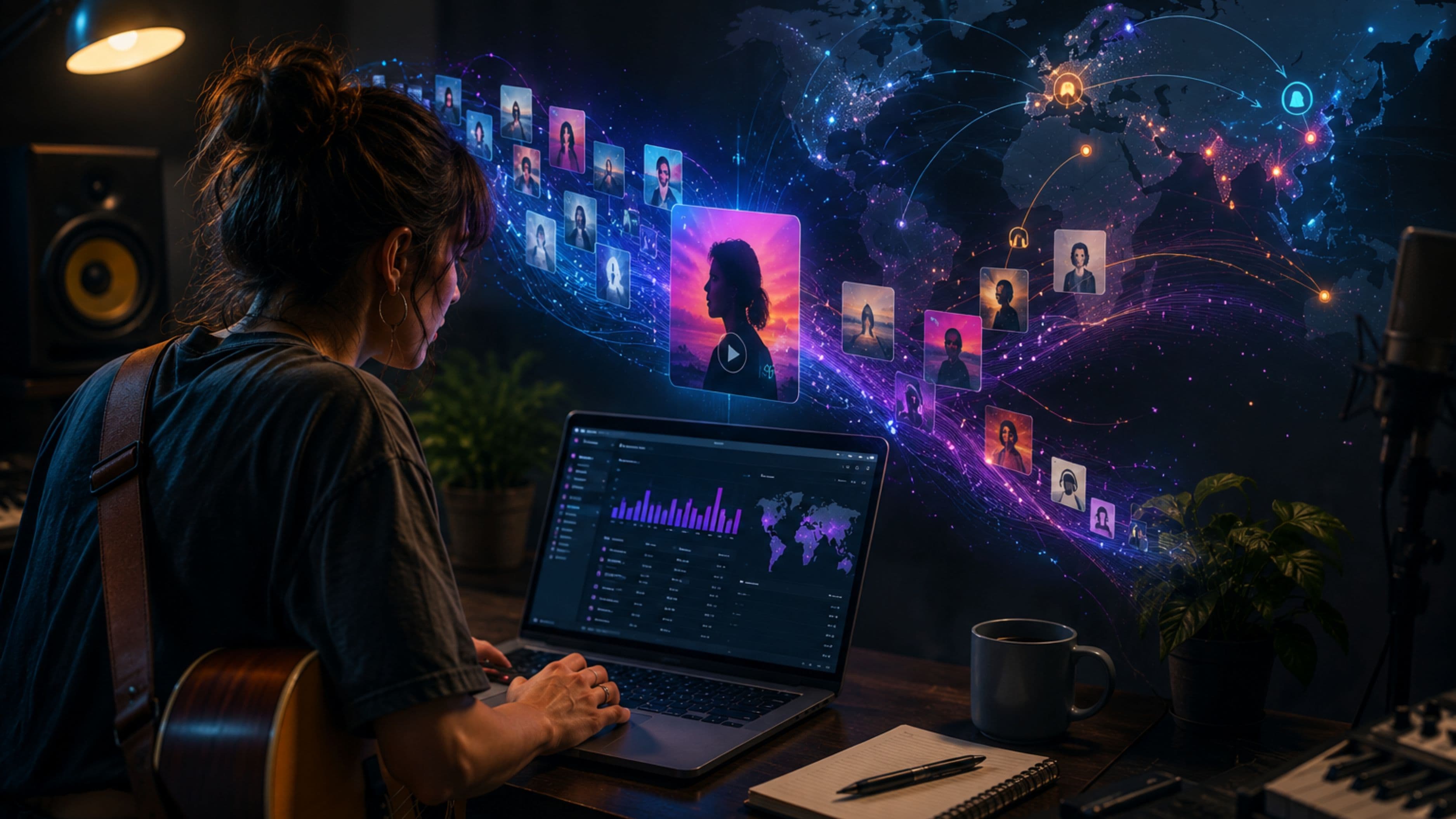
Algorithmic playlists aren't curated by humans. They're generated by recommendation engines that analyze listener behavior data at massive scale and match music to individual users based on what they're likely to enjoy. Spotify's system, which is the most documented and the most influential, builds models of each user's taste based on their listening history, saves, skips, repeat plays, playlist adds, and dozens of other signals. It then finds music that fits that profile – including new or unfamiliar artists whose music shares characteristics with what the listener already loves.
The key insight for artists is that these systems aren't trying to surface popular music. They're trying to surface the right music for a specific listener. An indie folk artist with 2,000 monthly listeners can land in someone's Discover Weekly because their song shares sonic and behavioral characteristics with music that listener already plays regularly. The algorithm doesn't know or care that the artist has a small following. It cares whether the song fits the listener's profile – and whether, once placed, that listener engages positively with it.
Why This Changes the Opportunity for Independent Artists
The traditional model of music promotion required working through gatekeepers at every stage. Radio programmers, label A&R, playlist editors, press contacts – all human decision-makers who were largely inaccessible to unsigned artists. Algorithmic distribution doesn't have a velvet rope. The system evaluates signals, not relationships.
This doesn't mean the system is fully meritocratic – there are structural advantages that artists with larger budgets can still use, including playlist pitching services, promotional campaigns that drive streaming numbers, and label connections that enable Spotify for Artists editorial pitching. But the floor for what an independent artist can achieve through understanding and working with the algorithm has risen dramatically. Artists are building audiences of 50,000–500,000 monthly listeners with no label, no PR campaign, and no external funding, through a combination of quality releases, metadata precision, and consistency that trains the algorithm in their favor.
The Signals That Actually Matter
Understanding what the algorithm measures is the most actionable thing an independent artist can do. Most of the relevant signals fall into a few categories.
Stream-to-save ratio is among the most important early signals. When a significant percentage of listeners who stream a song also save it to their library, that tells the algorithm the song has genuine appeal to the people it's reaching – not just passive listening, but intentional engagement. A save rate of 10–15% or higher on early streams is a positive signal. Save rates below 5% suggest the song is reaching the wrong listeners, or that the song itself isn't creating enough of an impression to prompt action.
Skip rate is the inverse signal. If listeners are consistently skipping a track within the first 30 seconds, the algorithm interprets that as a negative quality signal for that listener profile. This is one reason why the opening of a song matters more for algorithmic performance than it ever did in the download era. The first 5–15 seconds of a release need to hold attention.
Playlist adds and library saves from organic (non-promotional) sources tell the algorithm that real listeners with no particular incentive found the music worth keeping. These carry more weight than streams alone.
Complete listens matter. A song that consistently gets played to completion – or repeated – is demonstrating engagement quality that algorithms weight heavily when deciding whether to keep expanding a song's reach.
Artist profile follows after a discovery stream signal that the listener wants more from this artist specifically, which strengthens the algorithm's association between that listener's taste profile and that artist's music catalog.
How Smart Artists Are Building Strategy Around These Signals
The artists who are getting real algorithmic traction are treating each release as a data signal, not just a piece of content. A few specific approaches are consistently showing up.
Pre-save campaigns are now a standard independent artist practice. Encouraging fans and email subscribers to pre-save a release before it goes live means the song accumulates library saves on day one, which is exactly when Spotify's algorithm is deciding how broadly to distribute it through Release Radar and similar features. A strong pre-save number tells the system this release has pre-existing demand worth surfacing widely. Artists typically run pre-save campaigns through their distributor (DistroKid, TuneCore, and others all offer this), through direct fan email, and through social media in the weeks before a release date.
Consistent release cadence trains the algorithm over time. Artists releasing music every 4–8 weeks maintain algorithmic relevance in ways that artists who release sporadically don't. Each new release gets pushed to Release Radar for existing followers and gives the algorithm fresh data to work with. Artists with dormant catalogs – no new releases for 6+ months – often report a noticeable drop in algorithmic support for older tracks. Maintaining a steady output keeps the system actively routing listeners to your music.
Metadata precision affects which listener profiles a song gets tested against in the first place. Genre classification, mood tagging, and the subgenre signals embedded in your distributor submission all influence how the algorithm categorizes your music and which listeners it tests it with. Being accurate and specific – not generic – in how you classify your music gives the algorithm better matching data to work from. A track tagged broadly as "pop" will be tested against a wide and unfocused listener pool. A track accurately tagged as "indie dream pop" or "lo-fi R&B" will be tested against the specific listener profiles where it's most likely to generate strong positive signals.
Spotify for Artists pitching is the official channel for attempting editorial playlist placement (human curators, not algorithmic), and it also influences algorithmic distribution. When you pitch a release through Spotify for Artists and it gets editorial consideration – even if it doesn't get placed on an editorial playlist – the data from that consideration process can influence how the algorithm treats the song. Pitching should happen at least 7 days before release, through the unreleased tracks section of the Spotify for Artists dashboard. Every release should be pitched regardless of whether you expect editorial placement, because the process itself sends a signal.
Playlist pitching to independent playlist curators – humans who run playlist channels with real followings – remains a useful supplementary tactic. Curator playlists that place your song with the right audience type provide the behavioral data (saves, completes, follows) that the algorithm then uses to expand distribution. Platforms like Groover, SubmitHub, and Musosoup provide structured access to independent curators who accept submissions for a small fee. The ROI isn't guaranteed, but a well-chosen curator placement that reaches genuinely aligned listeners can seed meaningful algorithmic activity.
What the Algorithm Can't Do for You
The algorithmic opportunity is real, but it has limits worth being clear about.
The system surfaces music to listeners based on fit – it doesn't replace the need for the music itself to be compelling. A song that gets algorithmic placement but generates poor engagement signals (high skip rate, low saves, low completes) will be deprioritized quickly. The algorithm is a distribution mechanism, not a quality amplifier. It routes music to listeners who might like it; it can't make listeners like music they don't connect with.
Artificially inflated streams – through stream farms, playlist placements that reach misaligned audiences, or promotional tactics that generate streams without genuine engagement – can actively hurt algorithmic performance. A song with 100,000 streams and a 2% save rate is telling the algorithm that virtually nobody who heard it found it worth keeping. That's a worse position than 10,000 streams with a 15% save rate. Chasing raw numbers without attention to engagement quality is a commonly made mistake that independent artists who don't understand the system often fall into.
The algorithmic advantage also varies by platform. Spotify's recommendation engine is the most mature and the most influential. Apple Music's algorithms are improving but less transparent. YouTube's recommendation system operates through different signals (watch time, click-through from thumbnails, likes) and requires a different strategy. Artists targeting algorithmic growth need to understand which platform's system they're primarily optimizing for and build their release strategy accordingly.
The Bigger Picture: What Independent Artists Are Actually Building
The artists who are making algorithmic playlists work for them aren't chasing viral moments. They're building a foundation – a catalog of releases that consistently perform well on engagement metrics, a listener base that the algorithm understands and can expand, and a feedback loop where each release adds data that helps the system route subsequent releases more accurately.
Over 12–24 months of consistent, strategically executed releases, independent artists are building monthly listener counts and catalog streams that generate real income through streaming royalties and that create a meaningful audience for touring, merchandise, and direct-to-fan products. It's not a shortcut, and the income from streaming alone at small and mid-tier listener counts is modest. But the audience and the reach are real, and they're being built without the label relationships that previous generations of independent artists needed to access the same scale.
The algorithm isn't the music industry's great equalizer. But for independent artists who take the time to understand how it works, it's a genuinely useful tool for building something real.
What to Watch Out For
Paid playlist placement services that guarantee streams are almost uniformly problematic. Many use bot-driven or low-quality listener accounts that generate stream counts without genuine engagement, which actively damages an artist's algorithmic health. Spotify has been active in removing fake streams and can suspend or ban accounts associated with artificial streaming activity. If a service is offering guaranteed placement on playlists with large follower counts for a flat fee, the streams those playlists generate are almost certainly not coming from genuine listeners.
Algorithmic changes are real and occasional. Spotify updates its recommendation systems, and tactics that worked well 18 months ago may be less effective today. Following Spotify for Artists announcements, music industry newsletters (Music Business Worldwide, Hypebot), and creator-focused communities helps independent artists stay current on what the algorithm is actually responding to at a given time.
Finally, the algorithmic opportunity doesn't eliminate the need for audience development on owned channels. An artist with 200,000 Spotify monthly listeners but no email list, no social media presence, and no direct fan relationships is entirely dependent on the platform's continued goodwill. Platform algorithms change, monetization terms shift, and accounts can be disrupted. Building a direct relationship with your audience – email list, social platforms you control – is the insurance policy that makes algorithmic success durable rather than fragile.
FAQ
How long does it take to see algorithmic traction after a release? Most of the significant algorithmic activity happens in the first 2–4 weeks after a release, which is why the first few days of streaming data matter so much. Discover Weekly refreshes weekly (Monday) and Release Radar refreshes on Fridays. A song that performs well in its first week of release is a strong candidate for immediate algorithmic expansion. Songs that don't gain traction in the first 30 days rarely see significant algorithmic pickup later, though catalog songs can occasionally resurface if a newer release drives listeners to explore an artist's back catalog.
Does the number of Spotify followers an artist has affect algorithmic placement? Follower count affects Release Radar distribution – the feature that delivers new releases to existing followers. An artist with 10,000 followers gets their new release in 10,000 people's Release Radar on release day, which is a meaningful starting pool of engagement data. Artists with fewer followers have a smaller initial distribution window, which is one reason why growing your Spotify follower base through artist link sharing, pitching, and social promotion matters even in the algorithmic era. Followers are the seed audience that the algorithm then expands from.
Is Spotify the only platform where algorithmic playlists significantly impact independent artist growth? Spotify has the most documented and influential algorithmic system for independent artists, but Apple Music's "New Music" and "Favourites Mix" features operate on similar principles. YouTube's recommendation algorithm is equally powerful for artists who release music videos or audio uploads. TikTok's algorithm has become a meaningful discovery channel for music through the "For You" feed, though the conversion from TikTok viral moment to sustained streaming growth requires its own strategy. Most serious independent artists manage 2–3 platforms with distinct algorithmic approaches rather than focusing exclusively on one.
What's the best way to find independent playlist curators to pitch to? SubmitHub and Groover are the most established platforms for reaching independent curators with real audiences. Both operate on a credit or fee-per-submission model and show curator response rates and genre focus so you can target relevant playlists. Avoid any service that doesn't show you the curator's playlist or audience data upfront – legitimate curators are transparent about what they're offering. Research each curator's actual playlist before submitting: check the follower count, how recently it was updated, and whether the existing music is genuinely similar to yours.
📚 Sources
Spotify for Artists – How Spotify Recommendations Work – https://artists.spotify.com/en/blog/how-fans-find-your-music
Spotify for Artists – Pitch Your Music to Spotify Playlist Editors – https://artists.spotify.com/en/help/article/pitch-a-song-to-playlist-editors
Music Business Worldwide – Independent Artists and Streaming Trends – https://www.musicbusinessworldwide.com/independent-artists-are-thriving-on-streaming-platforms-heres-why/
Hypebot – How the Spotify Algorithm Works in 2024 – https://www.hypebot.com/hypebot/2024/03/how-the-spotify-algorithm-works.html
DistroKid – Pre-Save Campaign Guide – https://distrokid.com/hyperfollow/
SubmitHub – How to Pitch Music to Curators – https://www.submithub.com/blog/how-to-submit-music