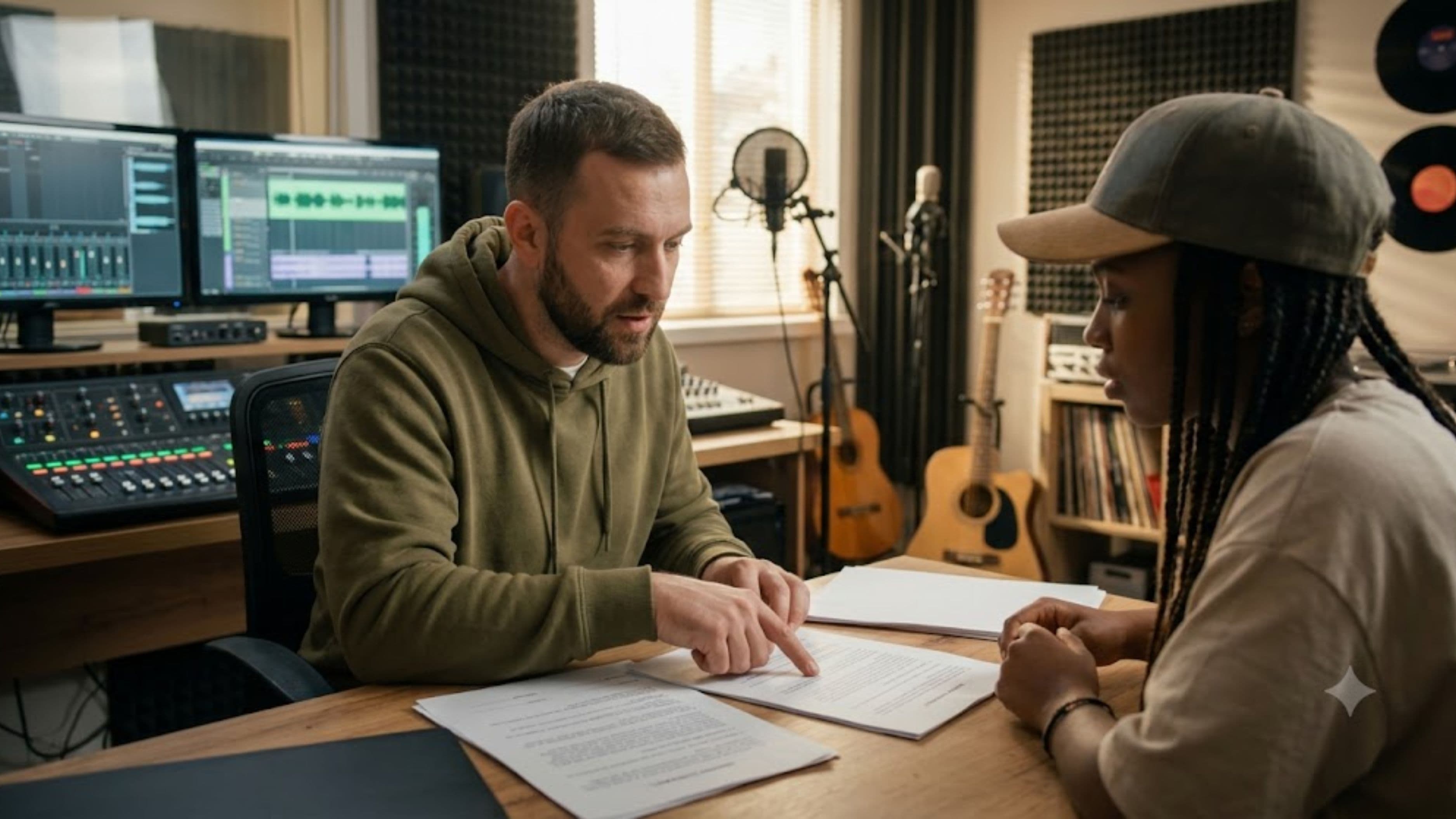
Getting this wrong doesn't just mean leaving money on the table, it can mean losing control over your own work entirely if the terms of a license aren't clear or favorable.
What a Beat License Actually Is
A beat license is a legal agreement that grants a buyer specific rights to use your instrumental, while you, as the producer, typically retain ownership of the underlying composition and master recording unless you've explicitly sold those rights separately. The license defines exactly what the buyer can and can't do with the beat, how many copies they can distribute, whether they can use it commercially, and whether other artists can also license the same beat.
Understanding this distinction, between granting usage rights versus transferring ownership, is the single most important concept in beat licensing, since confusing the two leads to disputes and lost income more often than almost anything else in this space.
The Common Types of Beat Licenses
Non-Exclusive Licenses
A non-exclusive license allows you to sell the same beat to multiple buyers, each receiving usage rights under the terms of their specific license, while you retain ownership and can continue selling the same beat to others. This is the most common license type sold through online beat marketplaces, typically priced lower since buyers understand they're not getting exclusive use of the beat.
Non-exclusive licenses usually come with limitations, like a cap on the number of copies that can be distributed or streamed, or restrictions on commercial use above a certain revenue threshold, which is worth reading carefully since these caps vary significantly between platforms and individual producers.
Exclusive Licenses
An exclusive license grants a single buyer sole rights to use the beat, meaning you agree not to sell it to anyone else going forward. These come at a significantly higher price point, since the buyer is paying for exclusivity and the assurance that their song won't share an instrumental with other artists' releases.
It's worth clarifying in the agreement whether an exclusive license also includes a full transfer of copyright ownership or just exclusive usage rights while you retain ownership, since these are meaningfully different arrangements with different long-term implications for who controls the beat.
Lease Agreements
Lease agreements are a more limited, often time-bound or usage-capped version of a non-exclusive license, sometimes used for producers offering tiered pricing based on usage limits, like a certain number of streams or physical copies. These tend to be the most affordable entry point for artists working with a limited budget, and correspondingly offer producers the most flexibility to continue licensing the same beat to others.
Key Terms Every License Agreement Should Address
Usage Rights and Limitations
The license should clearly specify what the buyer can do with the beat: recording a song, distributing it commercially, performing it live, using it in videos or other media. Vague or missing usage terms create ambiguity that can lead to disputes later if a buyer uses the beat in a way you didn't anticipate or intend to permit.
Distribution and Sales Caps
Many licenses, particularly non-exclusive ones, include caps on how many copies or streams the licensed track can generate before the buyer needs to upgrade to a higher-tier license or pay additional fees. Clearly defined caps protect you from a buyer's song unexpectedly blowing up commercially while they're still operating under a low-cost, limited license.
Credit and Attribution Requirements
Many producers require buyers to credit the beat's producer in official release metadata or liner notes, sometimes tied to the license tier purchased. This matters for building your reputation and portfolio as a producer, beyond just the direct payment from the license itself, so it's worth being clear and consistent about your credit requirements across all licenses you issue.
Term Length and Termination Conditions
Some licenses are perpetual, granting rights indefinitely, while others are time-limited or subject to renewal terms. Understanding and clearly stating which applies avoids confusion down the line, particularly for lease-style agreements that may expire or require renegotiation after a specific period.
Common Mistakes Producers Make With Licensing
Selling exclusive rights without clarifying whether copyright ownership transfers along with exclusivity is one of the most common and costly mistakes, since producers sometimes discover after the fact that they've unintentionally signed away long-term ownership and future royalty potential, not just usage rights.
Using vague, generic license templates without adapting them to your specific pricing tiers and terms is another frequent issue, since ambiguous language creates room for disputes that a clearer, more specific agreement would have avoided entirely.
Failing to register beats with a performing rights organization, or not understanding how royalty splits work once a licensed beat becomes part of a commercially released song, means producers sometimes miss out on royalty income they were actually entitled to collect.
What to Watch Out For as a Producer
Buyers occasionally request modifications to standard license terms, and it's worth having a clear sense beforehand of which terms you're willing to negotiate and which are non-negotiable for your business, rather than deciding on the spot without a consistent policy. This protects you from inconsistent terms across different buyers that can create confusion or perceived unfairness later.
It's also worth keeping organized records of every license you issue, including buyer information, license type, and terms agreed to, since disputes or questions about a specific beat's usage rights can arise well after the initial sale, sometimes years later if a song gains unexpected commercial traction.
FAQ
Do I lose ownership of my beat when I sell a non-exclusive license? No. Non-exclusive licenses grant usage rights to the buyer while you retain ownership and can continue licensing the same beat to other buyers.
What's the difference between a lease and a non-exclusive license? They're similar in that both are non-exclusive, but leases typically come with more restrictive usage caps or time limits and are priced lower as an entry-level option compared to a standard non-exclusive license.
Should I use a template license agreement or have one custom-made? Many producers start with reputable templates specifically designed for beat licensing, but having the terms reviewed or customized to your specific pricing structure and business needs reduces the risk of ambiguous or unfavorable terms.
📚 Sources
"Copyright Basics for Musicians" – U.S. Copyright Office – https://www.copyright.gov/circs/circ01.pdf
"Music Licensing Explained" – American Society of Composers, Authors and Publishers (ASCAP) – https://www.ascap.com/help/music-business-101
"Understanding Music Royalties" – Recording Industry Association of America – https://www.riaa.com/reports/