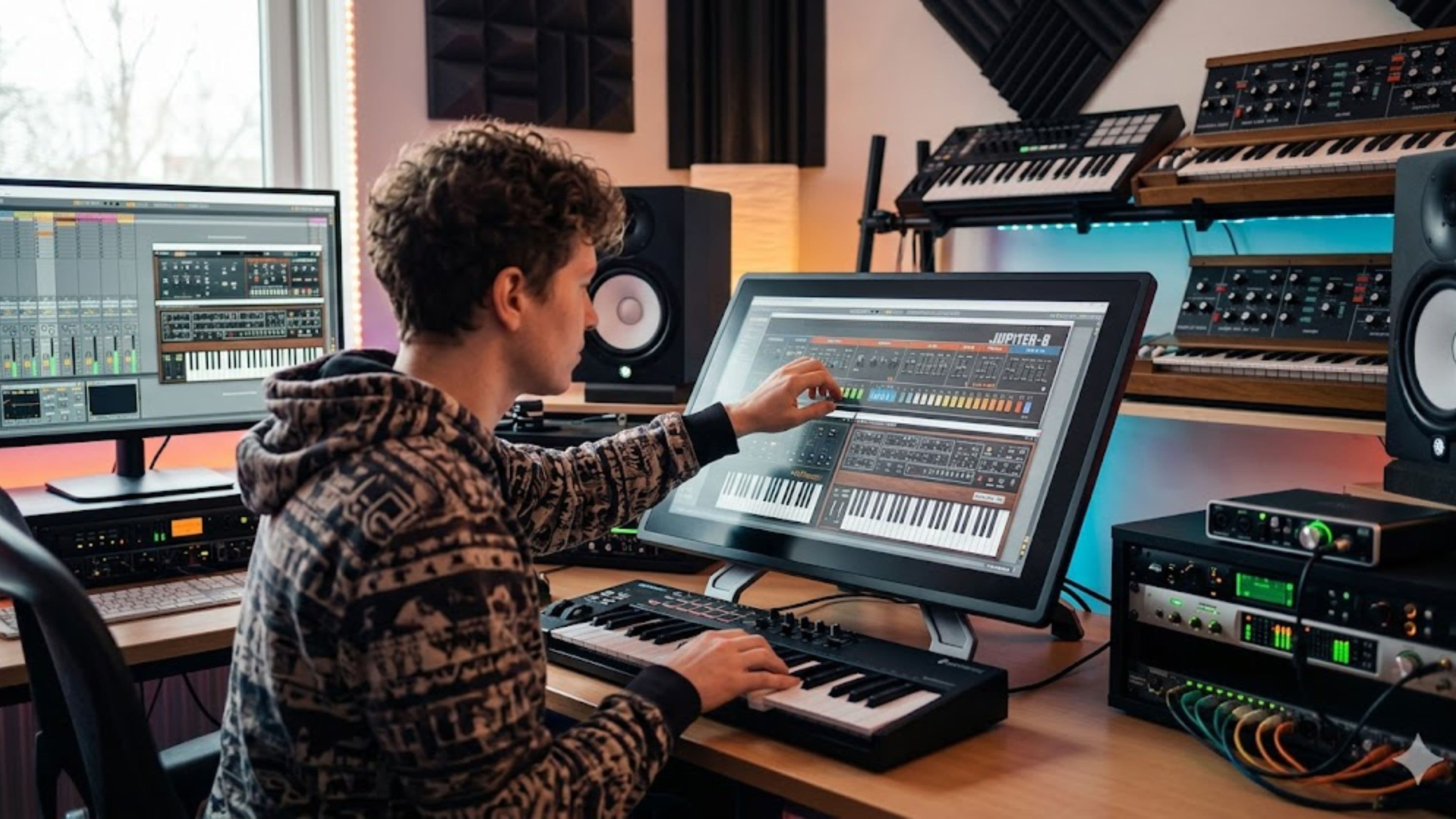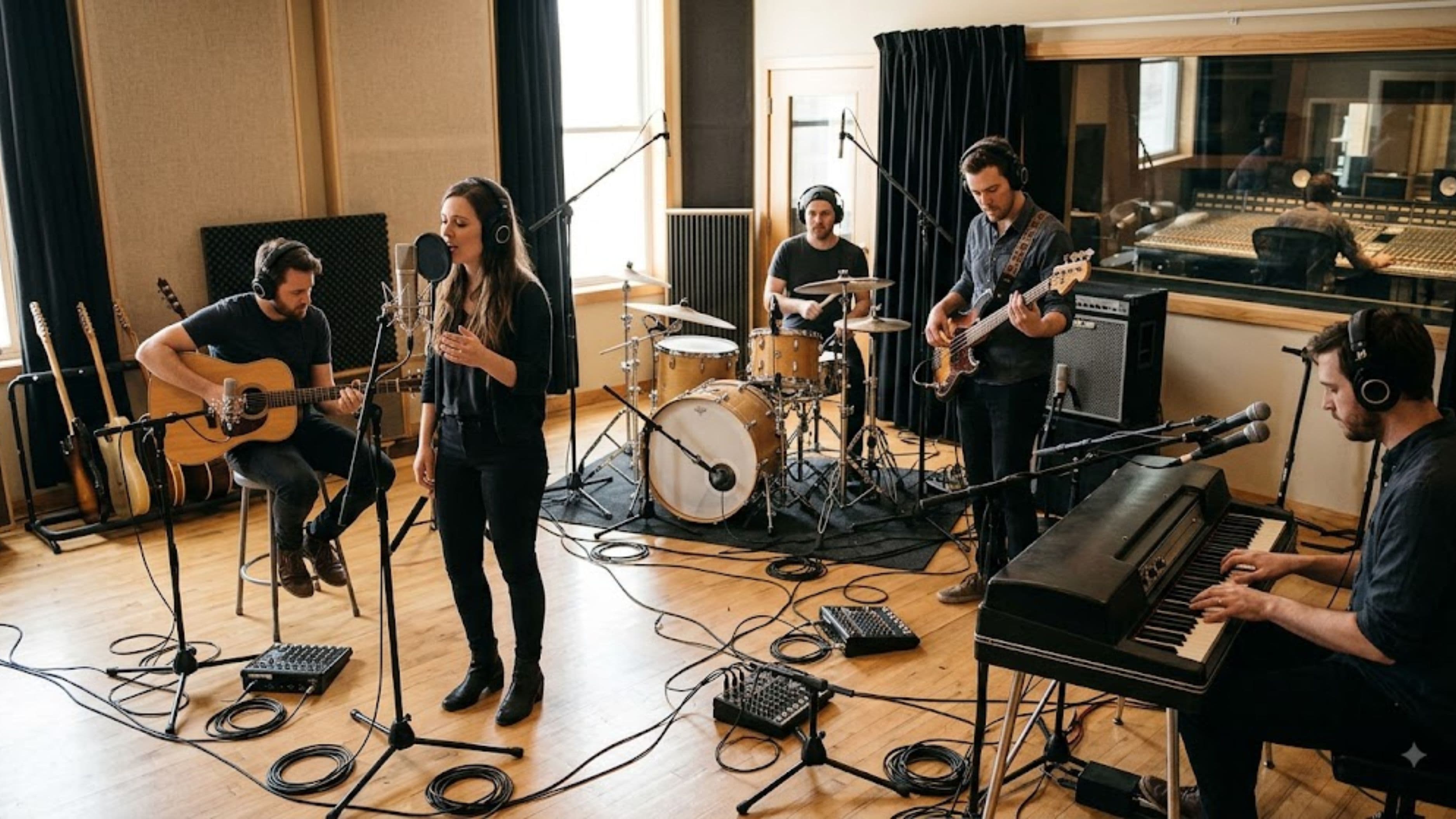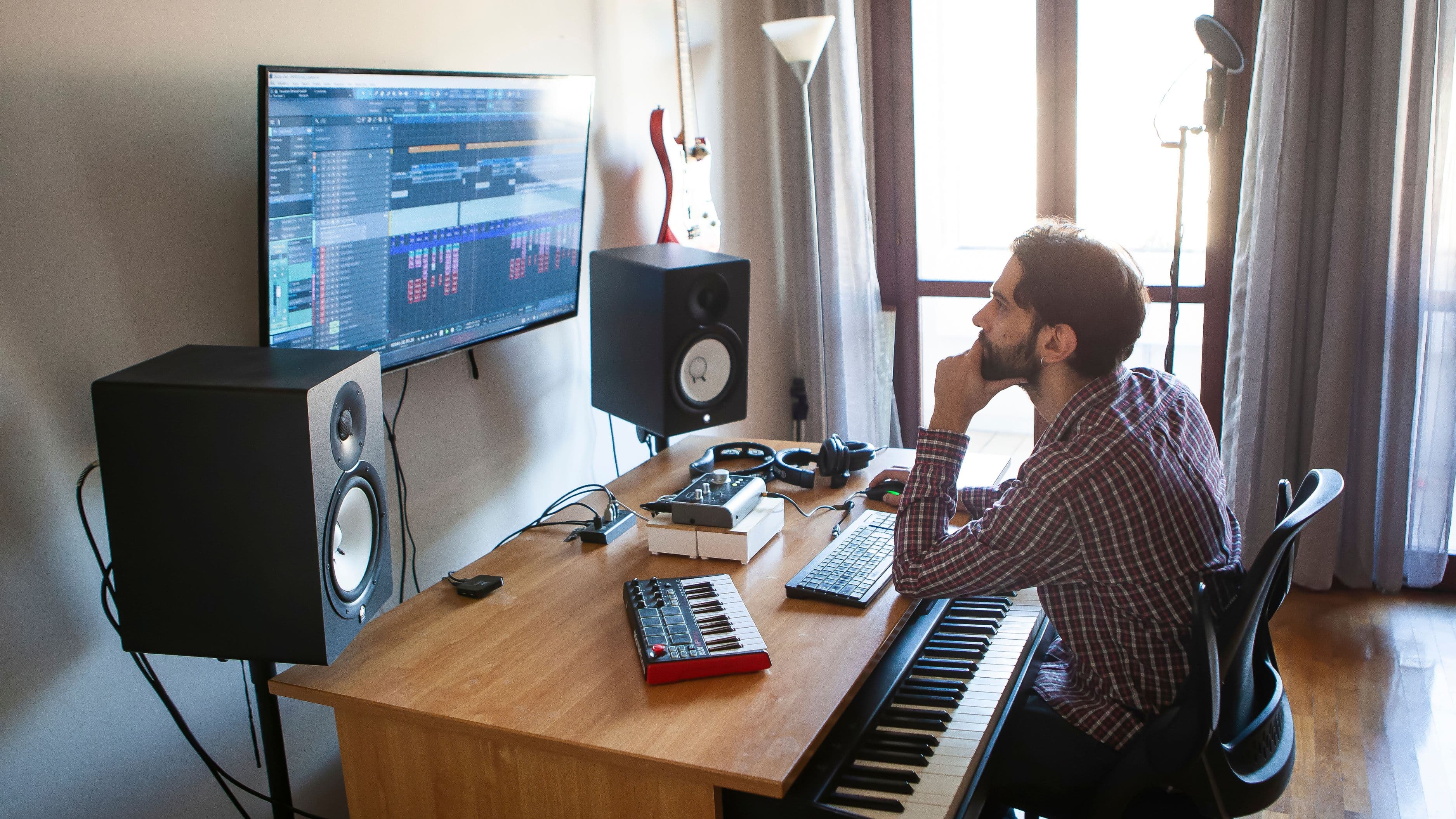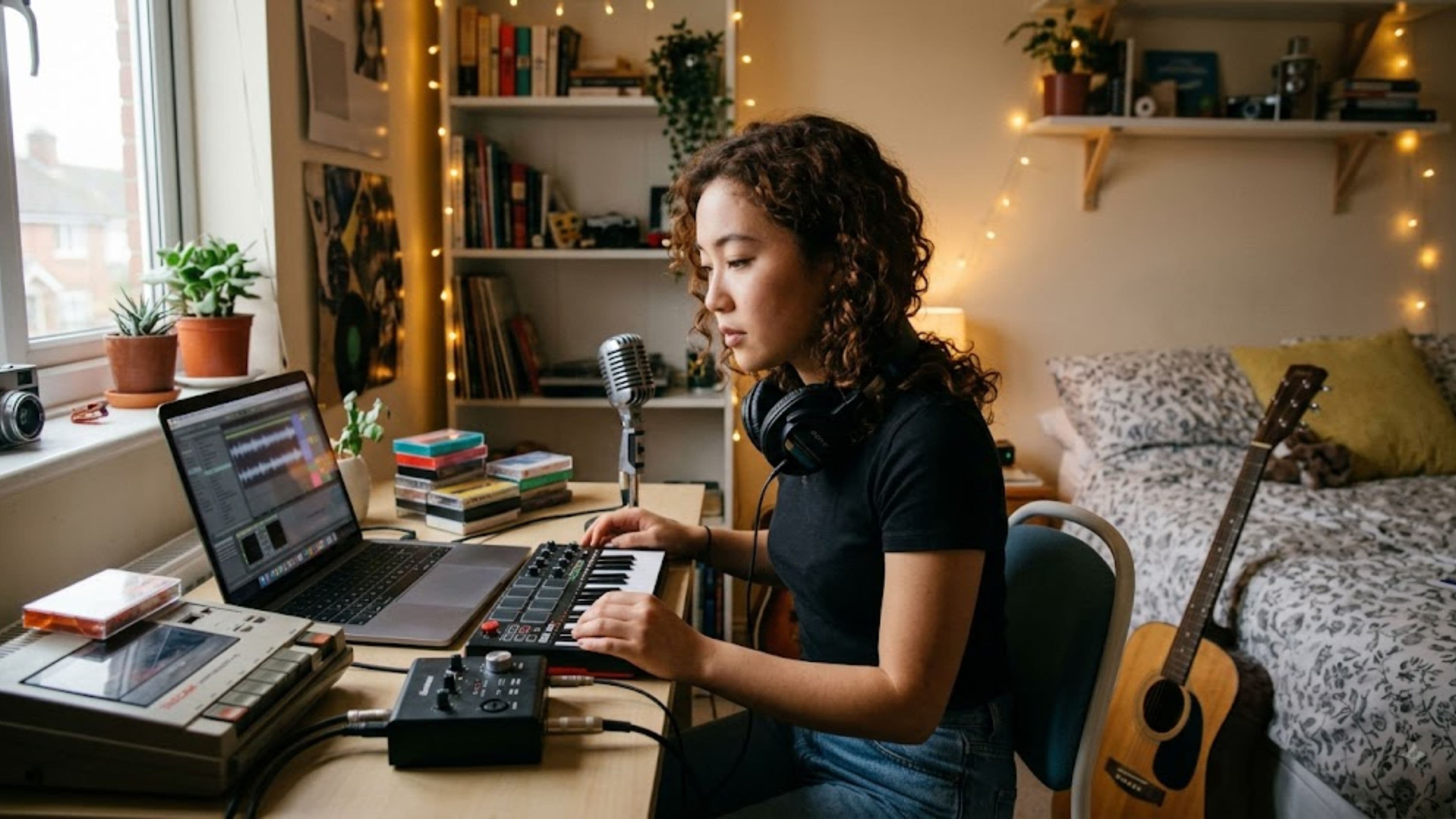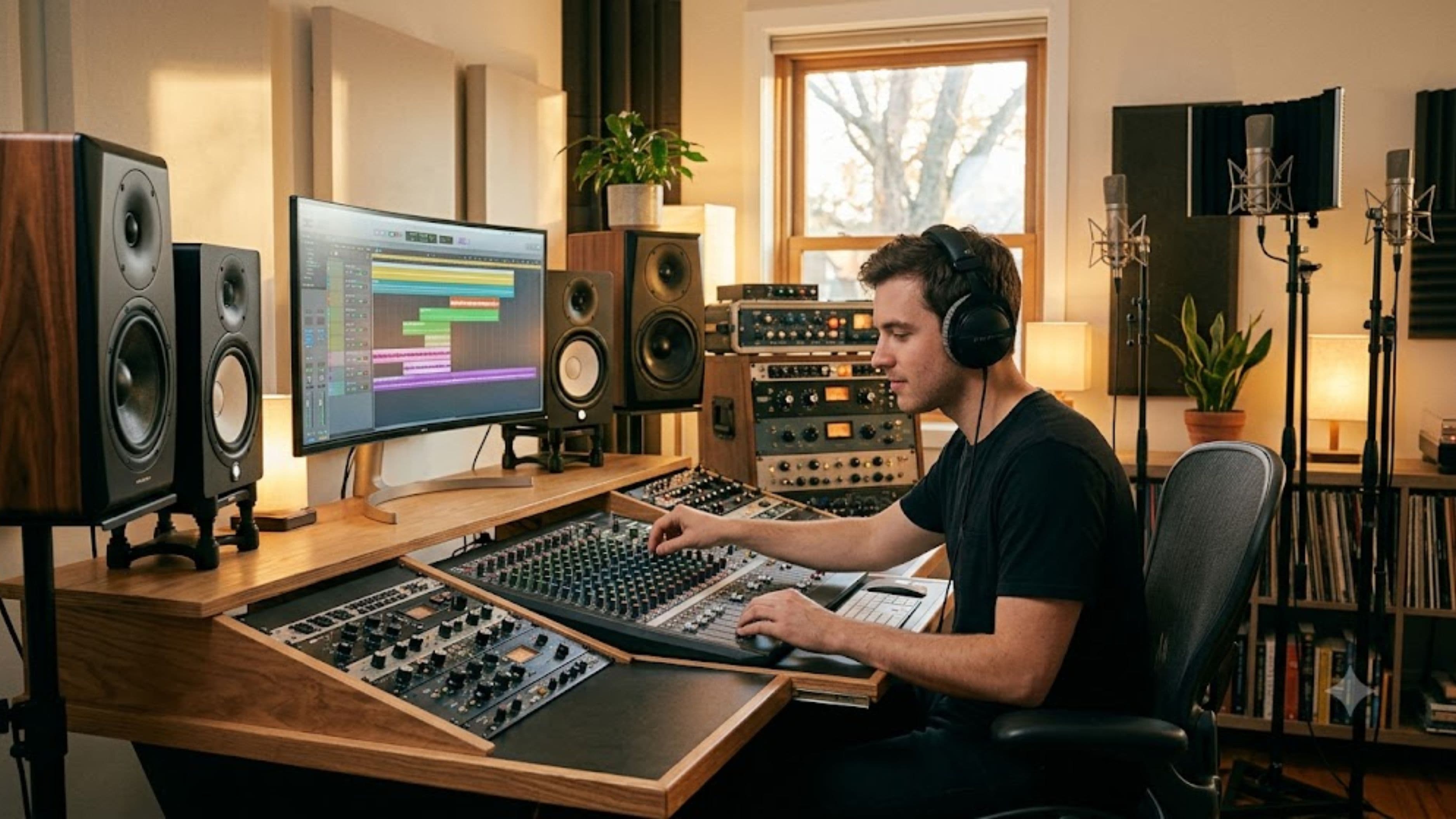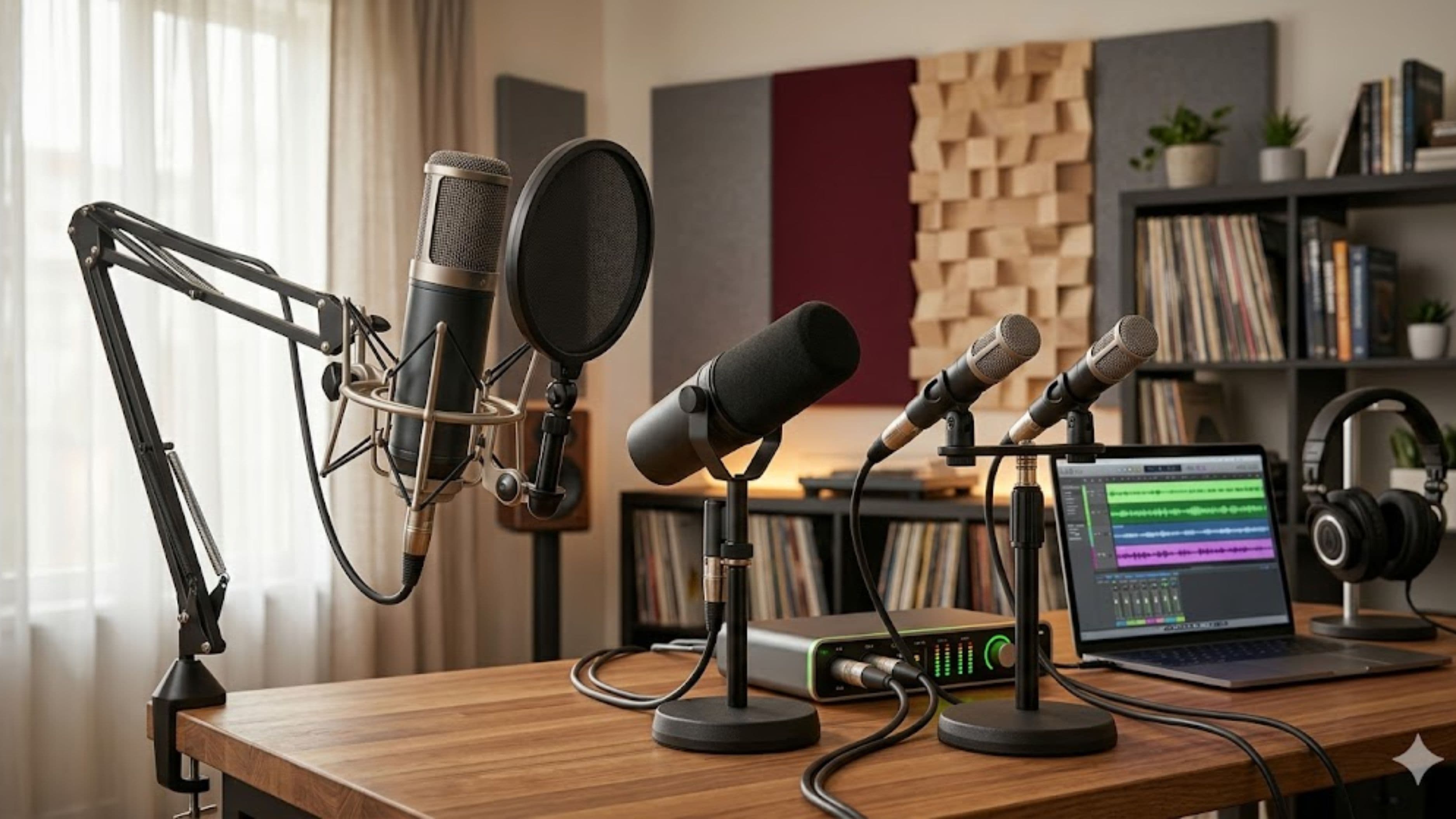
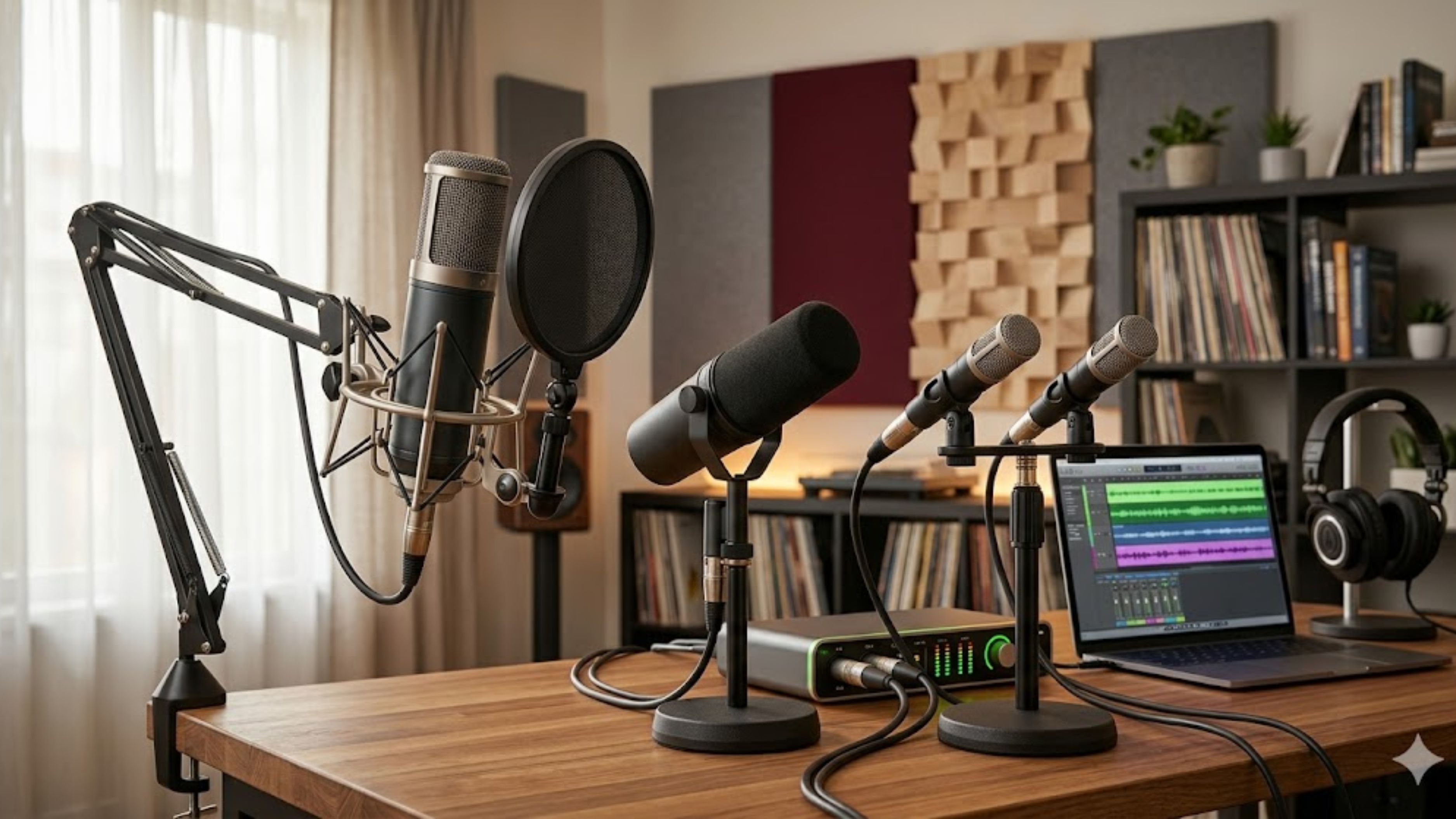
The home studio market has evolved significantly in the past few years. Entry-level microphones have gotten genuinely good, mid-range options have closed the gap with professional gear, and USB interfaces have made large-diaphragm condensers accessible to anyone with a laptop. Here's a practical breakdown of the best microphones across every tier in 2026, matched to the type of creator who actually needs them.
What to Know Before You Buy
Before getting into specific models, two fundamentals are worth understanding because they affect every purchase decision in this category.
Condenser vs. dynamic is the most important distinction. Condenser microphones are sensitive, detailed, and ideal for capturing vocals, acoustic instruments, and anything where nuance matters. They pick up a lot – which means they also pick up room noise, HVAC hum, and ambient sound. They work best in treated or quiet spaces. Dynamic microphones are less sensitive, more forgiving of rough acoustic environments, and better suited to loud sources like electric guitar cabs and drums. They're also more durable. For most vocalists and podcasters recording at home, a condenser is the right tool – but only if your space is reasonably quiet.
USB vs. XLR is the other fork in the road. USB microphones plug directly into your computer with no additional gear required. XLR microphones require an audio interface (a small external device that connects to your computer via USB or Thunderbolt). XLR is the professional standard and gives you more flexibility, better preamp quality at higher price points, and the ability to upgrade your interface without replacing your mic. USB is faster, simpler, and still produces excellent results from quality brands. For beginners, USB is a perfectly reasonable starting point.
Best Overall: Shure SM7B
The SM7B has been a studio staple for decades – it's the microphone on Michael Jackson's Thriller vocal recordings and the go-to choice for podcasters, streamers, and vocalists worldwide. In 2026 it remains the clearest recommendation for anyone who wants a professional-grade result without entering audiophile pricing territory.
It's a dynamic microphone, which makes it unusually forgiving of untreated rooms. Unlike condenser mics, the SM7B rejects off-axis noise well, which means it captures what's directly in front of it without pulling in your room's reflections or background hum. That characteristic alone makes it the right call for a lot of home studios where acoustic treatment is minimal. The frequency response is warm with a slight presence boost in the mid-range that works exceptionally well for spoken word and sung vocals alike.
The one genuine caveat is gain. The SM7B requires a lot of it – more than many entry-level interfaces can cleanly provide. If you're pairing it with a budget interface, a dedicated preamp booster like the Cloudlifter CL-1 (around $150) is a practical addition rather than an optional upgrade. With adequate gain, the SM7B sounds like a microphone that costs significantly more than it does.
Best for: Vocalists, podcasters, streamers, home studio setups with untreated rooms.
Connection: XLR
Price range: Around $400
Best Condenser for Vocals: Audio-Technica AT2020
The AT2020 has held its ground as the benchmark entry-to-mid-level condenser microphone for years, and nothing in its price range has displaced it. It's a cardioid large-diaphragm condenser that captures vocals with a clarity and detail that surprises people who haven't used a quality condenser before – especially if they're coming from a built-in laptop mic or a gaming headset.
The frequency response is flat and honest, which is a good thing for recording. It doesn't add artificial warmth or coloration – you get an accurate representation of what you're recording, which gives you more flexibility when mixing. It handles vocals, acoustic guitar, and room miking well. The build quality is solid for the price, and it's available in both XLR and USB versions (the USB version is the AT2020USB+), which makes it viable regardless of whether you have an interface yet.
The limitation to be honest about: it picks up your room. Any condenser will, and the AT2020 is no exception. If you're recording in a space with bare walls, hard floors, and no acoustic panels, you'll hear that environment in the recording. A reflection filter (a curved panel of acoustic foam that mounts behind the mic) is a cost-effective partial solution if treatment isn't possible.
Best for: Home vocalists, singer-songwriters, podcasters with a reasonably treated space.
Connection: XLR or USB
Price range: Around $100 (XLR) / $150 (USB)
Best USB Microphone: Blue Yeti X
The Blue Yeti X is the clearest recommendation in the USB-only category for creators who want quality without committing to an interface setup. It's a condenser microphone with multiple polar pattern options – cardioid, omnidirectional, bidirectional, and stereo – which makes it more versatile than most USB competitors that are locked to a single pattern.
The build is substantial and the desk stand is sturdy, which matters more than it sounds. Cheap mic stands introduce vibration into recordings and the Yeti X's integrated mount handles this reasonably well. The onboard headphone monitoring allows you to hear yourself in real time with zero latency, which is genuinely useful during recording sessions. Audio quality is excellent for the price – on par with entry-level XLR condensers when used in a good acoustic environment.
The honest limitation: USB microphones, including the Yeti X, are less upgradeable than an XLR chain. If you later invest in a quality audio interface and XLR mic, the Yeti X becomes redundant. For creators who are certain they want to build a proper studio setup eventually, starting with an XLR condenser and a budget interface is a more future-proof approach. For anyone who wants a clean, simple setup that works today without extra gear, the Yeti X is excellent.
Best for: Podcasters, streamers, content creators, vocalists who want a no-interface setup.
Connection: USB
Price range: Around $130
Best for Acoustic Instruments: Rode NT1 5th Generation
The Rode NT1 has long been one of the quietest microphones available at its price point – "self-noise" being the technical measure of electronic hiss a condenser introduces into a recording. The 5th generation version, released in 2023, added USB-C connectivity alongside the traditional XLR output, making it one of the few microphones that credibly serves both worlds.
For recording acoustic guitar, fingerpicking, classical instruments, and delicate vocals, the NT1's low self-noise (4.5 dB-A, which is exceptionally quiet) means the nuance in the performance comes through cleanly. It captures the detail in fingerpicked guitar patterns and the air in a vocal recording that cheaper microphones lose in their own electronic noise floor. The package includes a high-quality shock mount and pop filter, which together make a meaningful difference in recording quality – particularly the shock mount, which isolates the capsule from desk vibrations and footsteps.
The 5th generation's dual output – XLR and USB-C simultaneously – is a genuinely useful feature for creators who record directly to a DAW while also monitoring through an interface, or who want the flexibility to use the same microphone across different setups.
Best for: Singer-songwriters, acoustic instrumentalists, vocalists who want studio-quality capture.
Connection: XLR + USB-C (dual output)
Price range: Around $250
Best Budget Option: Samson Q2U
For creators just starting out who aren't ready to spend $100+ on a microphone, the Samson Q2U is the most honest recommendation in the under-$70 category. It's a dynamic microphone with both USB and XLR outputs, which means it works as a no-interface plug-and-play setup today and can be repurposed into an XLR chain later when you add an interface.
The Q2U is forgiving of room noise in the way all dynamic mics are, which makes it a better real-world starter mic than a cheap condenser. A $50 condenser in an untreated room often sounds worse than a $50 dynamic in the same space because the condenser captures everything the room is doing. The Q2U keeps the focus on the source and delivers clean, usable vocal recordings at a price point that removes the "is this worth the investment" hesitation.
It's not going to compete with the AT2020 or the SM7B – the frequency detail and character aren't there at this price. But for a first microphone used to record demos, podcast episodes, and early content, it punches well above what you'd expect for the money.
Best for: Beginners, first-time home studio builders, podcasters on a tight budget.
Connection: USB + XLR (dual output)
Price range: Around $60
Best Professional Step-Up: Neumann TLM 102
For creators who have outgrown mid-range options and are ready to invest in professional-grade capture, the Neumann TLM 102 is the clearest step-up recommendation. Neumann is the most respected microphone manufacturer in the professional recording world – their U 87 is the industry standard in major studios – and the TLM 102 brings Neumann capsule quality into a more accessible price range.
The TLM 102 is a large-diaphragm cardioid condenser with a frequency response that flatters vocals without being artificially hyped. It handles high SPLs well (up to 144 dB), which makes it capable of recording loud sources like brass instruments and guitar cabinets in addition to vocals. The build quality is exceptional and the microphone will last decades with reasonable care. At this price point, your interface and acoustic environment become the limiting factors, not the microphone.
The honest caveat: spending this much on a microphone only makes sense if your interface, acoustic treatment, and recording environment are already solid. A TLM 102 in a bare, reflective room running through a $50 interface will not sound significantly better than an AT2020 in the same conditions. Room treatment and a quality preamp need to come before this purchase.
Best for: Serious home studio artists, independent producers ready to invest in professional capture.
Connection: XLR
Price range: Around $700
What to Watch Out For
A few things that catch home studio builders off guard in this category.
Phantom power requirements are easy to miss. Large-diaphragm condenser microphones require 48V phantom power, which your audio interface supplies. If you're running a condenser through an older or very cheap interface, confirm it provides phantom power before buying – most do, but not all budget options include it.
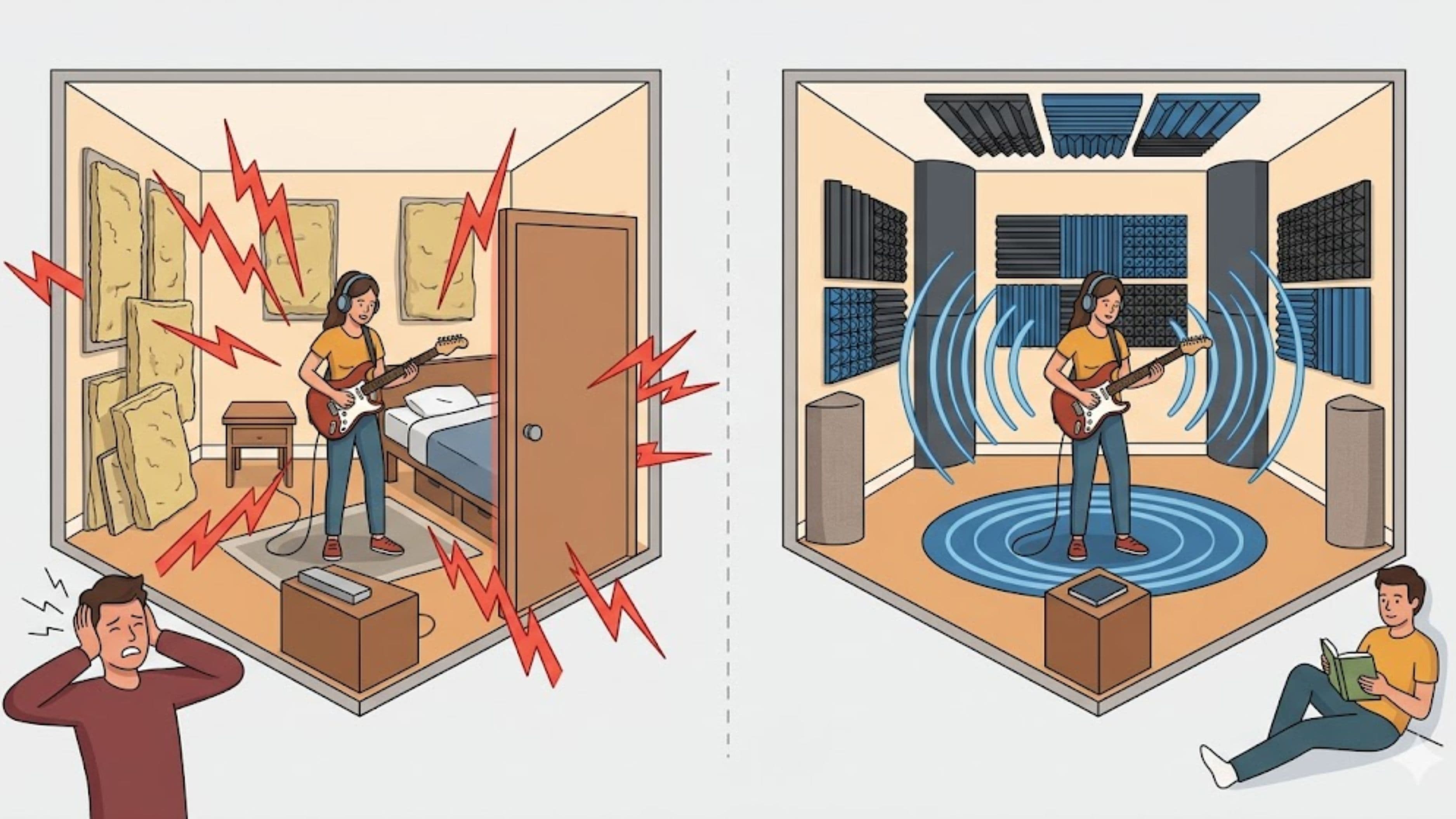
Over-investing in the microphone before treating the room is one of the most common sequencing mistakes. A $700 microphone in a reverberant, noisy space sounds worse than a $150 microphone in a properly treated space. Acoustic panels, a reflection filter, or even recording in a walk-in closet surrounded by hanging clothes will improve your recordings more than a microphone upgrade in most home studio situations.
USB microphones and audio interfaces generally can't be used together without creating driver conflicts. If you already have an audio interface, buy an XLR microphone – don't plug a USB mic in alongside your interface expecting both to work cleanly.
FAQ
Do I need an audio interface if I'm just recording vocals at home?
Not necessarily. A quality USB microphone like the Blue Yeti X or Rode NT1 5th Generation delivers excellent results without an interface. An XLR setup gives you more flexibility and upgrade paths, but USB is a legitimate option for home recording.
What's the most important upgrade after the microphone?
Acoustic treatment. The room you record in shapes the sound more than almost any gear purchase. Start with a reflection filter behind the mic, add acoustic panels to bare walls if possible, and avoid recording near HVAC vents or exterior walls.
Can I use these microphones for both music and podcasting?
Yes – most of the microphones on this list are versatile enough for vocals, acoustic instruments, and spoken word recording. The SM7B and Samson Q2U are especially well-regarded for podcasting specifically due to their dynamic capsules and background noise rejection.
What audio interface pairs well with these microphones?
The Focusrite Scarlett Solo (around $120) is the most widely recommended entry-level interface and pairs well with any XLR microphone on this list. For more inputs and better preamps, the Focusrite Scarlett 2i2 (around $180) or the Universal Audio Volt 2 (around $200) are strong mid-range options.
Is there a meaningful quality difference between USB and XLR at the same price point?
At equivalent prices, XLR microphones paired with a quality interface generally have an edge in sound quality because the preamp in the interface can be upgraded independently. USB microphones integrate the preamp into the microphone itself, which limits future flexibility. For a beginner, the gap is small and USB is perfectly usable.
📚 Sources
Shure – "SM7B Cardioid Dynamic Microphone" – shure.com https://www.shure.com/en-US/products/microphones/sm/sm7b
Rode – "NT1 5th Generation" – rode.com https://rode.com/en/microphones/studio-condenser/nt1-5th-generation
Audio-Technica – "AT2020 Cardioid Condenser Microphone" – audio-technica.com https://www.audio-technica.com/en-us/at2020
Neumann – "TLM 102 Large-Diaphragm Microphone" – neumann.com https://www.neumann.com/en-us/products/microphones/tlm-102/
Recording Magazine – "Home Studio Microphone Shootout" – recordingmag.com https://www.recordingmag.com/resources/resourceDetail/Home-Studio-Microphone-Shootout.html
Focusrite – "Scarlett Solo Studio" – focusrite.com https://focusrite.com/downloads/scarlett-solo-studio-getting-started-guide