Some of those changes have made going to live music genuinely easier. Others have introduced new frustrations that didn't exist before. The full picture is worth understanding, especially for artists and creators who need to think about how their audiences interact with ticketing as part of their live business.
How Digital Ticketing Replaced the Physical Ticket
The shift from paper tickets to digital ones was the foundational change that made everything else possible. Physical tickets had a natural scarcity that made them harder to duplicate and simpler to transfer – you handed someone the ticket and that was the transaction. Digital tickets introduced a more complicated system of barcodes, QR codes, and account-linked passes, but also opened up a new layer of data, control, and flexibility that physical tickets never had.
Mobile ticketing – where the ticket lives in your phone's wallet or inside an app – is now the default at most venues. Fans tap or scan at the door rather than printing anything. This change alone reduced one of the most persistent frustrations of live event attendance: the risk of forgetting, losing, or damaging your ticket before you got to use it. It also made last-minute ticket purchases practical in a way they weren't before, since there's no need to wait for physical delivery.
The flip side is that mobile ticketing introduced dependency on battery life, cellular signal, and app availability in ways that physical tickets didn't. A dead phone at the gate is a genuinely stressful situation that never existed when the ticket was a piece of paper in your pocket. Most major ticketing platforms have added features like offline pass storage to address this, but the underlying vulnerability is real and still catches fans off guard.
Dynamic Pricing and What It Did to Fan Trust
Dynamic pricing – where ticket prices adjust based on real-time demand rather than being fixed at a single price point – has become one of the most controversial shifts in concert ticketing, and understanding it matters for artists and fans alike.
The concept is borrowed from airlines and hotels, where pricing fluctuates based on how many seats or rooms are left. Applied to concerts, it means that the first tickets released for a popular show might cost $80, while the same seats a week later, as demand rises and inventory drops, might cost $180. Ticketmaster introduced dynamic pricing broadly across major events, and the backlash from fans discovering that prices had doubled or tripled between the time they saw the announcement and the time they clicked "buy" was significant and vocal.
The argument in favor of dynamic pricing is that it captures revenue that would otherwise go to scalpers – if the market rate for a ticket to a sold-out show is $400, the artist and venue might as well capture that money rather than a third party reseller. There's a real logic to this, and some artists have explicitly used dynamic pricing as an anti-scalping mechanism with that framing. The argument against is that it prices out less wealthy fans, punishes people who can't monitor prices obsessively, and fundamentally changes the relationship between an artist and their audience in ways that feel transactional rather than communal.
For independent artists specifically, dynamic pricing is largely irrelevant – it's a feature of major platform infrastructure that operates at scales and price points most independent artists don't work with. But understanding how fans have been shaped by it matters, because it's part of why platforms like Dice that explicitly don't use dynamic pricing or scalper-friendly resale have grown in favor with music-first audiences.
Verified Fan Programs and the Queue Experience
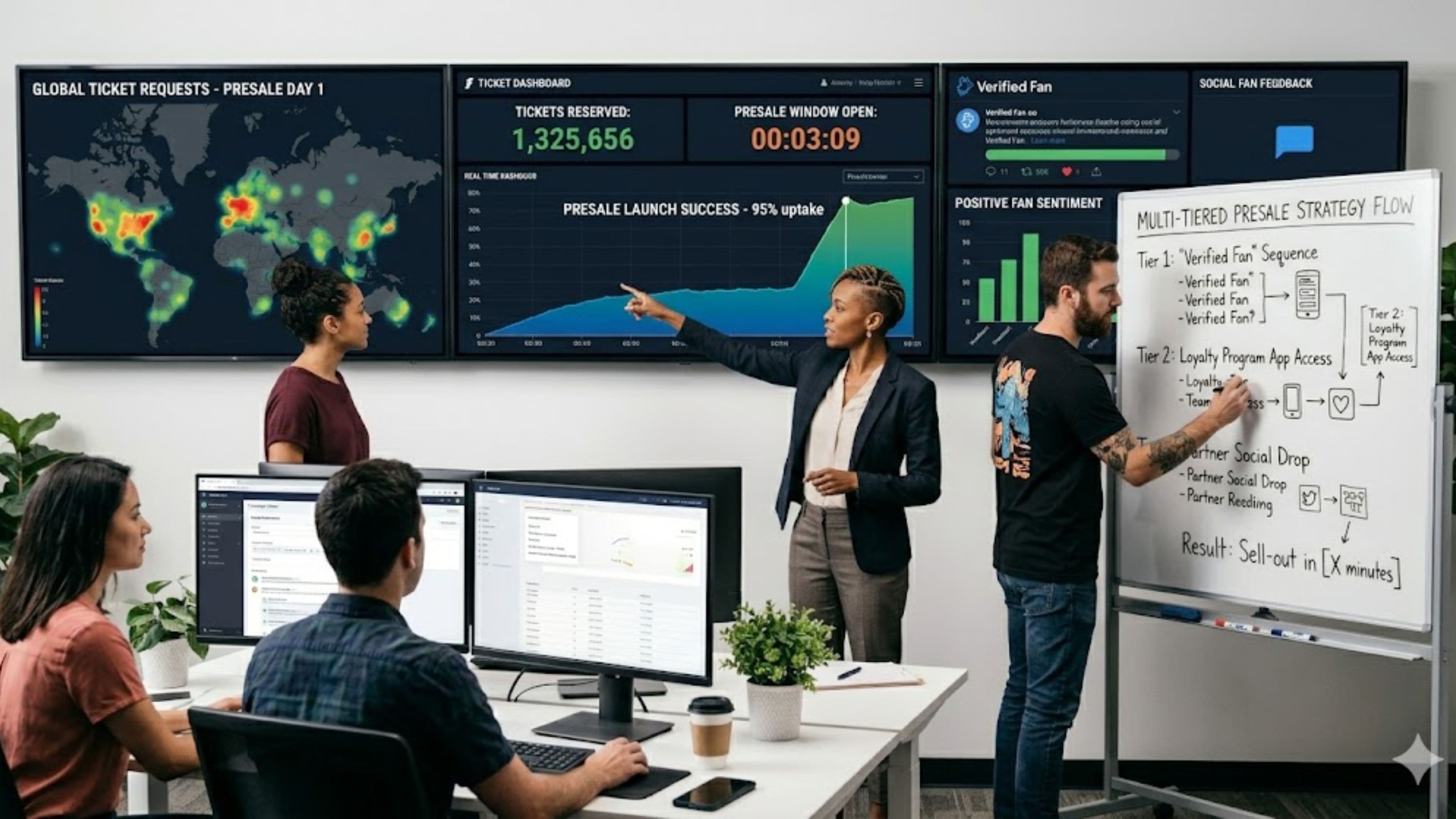
Ticketmaster's Verified Fan program and similar pre-registration systems were introduced primarily to address the scalping problem – bots purchasing large quantities of tickets in milliseconds and relisting them at multiples of face value. The idea was to verify that people registering for access to high-demand sales were actual fans rather than automated purchasing systems.
The Verified Fan experience replaced the chaos of an open onsale – where everyone hits the site simultaneously – with a queue-based system that pre-registers fans, runs them through a verification process, and assigns access windows. For genuinely popular artists, this meant registration numbers in the millions with a small fraction receiving codes and the rest waitlisted. The Taylor Swift Eras Tour sale in 2022 became the most prominent failure of this model at scale, resulting in a congressional hearing about Ticketmaster's market position and a renewed public conversation about ticketing monopoly power.
For fans, the Verified Fan experience introduced a new kind of anxiety – not the refresh-and-hope anxiety of the old onsale, but the waiting-to-find-out anxiety of whether you made the cut, followed by the time-pressured stress of a short purchase window if you did. Whether this is genuinely better than what came before is a matter of real debate, and the answer depends heavily on how many people are trying for the same show.
The Rise of Fan-First Ticketing Platforms
The frustrations with major platform ticketing have accelerated the growth of alternatives that approach the fan relationship differently. Dice, Seated, FIXR, and See Tickets have each carved out specific positions in a market that was previously dominated almost entirely by Ticketmaster and its subsidiaries.
Dice is probably the most discussed among music-forward audiences. Its model is built around several specific choices that distinguish it from the major platforms: no printed tickets (mobile only, linked to your account), a waiting list system that fills cancelled tickets from fans who want them rather than sending them back into a secondary market, and no dynamic pricing. The anti-scalping architecture is real – because tickets are linked to specific accounts and require identity verification at entry, listing them on StubHub or Viagogo is much harder than with a traditional barcode ticket.
For artists and fans who care about keeping tickets in the hands of real people rather than resellers, these platform choices matter. The tradeoff is reach – Dice doesn't have the market penetration of Ticketmaster, and for artists playing larger rooms or multi-city tours, it may not cover all the markets they need. But for independent artists in the 200–1,500 cap range, particularly in the UK and US independent music scenes where Dice has strongest adoption, it has become a genuinely meaningful alternative.
Resale Markets and the Ongoing Scalper Problem
Technology has made scalping both easier and harder simultaneously. It's easier because automated bots can execute mass ticket purchases in milliseconds before any human buyer gets through, and digital delivery means there's nothing physical to forge – just a transferable barcode. It's harder because platforms have invested in detection and prevention tools, and some ticketing systems have built non-transferability directly into the ticket architecture.
The secondary market – StubHub, Viagogo, SeatGeek resale, Vivid Seats – has become a multi-billion dollar ecosystem built almost entirely on exploiting the gap between face value and market value. Fans routinely pay two to five times face value for major events, and the money flows entirely to resellers rather than artists or venues. This is the context in which dynamic pricing was introduced as a "solution," though critics argue it primarily replaced one form of price gouging with another.
Some artists have experimented with paperless ticketing tied to the original purchaser's credit card, which requires the cardholder to be present at entry. This essentially eliminates resale by making the ticket non-separable from the buyer. It also creates genuine problems for fans who need to transfer tickets for legitimate reasons – illness, schedule changes, wanting to gift tickets to someone else. The friction is real on both sides.
The most effective anti-scalping approaches in practice have been the ones that retain some fan flexibility while raising the cost and complexity of bulk resale: account-linked mobile tickets with identity verification at entry, waiting list systems that recapture cancelled tickets before they hit the secondary market, and face-value resale portals built directly into the artist's own ticketing infrastructure.
Data and Personalization as a Fan Experience Tool
One genuinely positive transformation in concert ticketing technology is what it has made possible for artists and venues in terms of understanding and personalizing the fan experience. Every digital ticket transaction generates data – who bought, when they bought, from where, at what price point, for which shows. That data, used well, enables a level of audience understanding and relationship building that was completely unavailable in the physical ticket era.
Artists who manage their own ticketing or work with platforms that share first-party data can use purchase history to send genuinely relevant communications – notifying existing ticket holders about support acts, offering early access to loyal fans before general onsale, or understanding which markets have the most committed buyers for routing and investment decisions. This is meaningfully different from the generic mass email blast that was the previous standard.
Platforms that support fan accounts also enable discovery in ways that benefit both sides. Dice's app, for example, shows users shows by artists similar to ones they've attended, using purchase history as a recommendation signal. This creates a flywheel that benefits independent artists – being in a platform with active discovery surfaces them to an audience that has already demonstrated they show up for live music, not just that they listen online.
Venue Technology at the Door and Beyond
The ticket technology improvements don't stop at the purchase. Entry scanning has become significantly faster with modern QR code readers and RFID wristbands, reducing the queue times that historically cost venues and fans significant amounts of time and goodwill at the beginning of a show. For large festivals and stadium shows, RFID wristband systems have become standard and enable cashless payments inside the venue, faster access, and a degree of crowd management data that helps operators understand movement patterns across the site.
In-venue experience technology has also evolved around ticketing infrastructure. Pre-ordered drinks, merchandise pickups tied to your ticket account, seat upgrade offers pushed to your phone during a show, and digital set lists accessible through the ticketing app have all become part of the experience at venues that have invested in the infrastructure. These features are more common at larger corporate venues than at independent clubs, but the direction of travel is clear.
The scan-in moment itself has changed meaningfully. A decade ago, a tear-off paper ticket was the entirety of the technology involved. Today, the same scan can verify identity, confirm the ticket is account-linked and not counterfeit, log the attendance for fan recognition programs, and trigger a push notification with venue information – all in under a second. The underlying complexity is invisible to the fan, but it represents a fundamental shift in what the ticket-as-object actually is.
What to Watch
The regulatory environment around ticketing is shifting. Following the high-profile failures of major onsales in 2022 and 2023, legislative proposals targeting drip pricing (where fees are hidden until checkout), bot activity, and Ticketmaster's market monopoly have moved further than similar efforts did in previous years. The FTC and Department of Justice have both been active in examining the ticketing market, and several states have introduced or passed fan protection legislation around fee transparency and ticket resale.
For artists and fans, the practical outcome of these shifts is likely to be more fee transparency at checkout, expanded availability of face-value resale portals as required by regulation in some markets, and potentially structural changes to how dominant platforms operate in the major venue market. How quickly and how completely those changes materialize is uncertain, but the direction of regulatory attention is clearer than it has been in a long time.
FAQ
Why do ticketing fees add so much to the face value price? Ticketing platform fees – service charges, facility fees, order processing fees – typically add 20–30% on top of face value, sometimes more for premium events. These fees are split between the ticketing platform, the venue, and sometimes the promoter depending on the deal structure. Regulatory efforts to require all-in pricing displayed upfront rather than adding fees at checkout have gained momentum in the US and UK.
What's the difference between primary and secondary ticketing markets? The primary market is the official onsale through the artist, venue, or authorized ticketing platform – tickets at face value. The secondary market is resale, where tickets are listed by individuals or brokers at market rates, which are often significantly above face value. Platforms like StubHub and Viagogo operate in the secondary market. Some primary platforms, including Ticketmaster, have integrated resale directly into their interface, which blurs the line between the two.
Do artists make money from secondary market resales? Generally no, unless specific arrangements are in place. Most secondary market profits go to the reseller. Some platforms and artists have introduced royalty structures on resales – where the original seller gets a percentage of the resale price – but this is not yet standard practice.
Is RFID wristband entry more secure than QR code scanning? Both are more secure than paper tickets, but RFID has some additional advantages for large-scale events: faster throughput at high-volume entry points, integration with cashless payment systems, and better crowd movement data. QR codes on mobile are more practical for general use because they don't require wristband distribution. Most major festivals use RFID; most clubs and theaters use mobile QR codes.
What can independent artists do to protect their fans from scalpers? Using platforms like Dice that have non-transferable, account-linked tickets is the most effective option available to independent artists without major platform infrastructure. Keeping ticket prices at a point that reduces the scalping incentive, using waiting list systems that recapture cancelled tickets before they hit the secondary market, and selling a portion of tickets through your own direct channels where you control the terms are all practical approaches.
📚 Sources
Pollstar – Concert Ticketing Market Report 2023: https://www.pollstar.com/article/the-concert-industry-in-numbers-2023-147761
FTC – Junk Fees and Ticketing Transparency Initiative: https://www.ftc.gov/news-events/topics/competition/junk-fees
Dice – How Dice Fights Touting and Scalping: https://dice.fm/blog/how-dice-fights-touting
Hypebot – The Independent Ticketing Landscape in 2024: https://www.hypebot.com/hypebot/2024/01/independent-ticketing-platforms-2024.html
Music Business Worldwide – Dynamic Pricing and the Fan Backlash: https://www.musicbusinessworldwide.com/dynamic-pricing-the-full-story/