

Corporate travel management sounds like Fortune 500 paperwork until your headliner misses a connection in Dallas and the whole tour margin evaporates. Touring acts bleed money on fragmented bookings—public fares bought night-of, bags paid per leg, and crew scattered across hotels with no negotiated block rates. A managed travel program applies the same discipline labels use for arena routing: negotiated fares, duty-of-care tracking, and routing logic that treats flights and hotels as one economic system.
This article compares fragmented vs managed touring travel, quantifies savings paths, and outlines duty-of-care basics touring managers cannot outsource to "whoever grabbed the cheapest Kayak tab."

Touring travel is a cost center until routing and fares are managed as one system.
Fragmented Travel on Tour
Fragmented travel means each tour member or department books independently—drummer on one airline, backline tech on another, management on a third. Fares spike when inventory tightens. Nobody sees the full picture until the settlement sheet lists airfare triple the budget line.
Small clubs and mid-tier theaters rarely care how you arrived, but your guarantee does not expand when JetBlue prices surge two days before load-in.
What Managed Travel Includes
Corporate travel management for touring combines a travel management company (TMC) or dedicated touring travel desk with policy, negotiated rates, centralized booking, real-time itinerary visibility, and incident response. It is not merely "we have a travel agent." It is fare rules, approval workflows, and reporting tied to show dates.
According to business travel practice, consolidated spend unlocks leverage fragmented buyers never access individually.
Cost Comparison: Fragmented vs Managed
| Cost Category | Fragmented (6-week club tour) | Managed Program | Typical Savings |
|---|---|---|---|
| Airfare (8-person party) | $18,400 last-minute retail | $14,200 negotiated + planned | ~23% |
| Baggage / seat fees | $2,100 unbundled | $1,200 waived or bundled | ~43% |
| Hotels (crew blocks) | $11,600 individual bookings | $9,400 block rates | ~19% |
| Ground transport | $3,800 ad hoc rideshares | $2,900 contracted shuttle | ~24% |
| Change / cancel fees | $1,650 reactive fixes | $600 policy-managed | ~64% |
| Staff time (booking labor) | ~45 hours @ $35/hr | ~12 hours oversight | Labor redeployed |
| Estimated total | $37,550 + labor | $28,300 + labor | ~$9,250 cash |
Illustrative numbers assume contiguous U.S. routing with moderate advance booking. Savings scale with party size and routing discipline.
Tour Routing Savings Diagram
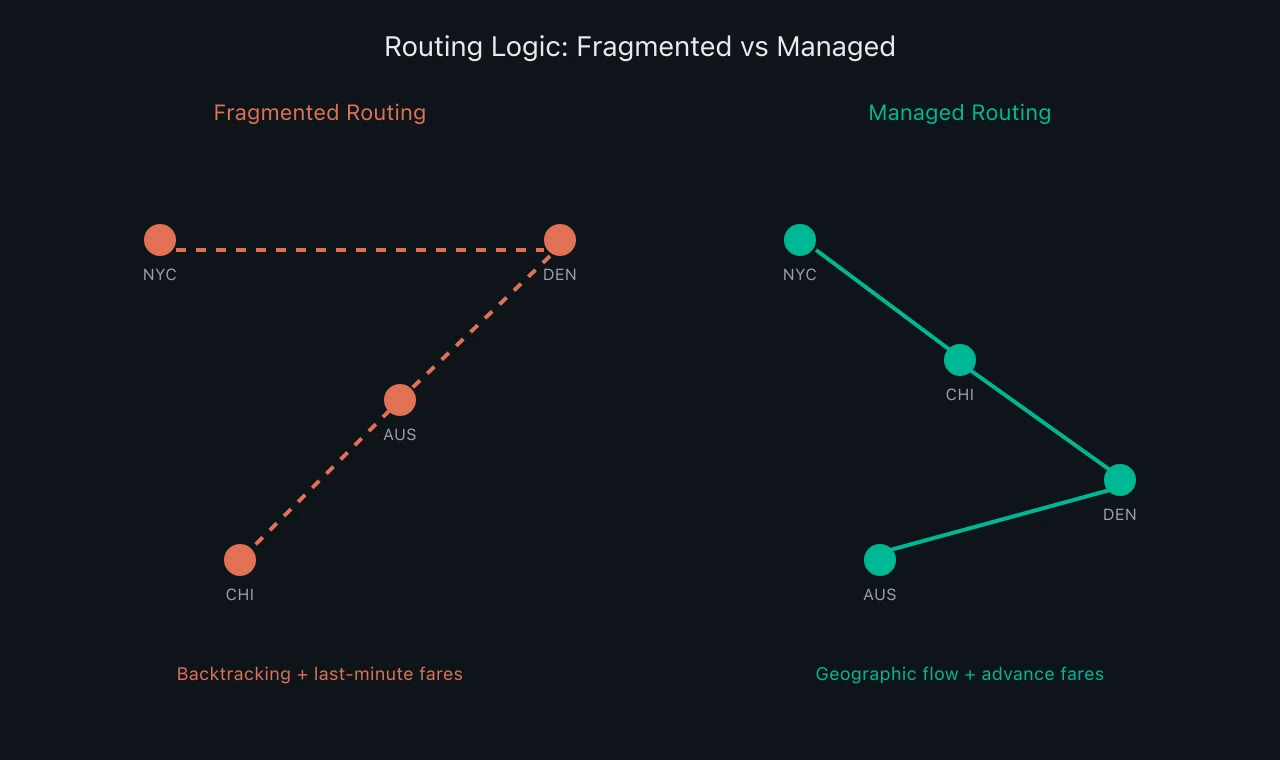
Corporate travel management tour routing savings
Routing and fare management interact. Optimized geography without advance purchasing still bleeds cash; cheap fares on zigzag routes waste ground days.
When Touring Needs Corporate Travel
Acts crossing time zones weekly, carrying backline as checked baggage, or moving parties larger than four benefit immediately. Fly-date weekends for festival season amplify last-minute retail pain.
Emerging acts on van tours may defer managed air programs—but hotel blocks and duty-of-care still apply once overnight drives exceed safety thresholds.
Negotiated Fare Programs
TMCs access corporate fares, bulk baggage waivers, and flexible change policies. Touring accounts stack show schedules to book identical itineraries for crew, reducing scatter when flights cancel.
Negotiate attrition-friendly hotel blocks near venues—not downtown tourist zones 45 minutes from load-in.
Duty-of-Care Basics
Duty-of-care means knowing where touring personnel are and being able to assist during disruptions—weather, illness, security incidents. Labels and insurers increasingly expect documented programs.
Location Tracking
Central itineraries with live flight status—not screenshots in a group chat. TMC dashboards flag delays before artists sit on tarmacs tweeting frustration.
Emergency Contacts
24/7 reachability for travel desk and tour manager. Crew should carry wallet cards with escalation numbers, not just venue load-in times.
Insurance Coordination
Travel insurance, medical evacuation, and gear insurance should align with routing. International legs need visa and work-permit tracking tied to itineraries.
Instrument and Gear Logistics
Managed programs pre-clear instrument policies with carriers—double bass, amp flight cases, fragile synth rigs. Fragmented booking yields gate agents inventing rules night-of.
According to concert tour logistics norms, gear failures from travel chaos cost show fees beyond airfare deltas.
Tour Manager and TMC Handoff
Tour managers own show-level decisions; TMCs own fare rules and inventory. Weekly sync calls align hold dates, routing changes, and budget caps. Ad hoc texts bypassing the TMC reintroduce fragmentation through the back door.
Policy and Approval Tiers
Set tiers: economy default, premium economy for principals on legs over six hours, business class requires management approval with medical or schedule justification. Policy prevents resentment and runaway spend.
Reporting and Tour Settlement
Export CSV travel spend by city and show date for settlement. Managed programs attribute costs to tour legs—critical when multiple acts share a festival run or co-headline splits expenses.
International and Visa Complexity
Cross-border tours need work visas, carnets for gear, and tax documentation. TMCs with entertainment desks coordinate with immigration counsel—corporate travel management extends beyond Expedia tabs into compliance.
Sustainability and Routing Tradeoffs
Geographic routing reduces carbon and cost simultaneously. Fans notice when indie acts zigzag continents for one-off offers; managed routing weighs fee vs fan momentum vs travel spend.
Vendor Selection for Touring
Interview TMCs with entertainment portfolios—not generic road warriors only. Ask: instrument policies, after-hours rebooking stats, hotel block attrition experience, and integration with tour management software.
Building Internal Travel Playbook
Document: booking lead times (14-day preferred, 7-day minimum), approved vendors, baggage rules per role, hotel star caps by city tier, and incident escalation tree. Playbooks survive personnel turnover between tours.
Case Study: Club Tour Savings
An eight-person indie rock tour switched from fragmented self-booking to managed program mid-run. Same routing, advance purchase discipline, and hotel blocks saved $8,700 over remaining four weeks—covering backline repair fund shortfall.
Case Study: Festival Season
A DJ act playing six fly-dates in ten days used TMC to bundle open-jaw routing through one hub. Avoided three overnight misconnects that fragmented booking would have created. Savings: $4,200 fares plus two avoided show delays worth $15,000 guarantees.
Central itinerary visibility let management prove duty-of-care to insurer after a weather cancellation stranded half the party overnight.
Hidden Costs of DIY Booking
DIY ignores opportunity cost—tour manager hours spent refreshing fares instead of advancing shows. It ignores duty-of-care gaps insurers flag after incidents. It ignores lost bulk negotiations that compound over multi-year careers.
Integrating Travel with Tour Budgeting
Build travel as percent of guarantee model: club tours 15–25%, theater 10–18%, festival fly-dates variable. Managed programs let you forecast inside tighter bands because change fees and baggage are predictable.
Share travel forecasts with business manager monthly—not only at settlement—so cash reserves match upcoming fare blocks and hotel deposits.
Crew Morale and Travel Quality
Cheap travel burns crew. Managed does not mean luxury—it means sane layovers, consistent hotels, and fewer 5 a.m. checkouts because routing was irrational. Retention saves rehire training costs invisible on spreadsheets.
Weather and Disruption Playbooks
Storms cancel flights; buses hydroplane; gear trucks get delayed at state lines. Managed travel programs include disruption playbooks: alternate routing, hotel extensions, and mass rebooking authority. Fragmented booking leaves tour manager refreshing airline apps while load-in clock runs.
Pre-negotiated waivers for weather events reduce change fees that otherwise appear as tour manager "heroics" with hidden costs.
Per Diem and Meal Policy
Travel management pairs with per diem policy—daily meal allowances by city tier. Corporate travel management systems track per diems alongside airfare so settlement captures full cost of moving humans, not just tickets.
Consistent per diems reduce crew friction over "who expensed what" and speed accounting at tour end.
Green Room to Gate Logistics
After-show departures need buffers. Managed programs schedule flights no earlier than safe load-out plus transit—avoiding 6 a.m. departures after midnight encores unless unavoidable. Routing savings mean little if missed flights cascade.
Tax Documentation and Deductions
Touring travel is heavily deductible business expense when documented. Managed programs export tax-ready reports—dates, amounts, business purpose—reducing year-end accountant chaos. Fragmented personal card bookings mix personal and tour expenses, inviting audit friction.
Scaling From Van to Fly-Dates
Acts graduating from van tours to fly-dates should onboard travel management before first festival season, not after a financial postmortem. Habits formed in fragmented booking persist—breaking them mid-career is harder than starting managed early at modest scale.
Phase approach works: hotel blocks first, then airfare policy, then full TMC when party size crosses six air travelers regularly.
Relationship With Booking Agents
Booking agents optimize show routing for market penetration; travel desks optimize routing for cost and duty-of-care. Align both—agents should not confirm geographically absurd dates that travel cannot service economically.
Weekly agent-TMC coordination prevents announcing dates before fare sanity checks.
Accessibility and Inclusion
Duty-of-care includes accessibility needs—mobility accommodations, medical equipment on flights, accessible hotel rooms near venues. Corporate travel management desks track requirements per traveler rather than assuming uniform crew capabilities.
Post-Tour Travel Audit
After every leg, audit actual vs budgeted travel spend. Managed programs make audits fast—export and compare. Lessons feed next routing: which cities need earlier hotel blocks, which carriers cancel most, which legs should shift to bus.
Continuous improvement separates touring acts that repeat mistakes from those that compound margin tour over tour.
Bus and Air Hybrid Routing
Many tours mix bus legs with fly-dates. Corporate travel management should cover both—negotiated motorcoach vendors and air contracts under one policy. Hybrid routing without unified oversight duplicates booking labor and misses geographic optimization.
VIP and Guest Travel
Label guests, contest winners, and artist family sometimes travel on tour budget. Managed programs define approval tiers for non-crew travel so ad hoc guest bookings do not bypass fare rules or duty-of-care tracking.
Currency and International Expense
International tours incur multi-currency expenses. TMCs with global billing consolidate FX exposure; fragmented booking spreads FX losses across personal cards. Centralized reporting simplifies VAT reclamation and per-country expense documentation.
Tour Insurance and Travel Bundling
Some entertainment insurers bundle travel assistance with tour liability policies. Align insurer assistance hotlines with TMC disruption desks—crew should not guess which number to call when flights cancel hours before showtime.
Budget Owner and Approval Matrix
Define who approves travel exceptions: tour manager up to $200 fare delta, business manager above, artist principal for charter. Clear matrix prevents both overspend and paralysis when last-minute routing changes are necessary.
Long-Term TMC Partnerships
Multi-year TMC relationships deepen negotiated fare access as cumulative spend grows. Loyalty matters when evaluating switching costs—but loyalty without annual effective-rate review is complacency. Rebid every two to three years even if you stay.
Document annual savings achieved versus retail baseline. That report justifies management fees and informs whether rebid or renewal is smarter.
Off-Tour Travel Policy
Artists and crew travel off-tour for promo, writing sessions, and label meetings. Extend corporate travel management policy beyond show dates so promo travel captures same fares and duty-of-care—not a separate fragmented lane.
Carbon Reporting for Tours
Some festivals and sponsors request travel carbon disclosures. Managed travel data supports reporting—flight legs, distances, party size—without reconstructing trips from scattered receipts. Sustainability reporting is becoming a booking requirement, not a nice-to-have.
Routing optimization that cuts backtracking saves money and emissions simultaneously—useful story for sponsors evaluating your tour plan.
Onboarding New Crew Members
Mid-tour crew swaps need instant travel policy onboarding: booking portal access, baggage rules, emergency contacts, per diem rates. Managed programs issue traveler profiles in hours; fragmented programs leave new hires buying retail fares on personal cards until someone notices.
Include travel onboarding in crew contracts—signature acknowledges policy read, not just wage scale and per diem numbers.
FAQ: Corporate Travel Management for Touring
What is corporate travel management for touring acts?
Centralized booking, negotiated fares, policy, and duty-of-care through a travel desk or TMC—applied to tour routing instead of ad hoc individual purchases.
How big must an act be to benefit?
Any act flying parties of four+ regularly or doing multi-city fly-dates benefits. Van tours may start with hotel blocks only.
Are 20%+ savings realistic?
Yes on airfare and change fees when moving from last-minute fragmented booking to planned managed programs. Results vary by discipline.
Is duty-of-care legally required?
Varies by jurisdiction and contracts, but insurers and labels increasingly expect documented programs for touring personnel.
How are instruments handled?
Entertainment-savvy TMCs pre-arrange carrier approvals and cabin/checked rules. Document cases and serial numbers before departure.
Can we switch mid-tour?
Yes—onboarding a TMC mid-run still improves remaining legs. Earlier is cheaper.
Corporate Travel Management Summary
Corporate travel management turns touring travel from reactive spending into a negotiated, trackable program. Compare fragmented vs managed costs honestly, optimize routing geographically, enforce duty-of-care, and partner with entertainment-experienced travel desks. The guarantee you fight for deserves margin protected before anyone boards.
Start with hotel blocks and routing review if full TMC onboarding feels heavy. Incremental managed discipline beats perfect programs that never launch.
Every dollar saved on fragmented fares is a dollar available for crew, production, or the next routing optimization pass.
Corporate travel management is tour infrastructure—book it with the same seriousness you book backline and insurance.
Ask your booking agent and business manager to review routing and travel policy together before the next leg is announced.


