What's Actually Happening
Highly productive producers across genres tend to treat creative output less like an unpredictable event that strikes when inspiration hits, and more like a practice built on consistent, repeatable systems. This isn't about being less creative or more mechanical in approach, it's about removing as much friction as possible between having an idea and actually finishing something with it, since unfinished ideas rarely contribute to a growing body of released work no matter how good they might have been.
Key Patterns Worth Understanding
Dedicated, Protected Time Blocks
A recurring pattern among prolific producers is treating studio time as a fixed, non-negotiable appointment rather than something that happens whenever motivation shows up. This might mean blocking off the same hours every day or several set days a week specifically for production work, regardless of whether inspiration feels present in that moment. The value here isn't that every session in a protected time block produces something great, it's that showing up consistently, even on uninspired days, creates far more raw material to work with than waiting for motivation to strike unpredictably.
Separating Idea Generation From Finishing
Many productive producers deliberately separate the loose, exploratory phase of generating ideas from the more disciplined phase of actually finishing a track. This often looks like keeping a running folder of unfinished loops, sketches, and half-formed ideas generated during looser creative sessions, then dedicating separate, more structured sessions specifically to selecting from that pool and pushing individual ideas toward completion. This separation matters because generating ideas and finishing tracks require genuinely different mental modes, and trying to do both simultaneously in every session often leads to a lot of half-finished work and very little that actually gets released.
Setting Volume-Based Goals Rather Than Perfection-Based Ones
A pattern that shows up consistently among producers with large, active catalogs is prioritizing a target output volume, like finishing a certain number of tracks per month, over waiting until a single track feels perfect before moving on. This approach accepts that not every finished track will be a standout, but a larger body of consistently finished work tends to produce more genuine hits over time than an approach focused on perfecting a small number of tracks that may never actually reach a finished, released state.
Building Constraints Into the Process
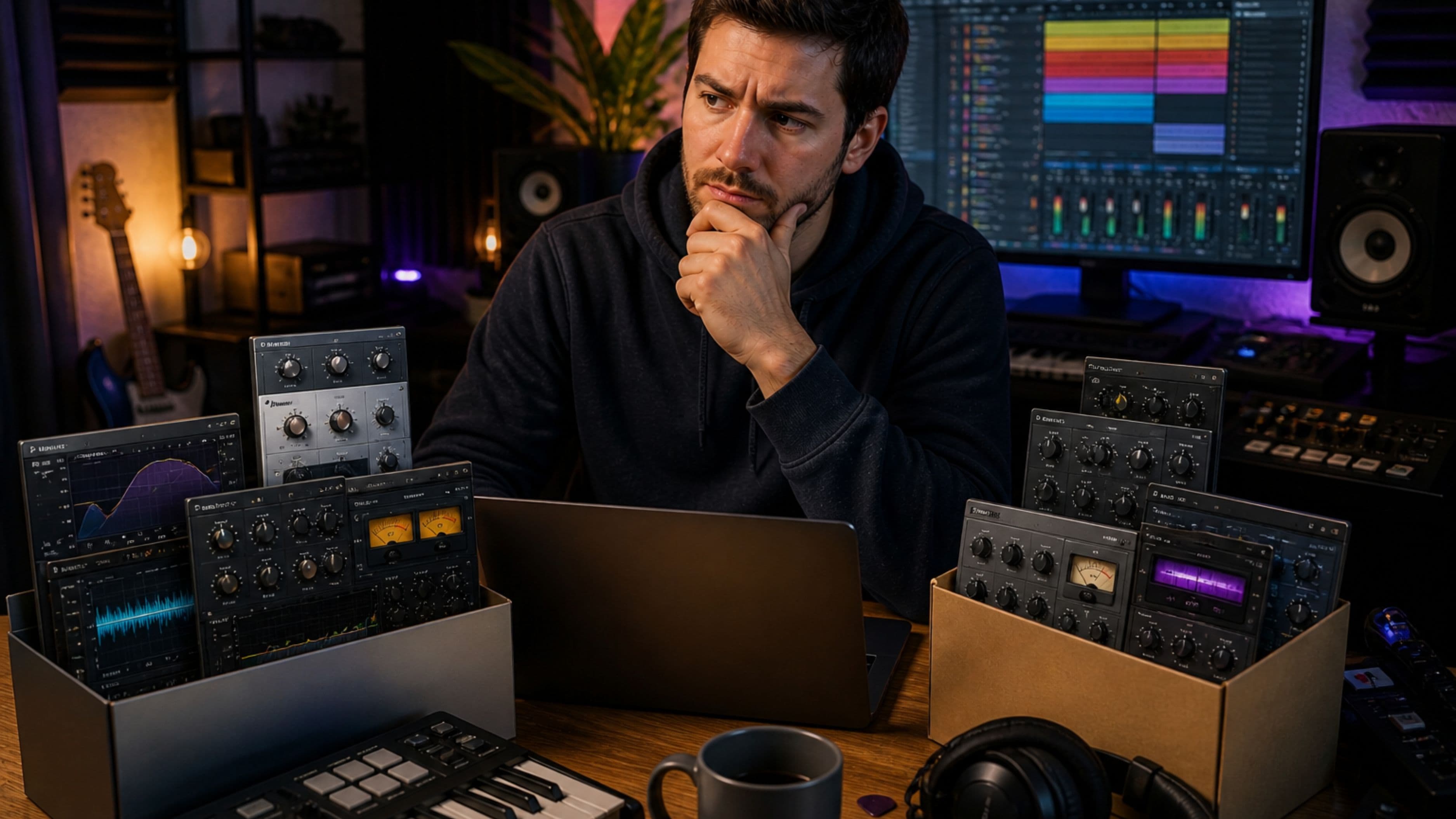
Rather than starting every session with an unlimited palette of sounds and options, many productive producers deliberately impose constraints, like limiting themselves to a specific set of plugins, a fixed tempo range, or a single sample source for an entire session. These constraints reduce the decision fatigue that comes from unlimited creative options, and somewhat counterintuitively, tend to produce more finished, distinctive work than sessions where every possible choice remains open the entire time.
Regular Review and Revision Cycles
Rather than treating a track as either actively in progress or completely finished, productive producers often build in short, scheduled review sessions where older unfinished tracks get revisited with fresh ears, sometimes months after the original work began. This habit rescues ideas that might otherwise be permanently abandoned simply because momentum was lost, and it takes advantage of the perspective that comes from stepping away and returning to a piece of work later.
Why This Matters for Creators
For independent artists and producers trying to build a consistent release schedule or grow their catalog, these patterns suggest that the biggest lever isn't necessarily more raw talent or more expensive gear, but rather building a more deliberate structure around when, how, and under what constraints creative work actually happens. This is genuinely good news for less experienced producers, since these are learnable habits rather than innate traits, and small structural changes to a workflow tend to compound significantly over months and years of consistent practice.
Practical Application
Someone struggling with an overflowing folder of unfinished projects might benefit most from adopting the idea-generation-versus-finishing separation, dedicating specific sessions purely to picking from existing sketches and pushing them toward completion rather than constantly starting new ideas. Someone who finds themselves endlessly perfecting a small number of tracks might get more value from setting a volume-based monthly goal, accepting that some tracks in that count will be weaker than others in service of building a larger, more consistent body of finished work overall.
What to Watch Out For
It's worth being cautious about adopting a rigid structure so aggressively that it eliminates the space for genuine spontaneity and experimentation that often produces a project's most interesting moments. The goal of these routines isn't to mechanize creativity entirely, but to build enough consistent structure that spontaneous, inspired moments have a reliable environment to actually turn into finished, released work rather than staying trapped as an idea in an unfinished project file.
FAQ
Do these routines apply equally to all genres of music production? The underlying principles, like protected time blocks and separating idea generation from finishing, tend to transfer across genres, though the specific constraints or tools a producer imposes will naturally vary based on genre and workflow.
Is a rigid schedule really compatible with creative work? Many producers find that structure actually protects creative time rather than restricting it, since a scheduled block dedicated to production removes the friction of deciding when to work and lets more energy go toward the work itself.
How long does it typically take to see results from adopting these habits? Most producers who adopt more structured routines report noticing a difference in their finished output within a few months, though the compounding benefits of consistent habits tend to become more apparent over a longer stretch of sustained practice.
📚 Sources
Sound on Sound – "Building a Sustainable Music Production Workflow." https://www.soundonsound.com/
MusicTech – "How Prolific Producers Stay Consistent." https://musictech.com/
Ableton – "Creative Workflow Strategies for Producers." https://www.ableton.com/en/blog/