
Why Discord Works Differently Than Other Platforms
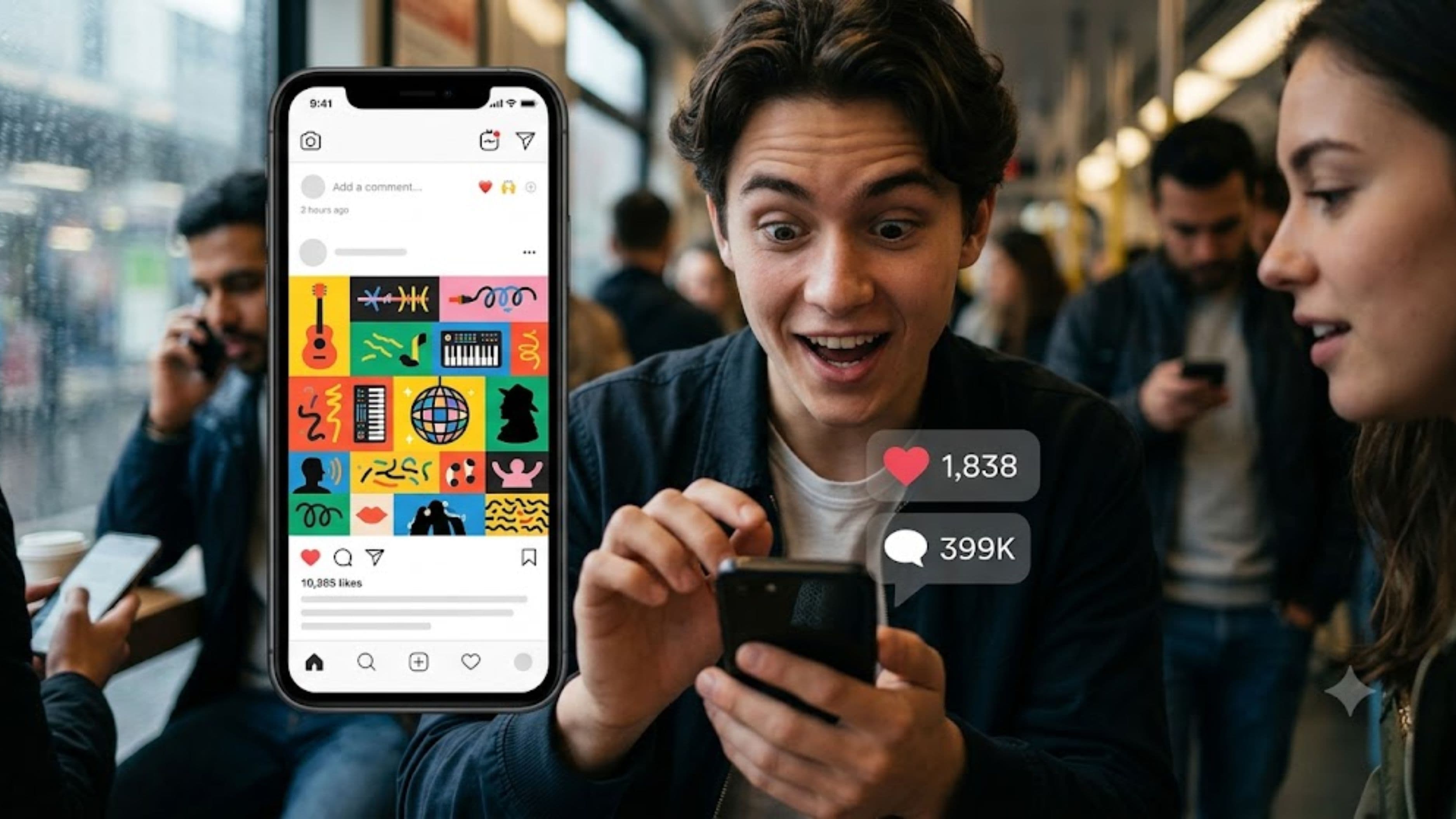
The fundamental difference is that Discord puts your most engaged fans in a room together, not just in front of your content. On Instagram or TikTok, the relationship is essentially one-directional: you post, fans react. The interaction between fans themselves happens only in the comment section and is buried quickly under new content. Discord inverts this entirely. Your fans can talk to each other constantly, independent of any new content you post. That peer-to-peer conversation is what builds community rather than just audience.
Discord also removes the algorithmic intermediary. When you post on a feed-based platform, the algorithm decides who sees it and when. A Discord channel is opt-in and notification-based – when you post in a server, the people in that server see it. They joined because they specifically wanted to be there, which is a fundamentally different relationship than someone who happens to see you on a For You page. The result is a more concentrated, intentionally chosen group of people who are already in the upper tier of fan engagement by the fact of their presence.
For artists, this concentration matters practically. A Discord server of 500 engaged fans will generate more real-world outcomes – concert attendance, merch purchases, playlist sharing, word-of-mouth – than a follow count ten times larger filled with passive observers.
What Artists Are Using Discord For
The use cases vary considerably depending on the artist's relationship with their audience and how much they want to engage directly. The most common patterns that work are worth understanding before you build your own approach.
Early access and exclusivity is the entry point for most artists. Making Discord the place where fans get unreleased music first, hear production updates before anyone else, or see behind-the-scenes content that doesn't go anywhere else gives people a reason to join and a reason to stay. The exclusivity doesn't need to be dramatic – even a rough demo shared a week before release or a voice note explaining a song's backstory is the kind of thing that makes a fan feel genuinely close to the project. That feeling is the foundation of a strong fan relationship.
Direct conversation is what Discord enables that no other mainstream platform does as well. You can talk with your fans in real time, in text channels, voice channels, or stage events, without the interactions being filtered through an algorithm, sorted by engagement score, or buried by newer content. Artists who participate genuinely in their Discord communities – not just posting announcements but actually responding to messages, answering questions, reacting to what fans are saying – build a level of personal loyalty that broadcasting-only platforms struggle to replicate. Fans who have had a real conversation with an artist, even a brief one, develop a different relationship with that artist's music than fans who have only consumed it.
Fan-to-fan culture building is the longer-term payoff of a healthy Discord. When fans develop shared references, inside terminology, recurring jokes, and their own creative traditions around an artist's work – fan art channels, cover song threads, lyric interpretation discussions – the community takes on a life that doesn't depend entirely on the artist's activity. This is what separates a Discord server that stays active for years from one that dies after the initial launch energy fades. The artist creates the context; the fans build the culture.
Feedback loops are a practical use case that's underused. A Discord community is a readily available focus group for decisions you're already making. Before finalizing a track title, dropping two options in a channel and asking for reactions takes sixty seconds and gives you real signal from people who are already invested in your work. Cover art polls, setlist suggestions before a tour, merchandise design feedback – these kinds of micro-participations make fans feel genuinely involved in the creative process, which deepens engagement without requiring major effort on either side.
How to Structure a Discord That Actually Works
Most artist Discord servers fail for the same reason: they're set up with too many channels, no clear reason for fans to participate, and no consistent presence from the artist. The server exists, but it doesn't have energy.
Start smaller than you think you should. A Discord server with three or four well-used channels is more valuable than one with fifteen channels where most of them are empty. A general chat channel for open conversation, an announcements channel where you post updates, a music channel for sharing and listening, and one specialty channel based on what your community specifically gravitates toward is enough to start. You can add channels based on what the community asks for – which is also a participation mechanism in itself.
Establish the tone early with a clear onboarding experience. Most Discord servers include a welcome message and some rules, but the best artist communities go a step further with a brief explanation of what the server is for, what the artist will share there, and what behavior is expected. Members who understand what they're joining are more likely to engage in the ways that make the community work.
Activity from the artist is the engine. The server will not sustain itself on fan activity alone, especially in the early months. Regular posts – not a strict schedule, but consistent enough that members know the server is alive – keep the server from going quiet. Even a short voice message dropped into a channel, a photo from a session, or a brief reaction to something happening in music creates the energy that signals to fans that this is a place worth checking.
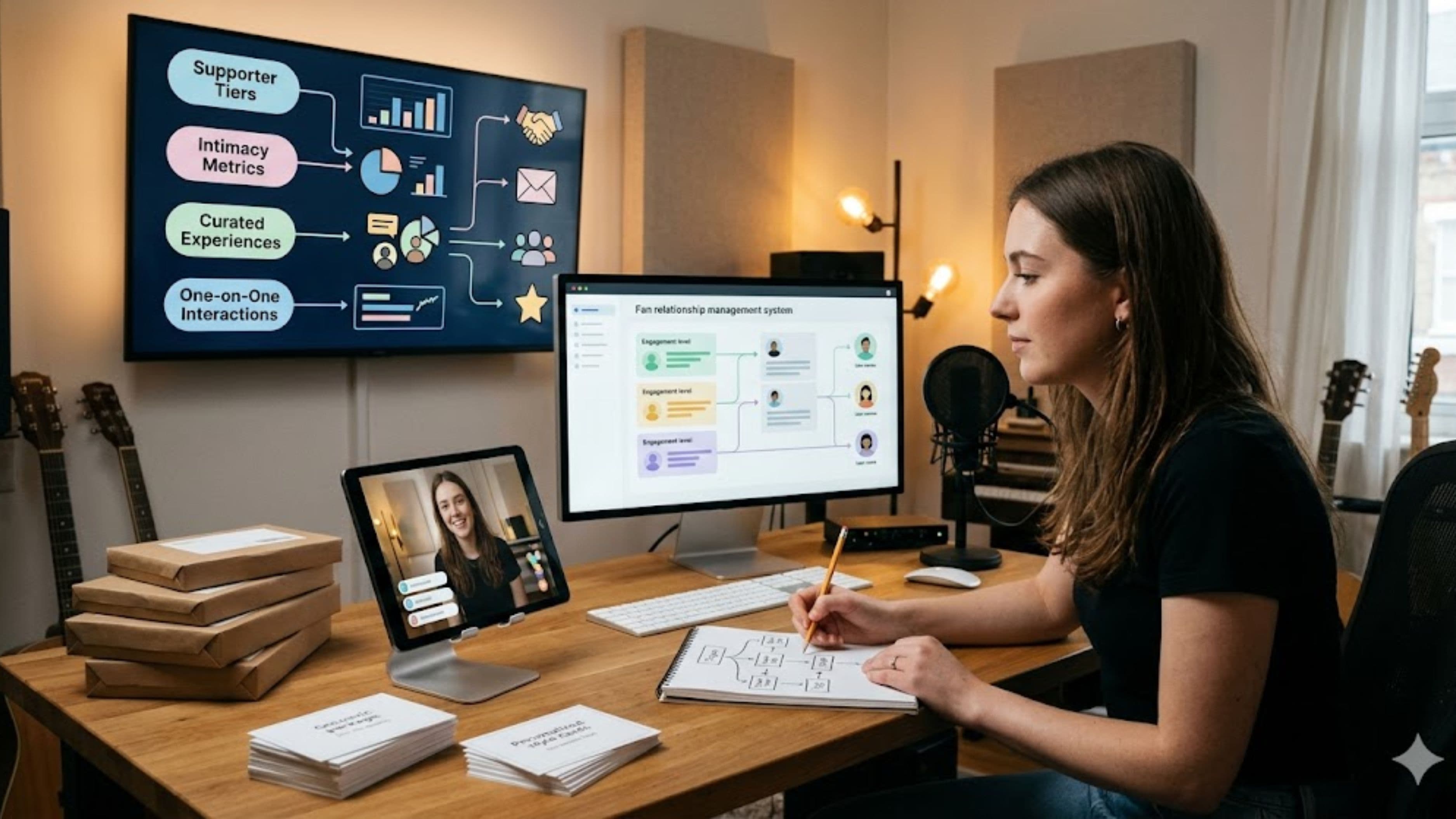
Consider tiers if your fan base supports it. Some artists use Discord connected to a Patreon or direct membership model, where different support levels unlock different channels. Fans who contribute financially get access to a closer-in tier where the artist is more directly present. This model works when the artist is already generating enough demand to make a paid community viable, and it creates a sustainable incentive structure for maintaining deep engagement over time.
What Actually Brings Fans to Discord in the First Place
The barrier to joining Discord is slightly higher than following on Instagram – it requires downloading an app, creating an account if they don't have one, and navigating an interface that isn't entirely intuitive at first. That friction means you need to give fans a compelling reason to take that step, and announcing "I made a Discord" without context doesn't usually move people.
The most effective conversion mechanisms are specific incentives tied to the server. An exclusive track available only in Discord, a Q&A session that's happening in the server next week, early ticket access for an upcoming show, or a limited merch drop announced first to Discord members – these give a concrete reason to join that a vague "community" pitch doesn't. The first wave of members who join for a specific reason becomes the foundation that makes the server worth joining for subsequent members who discover it.
Cross-platform promotion with specific calls to action drives better conversion than passive mentions. Telling your Instagram audience "join my Discord" performs significantly worse than "I'm dropping an unreleased song in my Discord at 8pm Thursday" – the specificity of the second version creates urgency and a clear reason to act now rather than vaguely someday.
Word of mouth from existing members is the highest-quality growth mechanism. When your current Discord members are enthusiastic enough about the community to recruit friends, you're getting new members who are pre-qualified by someone who already knows what the server is. Building that enthusiasm is a function of making the server genuinely good – not just present.
Managing the Community as It Grows
A Discord server with fifty members is easy to manage directly. At five hundred or a few thousand, you need structure that doesn't depend on the artist reading every message. Moderators – usually highly engaged community members who you've invited to take on the role – handle spam, enforce community rules, welcome new members, and keep conversation flowing in the artist's absence. Good moderators are often more valuable to community health than the artist's own activity, because they're present consistently in a way most working artists can't be.
Discord's built-in tools – roles, permissions, channel structures, bots for automated welcome messages or rule enforcement – are worth learning as your server grows. The time invested in setting up a well-structured server pays back in reduced moderation burden and better member experience.
Toxicity, drama, and bad actors exist in every community. Having clear rules, enforced consistently, from day one creates norms that self-reinforce over time. Members who've been part of a community with good norms will often enforce those norms themselves before moderators need to act.
What to Watch Out For
Treating Discord as just another broadcast channel is the main mistake. Posting announcements and not engaging with the community that forms around them creates a server that feels like a mailing list with a chat interface. The value is in the interaction, not the one-way messaging.
Burning out on engagement is a real risk. Opening a Discord server creates an implicit commitment to showing up there, and that can feel like an additional obligation on top of every other platform demand. Starting with lower expectations for your own posting frequency – and being honest with your community about what they can expect – is better than launching with high energy and going quiet two months later.
Discord's discoverability is effectively zero. Unlike TikTok or Spotify, there's no algorithm surfacing your server to new potential fans who don't already know you. Discord is a depth tool, not a growth tool – it strengthens existing relationships but doesn't create new ones at scale. Your growth still happens elsewhere; Discord is where you deepen the connections that growth creates.
FAQ
Do I need a large following before starting a Discord? No. Some of the most cohesive artist communities on Discord started with a few dozen people. A smaller, genuinely engaged server is more valuable than a large one filled with passive members. Starting early, before your audience is large, means your earliest fans shape the community culture, which often produces something more authentic than launching into a large but less connected audience.
Should my Discord be free or paid? Most artists start with a free server to build community first, with optional paid tiers for closer access. Launching with a paid-only model limits who can join before you've established that the community is worth paying for. A free base layer with paid channels above it is the more common and generally more effective structure.
How much time does running a Discord actually take? Depends entirely on your engagement model. Posting once or twice a week and checking in briefly on conversations is a low-time commitment. Hosting regular voice events, responding to most messages, and actively building programming takes significantly more. Start at a level you can sustain consistently, not at a peak that tapers off.
What makes fans leave a Discord server? The most common reasons are inactivity from the artist, too much self-promotion without genuine interaction, toxic community behavior that goes unmoderated, or simply losing interest in the artist's music over time. The first three are controllable.
Can Discord work for all music genres and audiences? It works best for audiences that are inherently community-oriented – fandoms that follow artists closely, genre communities with strong identity and shared culture, artists whose work generates conversation and analysis. It's less effective for audiences whose relationship with music is more passive or casual. Knowing your audience's engagement style honestly helps you decide how much to invest.
📚 Sources
Discord – Building a Server for Creators: https://discord.com/creators
Bandcamp – Artist Community Building Resources: https://daily.bandcamp.com/features/building-community-as-an-indie-artist
Music Business Worldwide – Discord and Fan Communities: https://www.musicbusinessworldwide.com/discord-fans-artists/
Hypebot – Discord for Independent Artists: https://www.hypebot.com/hypebot/2022/09/discord-for-musicians-what-artists-need-to-know.html
Patreon – Discord Integration Guide for Creators: https://support.patreon.com/hc/en-us/articles/212052266-Discord-Server-and-Patreon