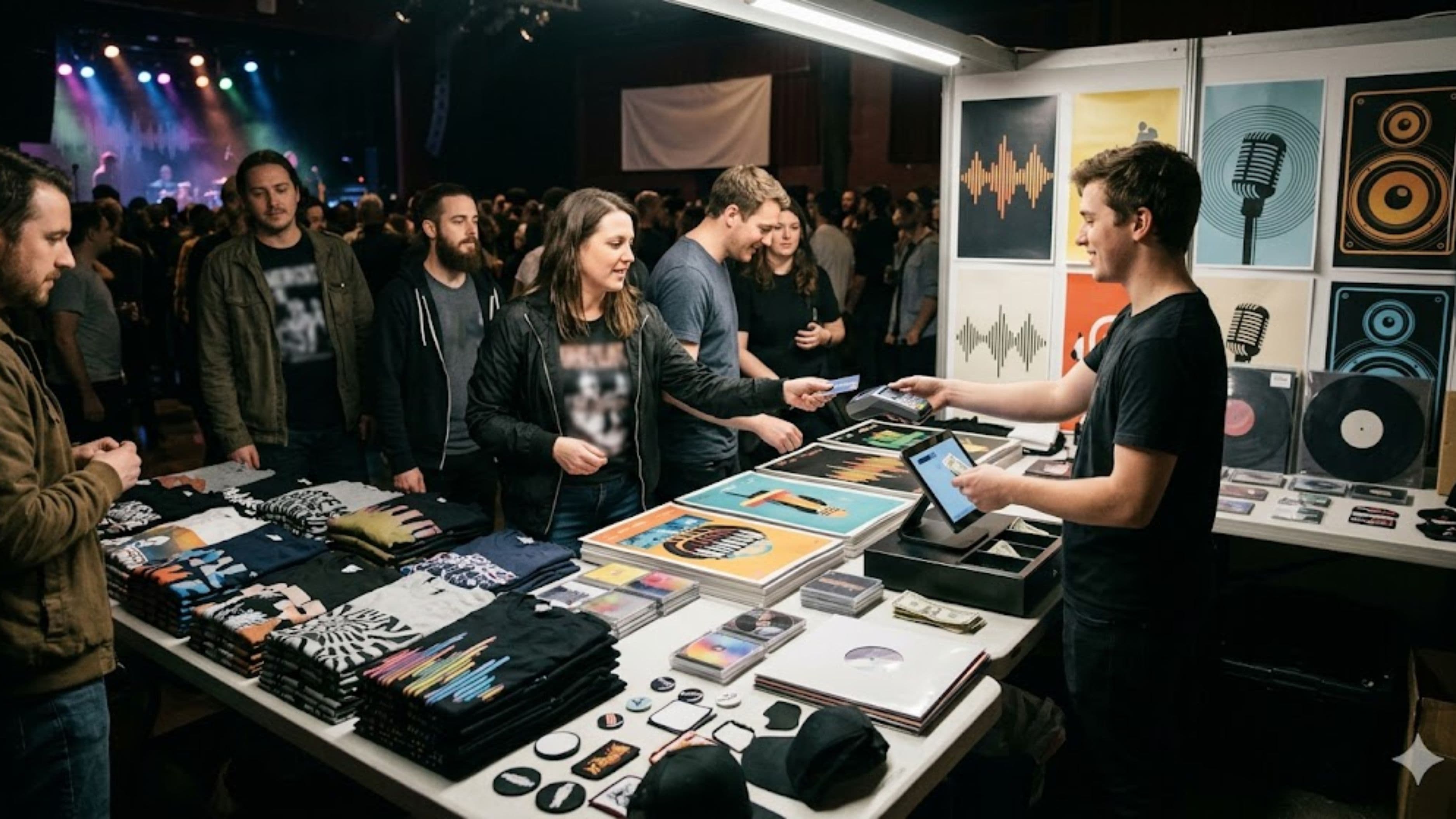
In a moment when every revenue stream feels fragmented or gated behind scale, the merch table at a live show is one of the most direct, reliable, and relationship-driven income sources an independent artist can build. It's not glamorous, but it works – and it works better than most artists realize when it's done with some intention.
Why Live Merch Works When Other Channels Don't
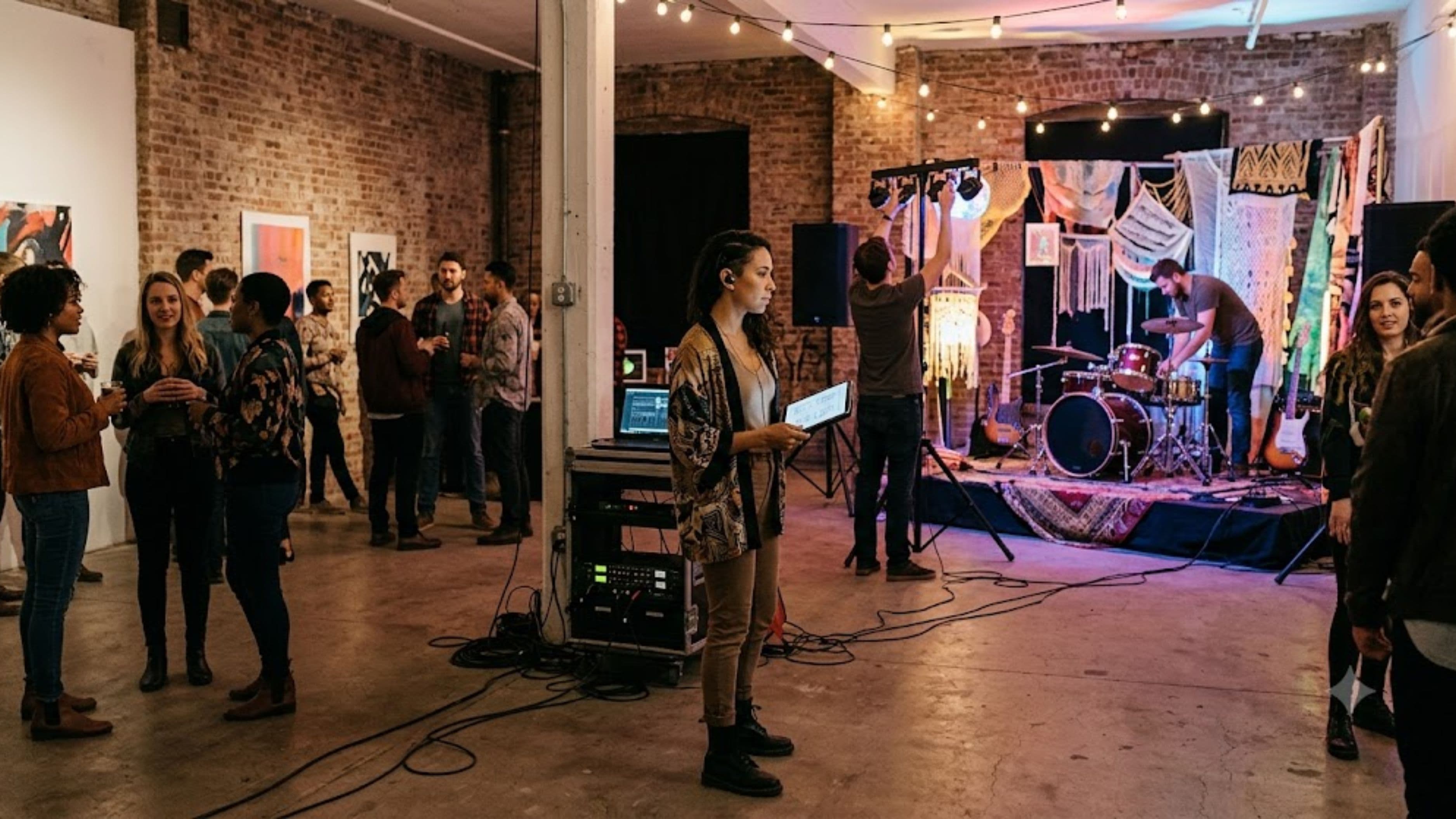
The emotional peak of experiencing live music is a short window. In that window, the audience has just connected with something – maybe for the first time, maybe for the hundredth time but in a room with real energy, with other people having the same experience. That emotional state is the most favorable buying context that exists for an artist's merchandise, and it has nothing to do with follower counts or algorithmic reach.
Someone who would never buy a t-shirt from your Instagram store will buy one at the merch table right after you played the show that made them feel something. That's not cynical – it's how emotional connection and purchasing behavior interact. The physical object becomes an extension of the experience, a way to hold onto something that was genuinely moving. Artists who understand this set up their merch table as an intentional part of the show experience, not an afterthought at the back of the room.
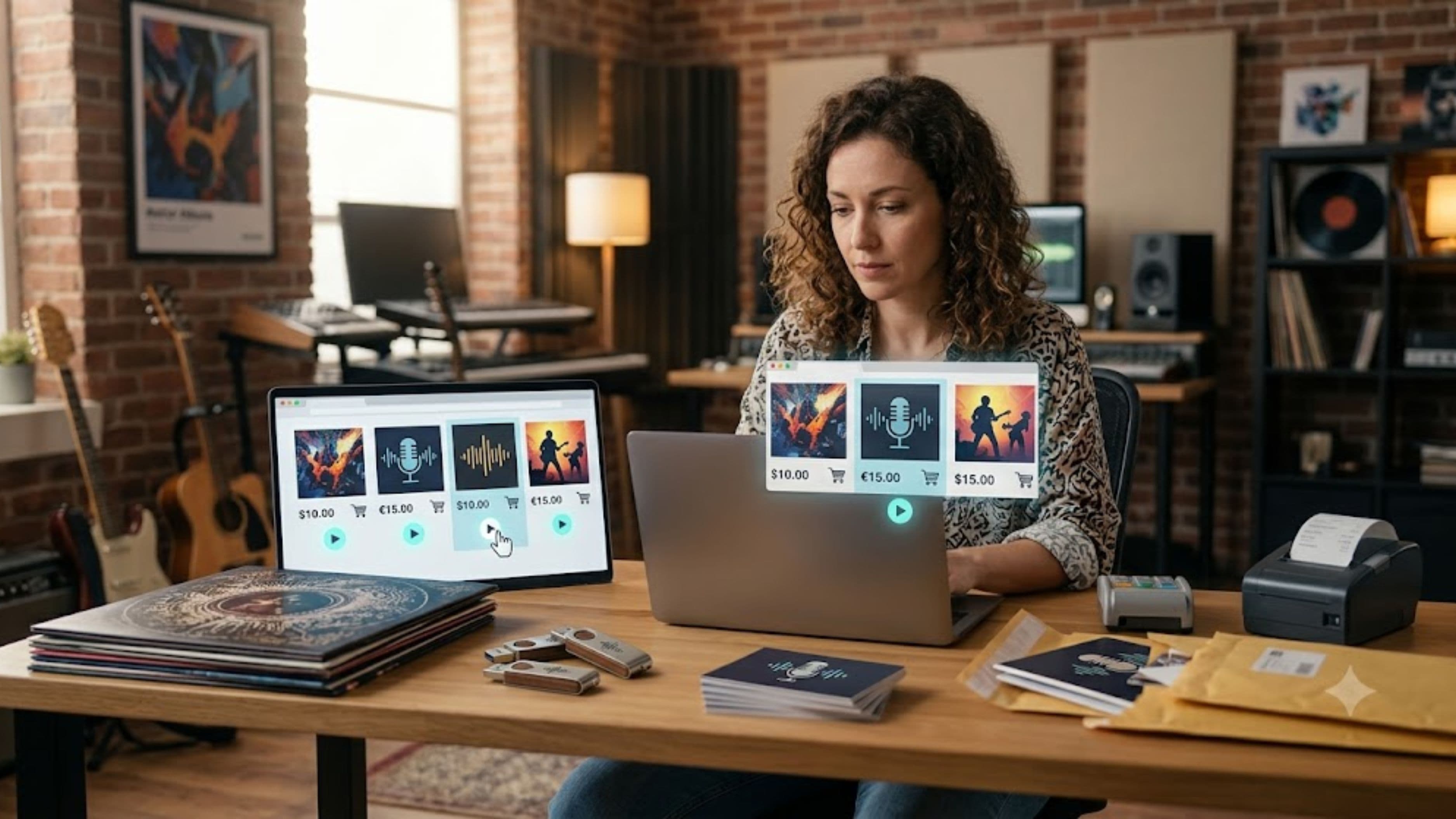
Online merch stores, for most independent artists, produce modest revenue with meaningful friction. You need consistent social traffic, a mechanism to drive people to the store, and a customer willing to navigate a purchase experience with several steps between impulse and completion. The live show removes all of that. The transaction happens in the room, immediately after the moment of connection, and the barrier between "I want this" and "I have this" is a few steps and a card tap.
What Actually Sells at Live Shows
The specific items that drive merch table revenue at live shows are different from what you might stock in an online store, and getting this wrong is one of the most common merch table mistakes independent artists make.
T-shirts remain the dominant live merch item. They sell because they're universally understandable as a product, they're wearable advertising, and they carry a perceived value that justifies $25–$35 without explanation. The design matters more than most artists acknowledge – a genuinely good graphic will sell to people who barely know your music because it works as a standalone piece. A poorly designed shirt will struggle even with dedicated fans. Investing in real design, even for a short run, consistently pays for itself.
Vinyl records have had a sustained commercial revival that shows no sign of reversing. At live shows, vinyl sells particularly well because the format signals seriousness – pressing vinyl is expensive and intentional, and fans who buy it are making a statement about how they value the music. Vinyl priced at $20–$30 at a show moves well when it's available for purchase directly from the artist, and some buyers will have you sign it immediately, which adds perceived value and creates a moment of direct connection.
CDs are less culturally potent than vinyl but still sell to certain audiences – particularly older demographics, fans who drive and still have CD players in their car, and fans who want a complete format at a lower price point than vinyl. For traveling artists where merchandise weight and space matter, CDs pack better than vinyl and can be priced at $10–$15.
Low-price impulse items are underused at most merch tables. A tote bag, a sticker pack, a printed lyric card, or a pin at $3–$8 gives the fan who can't afford a shirt or record a way to participate in the transaction and leave with something. These items also drive revenue through volume – selling 30 sticker packs at $5 each adds $150 to the night with minimal effort. Artists who only stock high-ticket items are leaving this low-friction revenue on the table.
Limited or exclusive items dramatically increase urgency. A vinyl pressing of only 100 copies with a handwritten element, a shirt design that exists only at this specific run of shows, or a zine available only from the merch table creates scarcity that prompts purchase decisions from fans who might otherwise think "I'll get it online later" – and then never do. The online later almost never happens at the rate the in-room moment does.
Pricing and Presentation
Underpricing merch is a near-universal habit for independent artists, and it costs real money. There's a psychological pull toward pricing low to seem accessible or to avoid the awkwardness of charging "too much," but underpriced merchandise signals lower value and rarely actually increases volume enough to compensate. A t-shirt priced at $15 doesn't outsell the same shirt at $25 by enough to justify the $10-per-shirt revenue loss, especially when your cost is already $8–$12.
Benchmark your pricing against what comparable artists at your level charge in the same venue context. A $25 t-shirt and $25 vinyl record are standard in most indie music contexts. Pricing below that range doesn't build goodwill; it leaves money on the floor. Fans who genuinely want to support you will pay a fair price. The ones who won't aren't the audience your merch table strategy should be optimized around.
Presentation matters more than most artists give it credit for. A table covered in folded items stacked randomly in the dark at the back of a venue is not the same revenue opportunity as a table with a couple of items displayed upright, well-lit, with signage showing prices clearly.
Most fans won't dig through a pile of shirts to find their size and guess what they cost. Simple display stands, one shirt hung or pinned to show the design, a small LED light if the room is dim, and clear printed or handwritten price tags are minimal investments that visibly increase engagement at the table.
The location of the merch table in the room is often outside the artist's control, but when you have input, positioning near the exit or near the bar outperforms positioning in a corner that people have to seek out. The merch table that people pass on their way out catches the post-show emotional peak; the merch table that requires a detour catches only the fans who were already planning to buy.
Staffing the Table
Playing the show and then rushing to the merch table immediately afterward is the right instinct, but it creates a bottleneck in the first ten minutes after the performance – often the highest-traffic window at the table. Having a trusted person managing the table during the performance, and for at least the first fifteen minutes after the set ends, prevents lost sales from fans who wanted to buy but didn't wait around for you to appear.
That person doesn't need to be a paid employee. A bandmate, a significant other, a friend who's coming to the show anyway – anyone reliable with basic cash handling and card reader familiarity can manage a merch table during the performance. Brief them in advance on prices, how to handle the card reader, and what sizes are available for each item. The post-show window where you're at the table in person can then be focused on the fan interaction and signing, not scrambling to process a queue of transactions alone.
Payment Infrastructure
Running a merch table without a mobile card reader in the current environment is leaving a significant percentage of potential sales behind. Most people under 40 don't carry cash consistently, and fans who want to buy but can't because you're cash-only will simply not buy. Square, Stripe, PayPal Here, and similar readers connect to a smartphone and process card and contactless payments with a transaction fee of around 2.6% – a minor cost relative to the revenue lost by cash-only operation.
Charge your card reader and phone fully before every show. Bring a portable battery pack if the show is in a venue with limited power access near the merch table. Losing a card reader mid-show because of a dead phone is a genuinely painful experience that has a simple preventive solution.
For accounting purposes, keeping a separate record of what sold each night – by item, by price, by quantity – is useful for tracking which items move, which cities buy differently, and how to adjust stock on future runs. A simple notes file on your phone works for this. That data, accumulated over a tour, tells you where to invest in production for your next merch run.
The Fan Interaction at the Table
The merch table is not just a retail transaction – it's often the one moment of direct contact between artist and audience that isn't mediated by a stage, a PA system, or a screen. Fans who come to the table are self-selected as the most invested people in the room. How you engage them at that moment has a lasting impact on how they talk about you, whether they come to the next show, and whether they tell other people to come too.
Being fully present at the merch table for at least thirty minutes after your set is worth more as a long-term fanbase investment than it is as a short-term revenue tactic. Thank people for coming. Ask where they heard about the show. Learn a name or remember a face for next time. Sign things they've bought. The artists who build genuinely loyal fanbases are usually the ones who treat the post-show merch table as part of the performance, not the epilogue to it.
What to Watch Out For
Venue merch cuts are something to check before you show up. Some larger venues and promoters take 15–25% of gross merch sales as a "hall fee." This is standard in larger rooms and at festival contexts but less common at small independent venues. Ask about it when confirming your date so the number isn't a surprise at settlement.
Over-ordering production runs can turn a profitable night into a loss when you're carrying 40 unsold shirts back from a five-city run. Start with conservative quantities – 12–20 shirts in a size run, 50–100 copies of a record – until you have enough data about your per-show sell-through rate to scale production confidently.
Inconsistent sizing availability frustrates buyers and costs sales. Running out of Medium and XL shirts – the most common sizes – mid-tour is a recurring problem for artists who don't think carefully about size distribution. Order roughly 30–35% Medium, 30–35% Large, 15–20% XL, 10% Small, and 5–10% in other sizes as a starting point, and adjust based on your actual audience.
FAQ
How much merch revenue can an independent artist realistically make per show? It varies enormously with crowd size, room type, and how well the merch table is set up and staffed. A show with 40–60 people attending and a well-run table can reasonably generate $150–$400 in merch revenue. A show with 100–200 people and strong execution can produce $400–$1,000 or more. These aren't guarantees, but they're realistic ranges for artists who approach the table as a revenue channel, not an obligation.
Should I sell merch at shows where I'm an opening act? Yes, when the venue allows it. Some headliners are territorial about merch space, and some venues only allow the headliner to sell during the show. Ask the headliner or their team before assuming you have table access. When you do have access, set up early and focus on the fans who arrive before or during your set – they're the ones most likely to engage with you specifically.
What's the minimum viable merch setup for a first tour? A short run of shirts in two or three colors (or one design), a couple of physical music options (vinyl if you can afford it, CDs as a secondary), stickers as the low-price option, and a mobile card reader. That's a functional merch table that covers multiple price points and doesn't require a large upfront investment.
Does signed merchandise actually increase sales? Yes, meaningfully. Offering to sign anything purchased creates a reason for fans to come to the table and adds perceived value to the item beyond its face price. Many fans will buy a record specifically because it's signed, when they might have hesitated otherwise. Build signing into your post-show merch table routine as a default, not a special occasion.
How do I handle merch inventory across multiple cities on a tour? Start with a physical count of every item before the tour begins, update the count after each show, and use that running tally to decide when to reorder or redistribute stock across remaining dates. A simple spreadsheet works for most indie tour scales. Knowing where you're running low early gives you time to replenish before you run out, rather than discovering mid-tour that you sold out of every Medium two cities ago.
Outro
The merch table isn't a relic of a pre-streaming era – it's one of the few revenue mechanisms in an independent artist's toolkit where the economics actually make sense without requiring scale. A well-run table, good product, fair prices, and genuine engagement with the fans who come up after the show can consistently generate meaningful income from audiences that might not find you any other way. It takes some setup and some presence, but the return on that investment beats most of what the music business offers artists who are still building.
📚 Sources
Square – How to Accept Payments at Live Events: https://squareup.com/us/en/the-bottom-line/running-your-business/how-to-accept-payments
Bandcamp – Physical Merch Sales Guide for Independent Artists: https://bandcamp.com/guide
DIY Musician (CD Baby Blog) – Merch at Live Shows: https://diymusician.cdbaby.com/musician-tips/musician-merchandise
RIAA – Vinyl Sales Data and Physical Music Market Trends: https://www.riaa.com/u-s-sales-database