Here's how to start generating income from a music podcast before you've scaled your numbers – and how to think about which approaches actually fit where you are right now.
Why the Download Threshold Myth Exists
Most monetization guides for podcasters are written around the dominant ad-network model: a host reads a sponsor message, the sponsor pays a CPM (cost per thousand listens), typically $15–$50 depending on niche and format. To generate meaningful income from CPM deals, you need meaningful volume. At 500 downloads per episode and a $25 CPM, that's $12.50 per episode. Not a business.
The mistake is treating that model as the only model. Music podcasters have advantages that general podcasters don't: a deep, passionate niche audience that's already spending money on music – concerts, vinyl, streaming subscriptions, gear, lessons, merchandise. The same 500 engaged music listeners who are worth almost nothing to a programmatic ad network are worth real money to a guitar pedal brand, an independent record label, a music education platform, or a festival promoter looking to reach exactly that audience.
The path to monetization at sub-1,000 downloads isn't chasing CPM scale. It's building the right direct relationships and revenue models for where you actually are.
Direct Listener Support
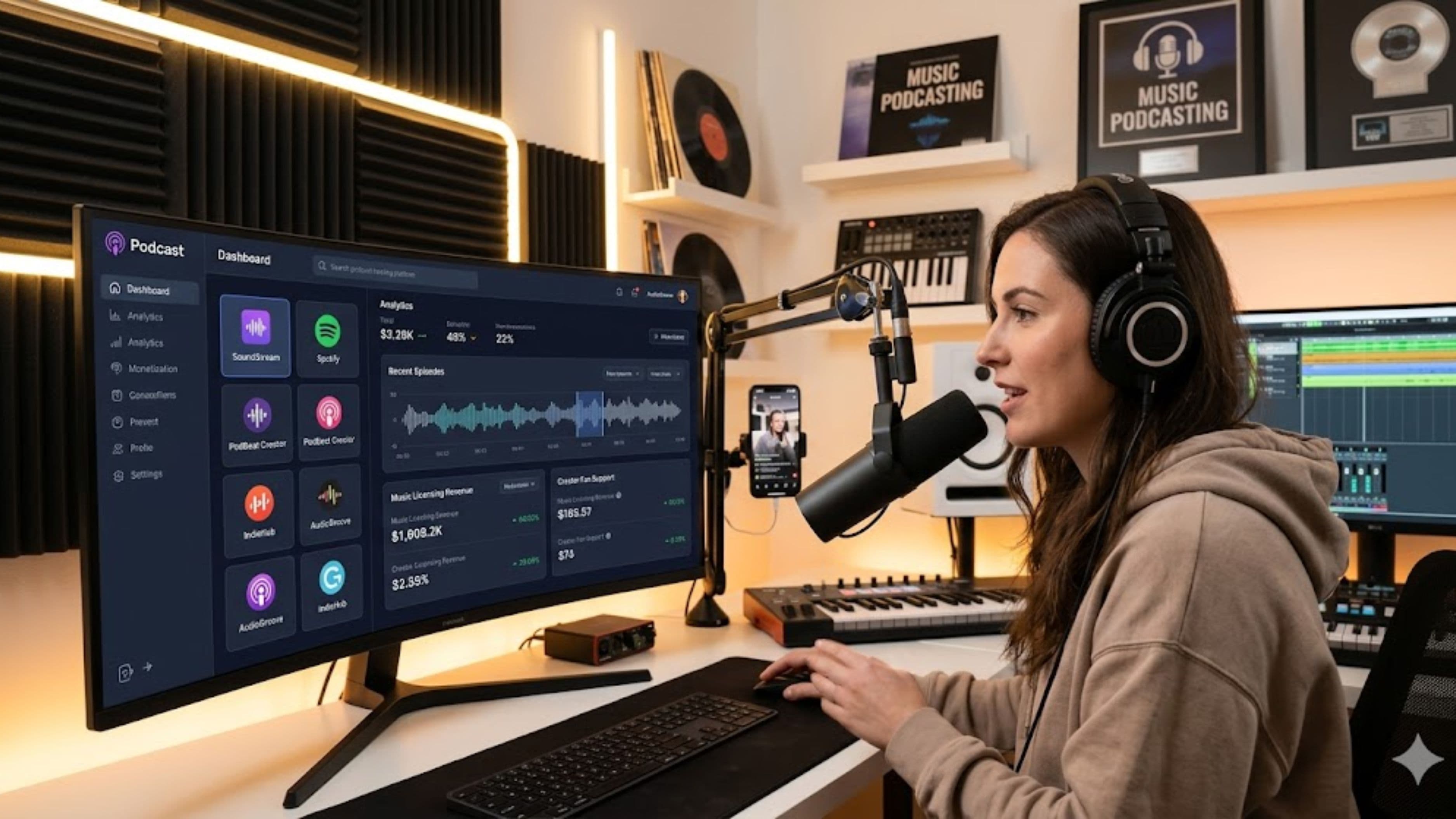
The fastest revenue path for a small but engaged music podcast is direct listener support, and it doesn't require minimum download thresholds or external sponsors. Platforms like Patreon, Supercast, and Spotify's Paid Subscriptions allow listeners to pay directly for access to bonus content, ad-free episodes, early releases, or community access.
At 300–500 dedicated listeners, even a 2–3% conversion to paid supporters at $5–$10/month generates $300–$750 per month without a single sponsor deal. That number isn't hypothetical for music podcasts – it's realistic because the audience has demonstrated strong interest by subscribing to a niche podcast in the first place.
The key is giving paid supporters something genuinely worth paying for. For a music podcast, that might mean extended artist interviews without edits, access to unreleased music from featured artists, early episode drops, ad-free audio, community Discord or Slack access, or exclusive video footage from sessions. The offer needs to feel like an upgrade, not a tip. Think about what part of your existing production you'd want if you were the listener.
Buzzsprout, Anchor (now Spotify for Podcasters), and Podbean all have built-in listener support features if you want a simpler, lower-friction option than setting up a separate Patreon. The tradeoff is less control and fewer options for tier customization, but the barrier to getting started is essentially zero.
Direct Sponsorships With Small Brands
Before you're big enough for podcast ad networks to care about you, you're the right size for niche brands that would never bother with a network deal. Small independent music retailers, boutique instrument brands, regional music festivals, music education apps, audio gear makers, vinyl subscription services, music theory courses – these are businesses whose ideal customer is precisely the audience of a music podcast with a few hundred dedicated listeners.
The pitch isn't "I get X thousand downloads." The pitch is "my audience is exactly your customer – here's why." A music gear brand sponsoring a podcast about analog recording equipment with 400 engaged listeners and a show focused on vintage gear will get a better return per dollar than sponsoring a general tech podcast with 50,000 mostly passive listeners.
Rates for direct small brand sponsorships at this stage vary widely, but $50–$200 per episode for a host-read mid-roll or outro read is realistic if you can clearly articulate your audience's profile and engagement. That's not transformational income, but a single monthly sponsor at $100/episode is $1,200 a year from one relationship you own directly.
Finding these sponsors doesn't require a broker. Start by looking at which brands are already advertising in your niche – on music forums, in niche publications, at local music events. Reach out directly with a concise pitch that includes your listener demographic, episode themes, and a proposed rate card. Keep the initial offer low-friction: one sponsored episode as a trial before any larger commitment.
Merchandise and Digital Products
A podcast audience that genuinely loves a show will buy merchandise from it. The threshold isn't size – it's identity. If your podcast has a strong name, a distinctive aesthetic, or a community feel that listeners identify with, there's a merchandise play available well before you hit 1,000 downloads.
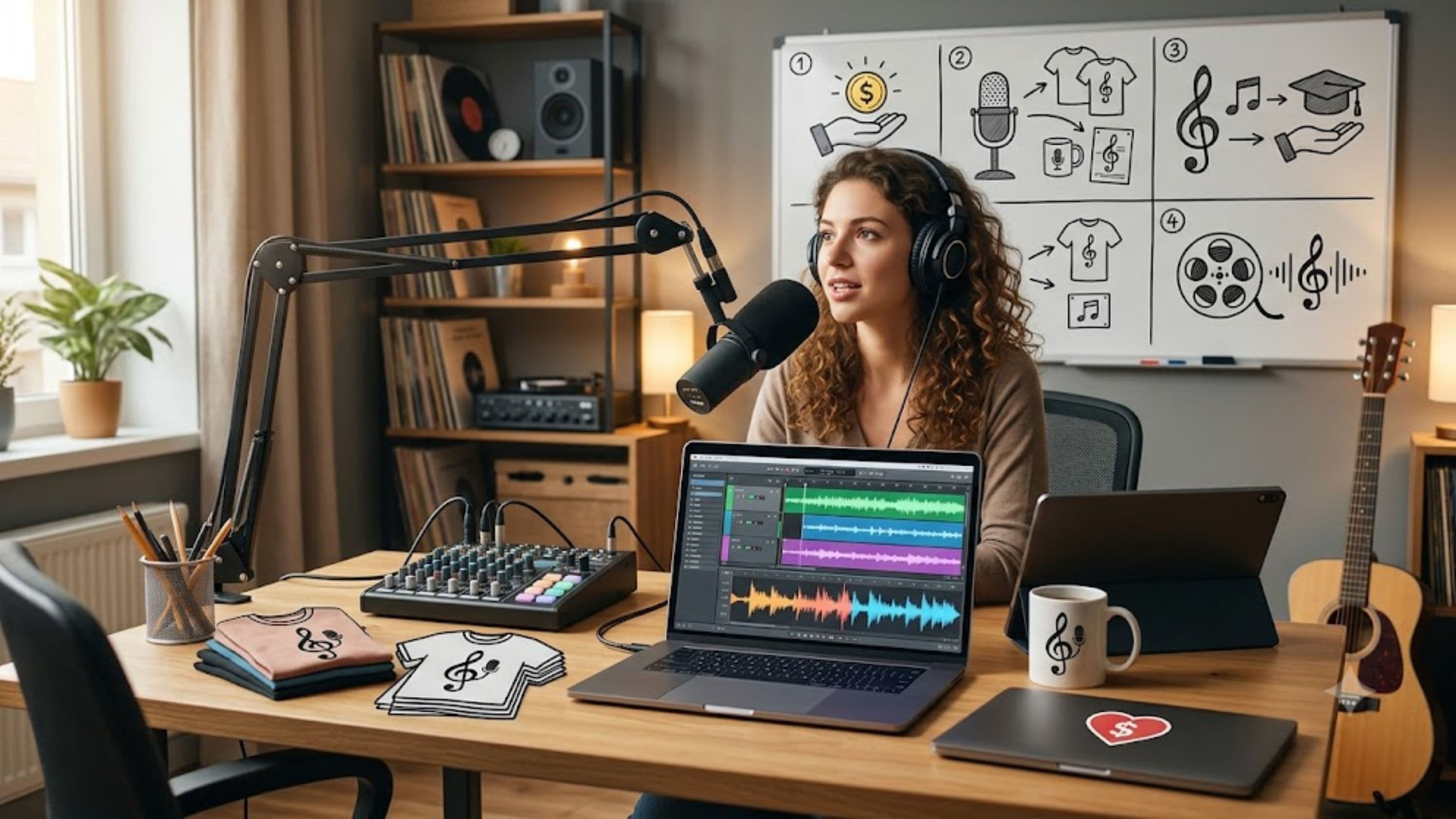
Print-on-demand services like Printful, Merch by Amazon, and Printify eliminate upfront inventory costs entirely. You design a t-shirt, hoodie, or tote with your podcast name or a phrase from the show, set your margin, and the service fulfills every order without you touching inventory. The economics aren't as good as bulk orders, but the risk is zero and the upfront cost is minimal. At this stage, that tradeoff makes sense.
Digital products are an even better early-stage option because they scale without any additional cost per unit. A music podcast on a specific topic – jazz production, music licensing, home recording – has the subject matter expertise to produce a guide, a template pack, a sample library, a resource list, or a short course that the audience would pay for. A "gear setup guide for home recording" at $15 sold to 50 listeners who trust your recommendations generates $750 from a single product with no ongoing production cost. The same product keeps selling as the audience grows.
Affiliate Revenue
Affiliate programs are a low-effort monetization layer that works at any audience size, including small ones. You get a unique link to a product or service, you mention it in your show or show notes, and you earn a commission when listeners click and buy. No sponsor relationship required, no minimum downloads.
The music space has a solid range of affiliate programs available. Sweetwater and Guitar Center both have affiliate programs for music gear. Thomann runs affiliate deals for European audiences. Plugin Alliance, Native Instruments, Splice, and iZotope run affiliate programs for music software. Music education platforms like Coursera, MasterClass, and Lessonface have affiliate options. Reverb has an affiliate program for instrument and gear sales.
The key is only promoting products you actually use, would recommend, or can speak to credibly. An affiliate link to a plugin pack you've never opened converts poorly and damages trust. A natural mention of the audio interface you actually record on, with your affiliate link in the show notes, converts well because the recommendation is real.
Monthly affiliate income at this stage might be $50–$200 depending on your episode frequency and how organically the recommendations fit. It's not a primary revenue stream, but it compounds over time as your library of episodes grows and each one continues to drive clicks.
Live Events and Workshops
For a music podcast with a local or regional dimension, or a podcast about music education or production, live events can generate meaningful income before the audience is anywhere near 1,000 downloads. A workshop, a listening party, an in-person recording session, or a small live show tied to your podcast brand can convert 20–30 engaged listeners into $15–$40 ticket buyers.
The math on a single event: 25 attendees at $25 per ticket is $625. Run four events in a year and you've added $2,500 in revenue while also deepening the relationship between your audience and your show. These events also generate content – recorded panels, footage, interviews – that feeds back into future episodes.
This approach works best for podcasts with a clear, local community dimension or a niche that naturally benefits from in-person format (listening parties for a vinyl podcast, live recording sessions for a production-focused show, meetups for a music scene podcast in a specific city).
What to Watch Out For
Underpricing your audience. Small, niche podcast audiences in music are genuinely valuable to the right brands. Don't approach sponsors with $25/episode offers because you feel your download numbers aren't impressive. Lead with audience quality and charge accordingly.
Taking irrelevant sponsors. A music podcast audience will notice when the host reads an ad for a VPN or a mattress company. Irrelevant sponsors degrade the listener experience and signal that the show is chasing any revenue available rather than being selective. Stay on-niche even if it limits your options early.
Relying on a single revenue stream. A Patreon that's bringing in $200/month is encouraging but fragile. Stack multiple small streams – Patreon plus one sponsor plus affiliate links plus occasional digital product sales – so that the failure of any single one doesn't eliminate your podcast income entirely.
Launching paid tiers before the free show is strong. Patreon and paid subscriptions only work if listeners already love the free content. If your core show isn't consistently good yet, the paid layer won't stick. Get the free product right first, then offer the upgrade.
Realistic Income Expectations
A music podcast under 1,000 downloads per episode, monetized with a mix of the approaches above, might realistically generate $300–$1,200 per month after 6–12 months of consistent effort. That's a wide range because it depends heavily on niche specificity, audience engagement, how actively you pursue sponsor relationships, and whether you build out a digital product.
None of this is passive income at the early stage. It requires consistent episode production, active outreach to potential sponsors, and genuine effort building community around the show. What it isn't is a numbers game. The creators making money from small music podcasts aren't doing it by waiting to hit a download threshold – they're doing it by building a show worth paying for and finding the revenue models that match where they are.
FAQ
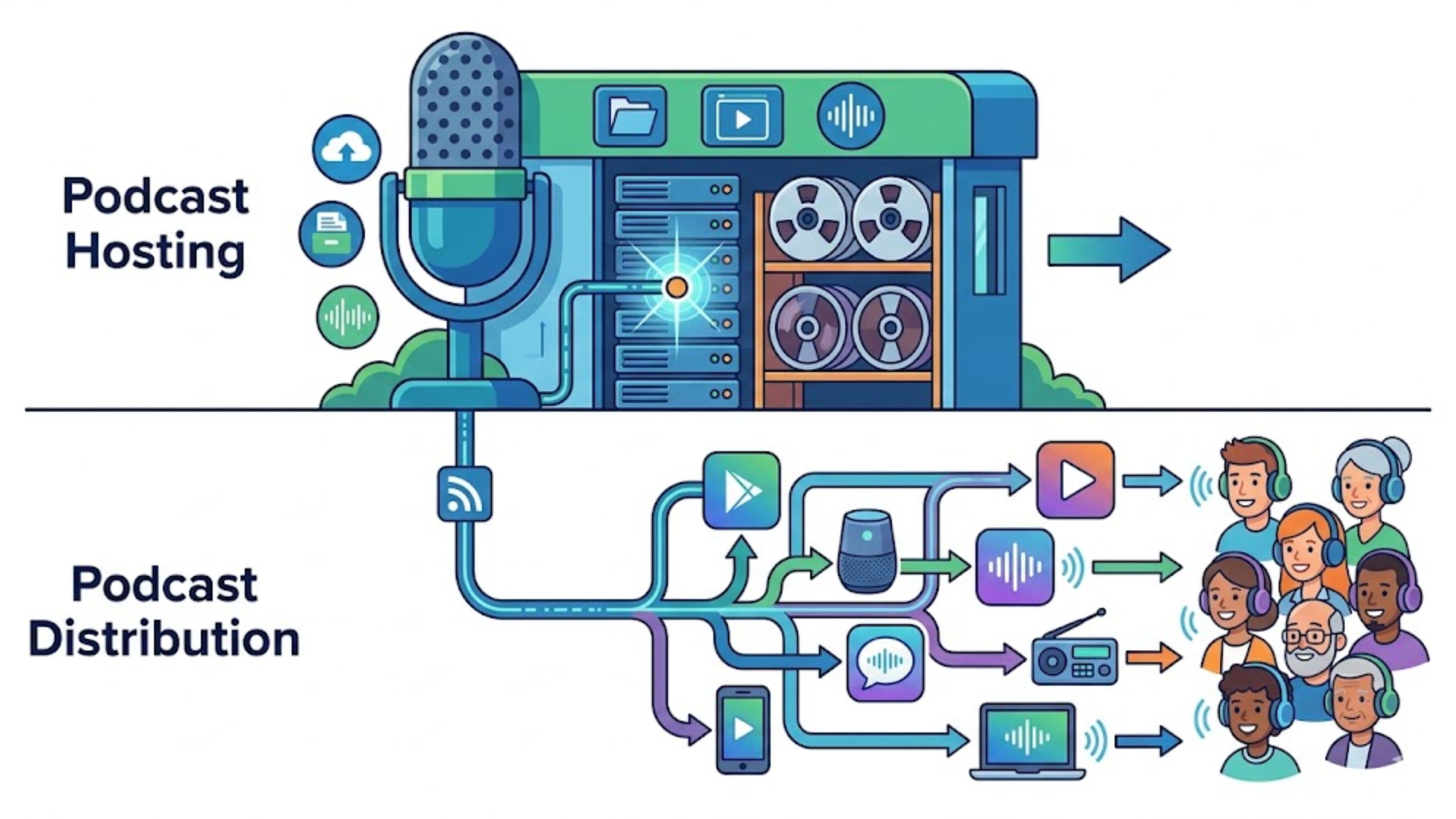
Do I need a hosting platform that supports monetization features? Not necessarily – most monetization at this stage happens outside the hosting platform. But platforms like Spotify for Podcasters, Podbean, and Buzzsprout have built-in tools (listener support, dynamic ad insertion) that simplify certain revenue paths. If you're starting fresh, choosing a platform with these features built in is worth factoring into your decision.
Can I run ads through a network before 1,000 downloads? Some networks have lower thresholds – Podcorn and Podcorn-style marketplaces match podcasters with sponsors based on niche fit rather than volume. Midroll and larger networks typically require 5,000–10,000 downloads per episode. For under 1,000, direct sponsorship outreach is more effective.
Is it worth starting a Patreon with fewer than 500 listeners? It can be, if the core free show is strong and the paid offer is genuinely worth it. Don't launch a Patreon as a "tip jar" – launch it when you have a clear paid tier value proposition. A 200-episode library with a modest but highly engaged audience and a compelling paid tier (bonus episodes, community access, early releases) can absolutely convert.
How do I find out what my audience looks like for a sponsor pitch? Podcast hosting platforms provide demographic data (approximate age, location, platform used). For additional insight, run a listener survey through Typeform or Google Forms linked from your show notes. Even 30–50 responses give you enough to build a credible audience profile for outreach.
Should I disclose affiliate links and sponsorships? Yes, always. FTC guidelines in the US require disclosure of material connections with sponsors and affiliate relationships. A brief verbal mention at the start of a sponsored read and a note in the show notes is the standard approach. Beyond compliance, transparency builds trust with your audience, which is the foundation everything else depends on.
📚 Sources
Podcast advertising CPM rates and industry benchmarks – Podcast Index / Podchaser Pro: https://www.podchaser.com/creator-news/podcast-advertising-rates
Patreon creator overview and monetization guide – Patreon: https://www.patreon.com/creatorhub
FTC endorsement and testimonial guidelines – FTC: https://www.ftc.gov/business-guidance/resources/ftc-endorsement-guides-what-people-are-asking
Spotify for Podcasters monetization features – Spotify: https://podcasters.spotify.com/monetization
Podcorn marketplace for podcast sponsorships – Podcorn: https://podcorn.com/for-podcasters/