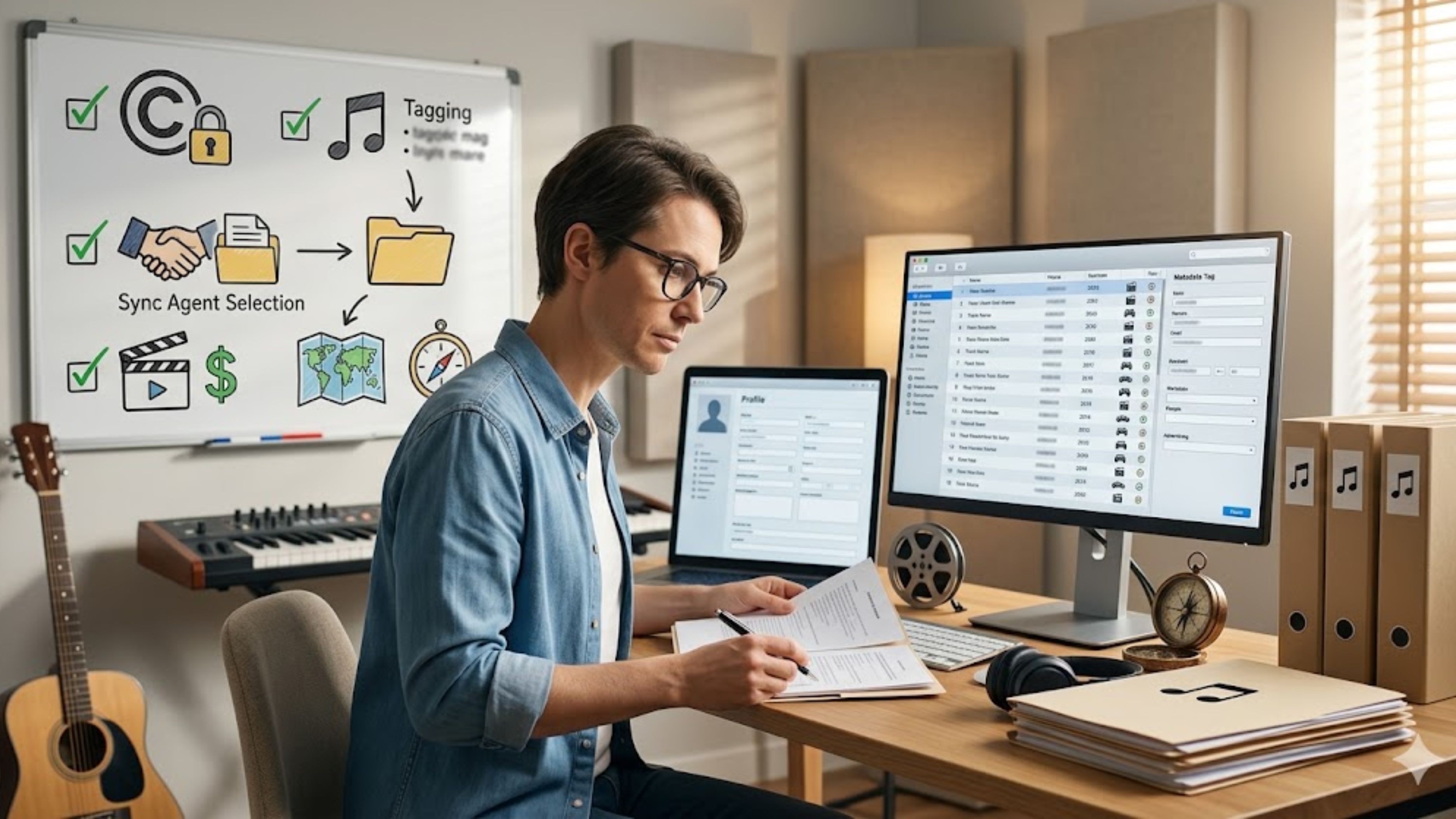
This guide is for artists who want to understand what licensing really is and take the first concrete steps to be ready for it.
What Licensing Your Music Actually Means
When you license your music, you're granting someone else permission to use it under specific conditions – for a set period of time, in a defined context, across a defined territory – while retaining ownership of the copyright. You're not selling your music. You're renting access to it. The person or company licensing it can use it as agreed; you keep the underlying right to license it again to someone else, put it in your own projects, or revoke access when the term expires.
This is the fundamental difference between a license and a sale. A sale (or more precisely, an assignment of copyright) permanently transfers ownership. A license is temporary and conditional. Almost everything artists do in the sync, background music, and content creator licensing world is licensing, not selling – though some agreements are worded to obscure that distinction, which is worth watching for.
Every license specifies what use is permitted, how long, where, and on what terms. Those variables are what determine what a license is worth and what you're agreeing to give up in exchange for the fee.
The Rights You Own as a Creator
Before you can license anything, you need to know what you actually own. Most independent artists own two distinct copyrights in any original song they create:
The first is the composition copyright – the rights in the underlying song itself: the melody, harmony, and lyrics. This is what songwriters own. It exists the moment you create an original work, though registering it with the US Copyright Office (or your country's equivalent) gives you legal protections that are difficult to enforce without it.
The second is the master recording copyright – the rights in the specific recorded version of that song. This is what the artist or producer owns in the recording. In most cases for independent artists who self-produce or self-fund their recordings, you own the master. If a label paid for the recording, they likely own it – check your contract.
Both rights can be licensed separately, and in professional contexts like TV and film, both usually need to be cleared. If you own both (which most fully independent artists do), you can negotiate a single combined deal. If you co-wrote the song, your co-writers also own shares of the composition and their agreement is needed before you can license it.
Knowing exactly what you own, and who else might have a claim, is the starting point for any licensing conversation. It's also what protects you from accidentally licensing rights you don't control.
The Main Types of Music Licenses
Not all licensing works the same way. The type of license determines what the music can be used for, and each type has its own conventions around pricing and terms.
Sync licenses allow music to be synchronized with visual content – film, TV, advertising, YouTube videos, video games, and similar media. The person licensing the music needs permission from both the composition owner and the master recording owner. This is the most lucrative category for most independent artists and the one with the most negotiation involved.
Mechanical licenses cover the reproduction of a composition in recorded form – when someone else wants to record and distribute a cover of your song. Streaming platforms and physical distribution companies pay mechanical royalties for this use, typically at rates set by the Copyright Royalty Board in the US. If your music is on streaming platforms, mechanical royalties are being collected (or should be) every time your music is streamed.
Public performance licenses cover the right to perform a composition publicly – whether live, on broadcast radio, in a restaurant or retail space, or through streaming platforms. These are typically collected by Performing Rights Organizations (PROs) like ASCAP, BMI, or SESAC in the US, who distribute the royalties to registered songwriters and publishers.
Print licenses cover the reproduction of sheet music or lyrics – relevant for educational publishers, music textbook companies, or anyone who wants to print your lyrics in a physical publication.
Blanket licenses are agreements that cover a large catalog of music for a set fee or subscription, rather than licensing individual tracks. Streaming platforms, background music services like Epidemic Sound and Artlist, and some broadcast networks operate on blanket license structures.
For most independent artists starting out, sync and performance licensing are the most immediately relevant and the most worth setting up for.
Step 1: Register Your Copyright
Copyright exists the moment you create an original work, but registered copyright gives you significantly more legal protection. In the US, registering your work with the US Copyright Office ($45–$65 per application for a single work, less for group registrations) creates a public record of your ownership and is required before you can sue for statutory damages in a copyright infringement case.
For independent artists, the practical priority is registering your most commercially valuable and licensable work first – your strongest tracks, your most polished releases, anything you're actively pitching for sync. You don't need to register everything immediately, but unregistered work is harder to protect if a dispute arises.
The Copyright Office's eCO system handles online registration. The process takes 15–30 minutes per work and is straightforward once you have your files and metadata organized.
Step 2: Join a Performing Rights Organization
A PRO collects and distributes performance royalties on your behalf every time your music is performed publicly – on radio, streaming platforms, TV, live venues, and anywhere else that pays performance royalties. In the US, the main PROs are ASCAP, BMI, and SESAC. As a songwriter and publisher, you register your works with a PRO so that royalties flow to you when those works are performed.
Joining a PRO is free for songwriters (ASCAP charges a one-time $50 fee; BMI is free for songwriters). Once you're a member, register your catalog and make sure every track you release is properly registered before it goes live anywhere. Royalties can't be collected retroactively for performances that happened before your music was registered.
If you're both the songwriter and the publisher (which most independent artists are), you can register as both and collect both the songwriter's share and the publisher's share of performance royalties. Setting up a simple publishing entity – even just using your legal name with "Music" appended – is worth doing to capture the publisher's share.
Step 3: Collect Your Mechanical Royalties
Mechanical royalties are generated every time your song is streamed or downloaded, and they're owed to the composition copyright owner – meaning you, if you wrote the song. Streaming platforms pay mechanical royalties, but they don't necessarily find you automatically to pay them. Unclaimed mechanical royalties are a significant issue in the music industry.
The most direct way to collect mechanical royalties in the US is through a mechanical rights administrator. The Harry Fox Agency (now part of Songfile) and Music Reports handle mechanical licensing for many platforms. DistroKid, CD Baby, and other distributors offer publishing administration add-ons that handle mechanical collection for a fee or percentage. SoundExchange collects digital performance royalties (slightly different from mechanicals) for non-interactive streaming like Pandora and internet radio on behalf of recording artists and labels.
If you release music through a distributor, check whether they have a publishing administration option or partner with one. Having your mechanical royalties collected and properly routed is a step most independent artists skip until they've been leaving money on the table for years.
Step 4: Set Up for Sync Licensing
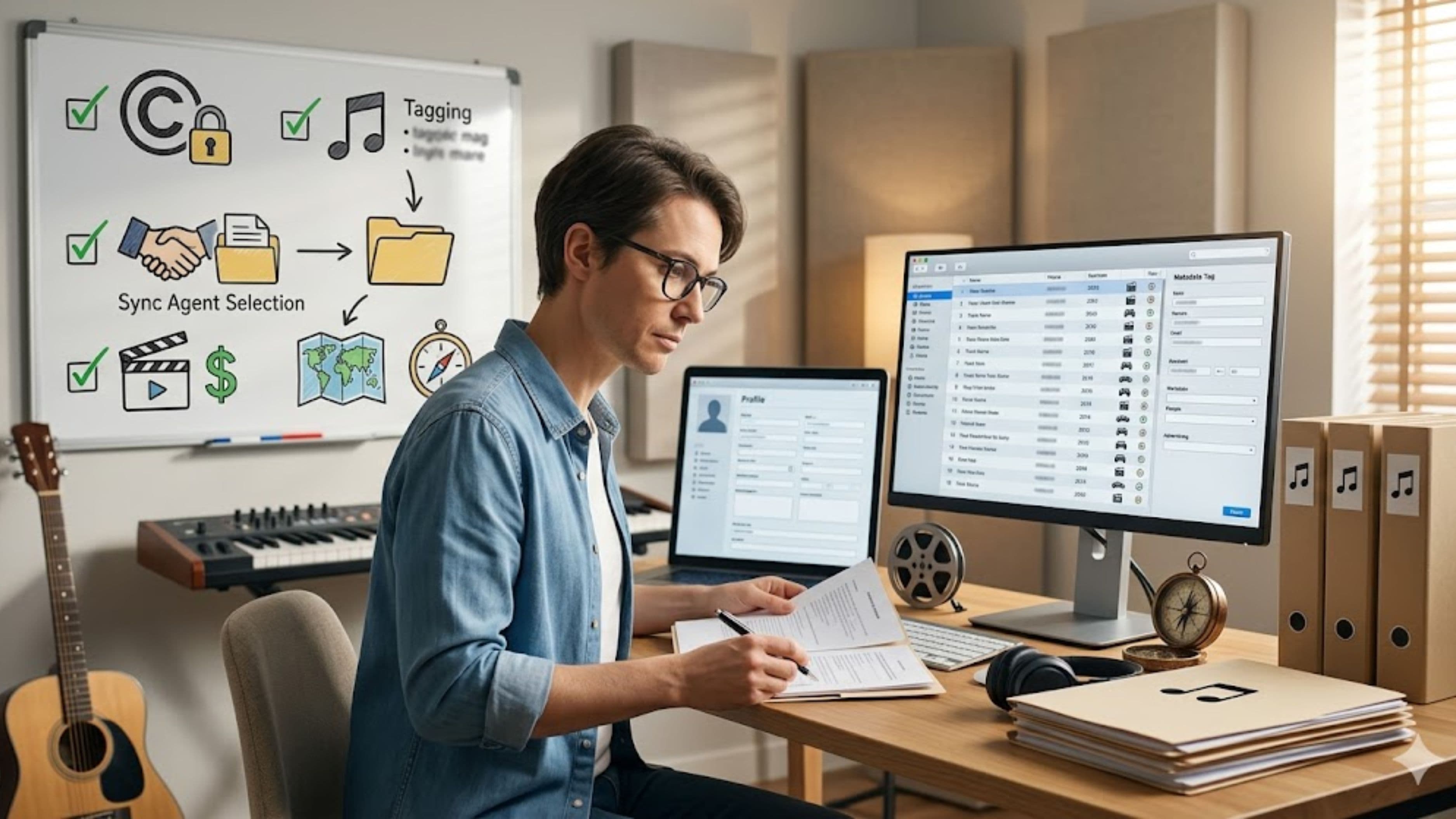
Sync licensing is where significant upfront fees are most often available to independent artists, and setting yourself up for it is more accessible than it used to be. A few things that make you sync-ready:
Your music needs to be cleared – meaning you know what rights you own, you have them documented, and you can represent to a licensee that you control those rights. Co-writer agreements should be in writing. Any samples in your music need to be cleared or replaced; uncleared samples are dealbreakers for most professional sync placements.
You need quality recordings. Sync placements, especially in advertising and film, require professional-sounding recordings. Demo-quality tracks rarely get placed in competitive contexts. This doesn't mean expensive studio recordings – many modern home studio recordings are sync-ready – but the production quality bar is real.
You need metadata. Every track you pitch for sync should have correct metadata embedded in the file: song title, your name, ISRC code (an international standard identifier for recordings), copyright notice, and contact information. A supervisor who can't figure out who owns the music or how to reach you will move on. Services like DistroKid, TuneCore, and CD Baby assign ISRC codes to every release.
Having stems available – separate audio files for different elements of a track (vocals, instruments, percussion) – significantly increases your value to sync supervisors, who often need to customize how music is used. Not every placement requires stems, but having them ready for your most licensable tracks is worth the preparation.
Step 5: Choose How You Want to License
Once your rights are in order and your catalog is ready, you need to decide how you're going to get your music in front of people who want to license it. There are three main approaches, and they're not mutually exclusive.
Direct licensing means handling inquiries and placements yourself – negotiating directly with supervisors, content creators, or companies who reach out. This gives you maximum control and 100% of the fee, but it requires you to handle the business side yourself and depends on being discoverable and building relationships in the industry.
Licensing libraries and platforms are services that pitch your music on your behalf to a network of supervisors, brands, and creators. Services like Musicbed, Artlist, Pond5, Marmoset, and Epidemic Sound operate on different models – some pay you a percentage of each placement, some pay a flat fee for non-exclusive rights, some require exclusivity in exchange for higher visibility. The trade-off between reach, exclusivity, and revenue split varies significantly by platform. Research the specific terms carefully before submitting.
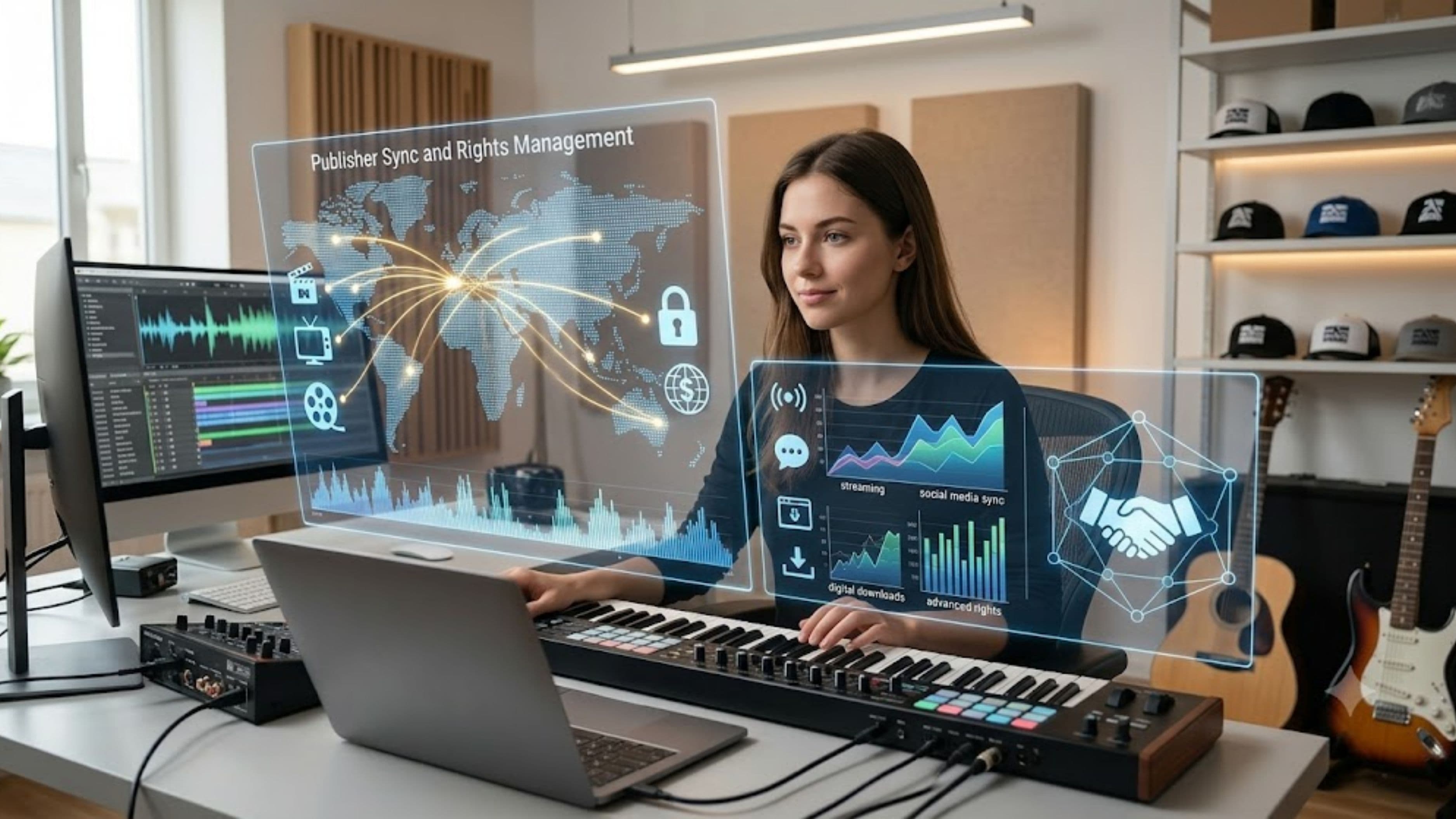
Publishing administrators like Songtrust, CD Baby Pro, and DistroKid's publishing add-on handle royalty collection across multiple income streams globally – PRO registration, mechanical royalties, and sometimes sync pitching – for a subscription fee or a percentage of collected royalties. For artists building a catalog and releasing regularly, a publishing administrator removes significant administrative overhead.
Most artists who get traction in licensing use some combination of all three: handling high-value direct inquiries, having catalog in one or more non-exclusive libraries for passive placement opportunities, and using a publishing administrator for royalty collection.
What to Watch Out For
Exclusivity without adequate compensation. Some libraries and platforms require exclusive rights to your catalog in exchange for pitching it. If your music isn't being actively placed, exclusivity locks you out of other opportunities for nothing. Read the terms and understand what exclusivity means – some agreements only prevent you from submitting to competing libraries; others prevent any third-party licensing without going through them.
Work-for-hire framing. Any agreement that calls your music a "work for hire" is effectively asking you to sign away your copyright permanently. This language sometimes appears in sync and library agreements worded to look like standard licensing deals. A license grants permission to use your music; a work-for-hire agreement makes the music legally someone else's creation. These are fundamentally different and the distinction is worth understanding clearly.
Unregistered music. Submitting music for sync or uploading it to streaming without PRO registration means any performance royalties generated go uncollected. Register your catalog before it goes anywhere public.
Metadata gaps. Missing or incorrect metadata in your audio files means royalty payments get delayed or lost. Always embed accurate title, artist, songwriter, publisher, copyright year, and ISRC information in every file you distribute or submit.
FAQ
Do I need a music publisher to license my music? No. Publishing is the business of managing and licensing music rights, and as an independent artist, you are your own publisher by default. A traditional publisher can help with pitching and connections, but they take a significant percentage (often 25–50% of publishing income) and may require exclusivity. Publishing administrators handle the administrative side for a much smaller fee and without giving up control.
What's the difference between ASCAP and BMI? Both are US PROs that collect and distribute performance royalties. The functional difference for most independent artists is minimal – they cover the same performing rights, pay on similar timelines, and have similar royalty rates. You can only belong to one PRO as a songwriter. ASCAP is a member organization; BMI is privately owned. Both have comparable reputations. Choose based on which fits your workflow better, or based on where peers in your genre tend to register.
How long does it take to start earning from licensing? It depends heavily on your catalog, your investment in the process, and how you approach it. Performance royalties from streaming take months to flow through PROs after registration. Sync placements can happen quickly if your music is submitted actively to the right libraries, or slowly if you're waiting for inbound inquiries. Mechanical royalty collection takes time to set up properly. Setting up all your infrastructure now means income flowing reliably in 6–12 months from music you're releasing today.
Can I license music that has samples in it? Not typically, unless those samples are cleared. A cleared sample means you have a written agreement with the original copyright holder allowing you to use it in your recording and sublicense it. Uncleared samples are a liability for any licensee, which is why most professional sync placements require sample-free music or fully cleared samples. If your tracks contain uncleared samples, they're generally not sync-licensable in professional contexts.
What metadata do I actually need on my files? At minimum: song title, artist name, songwriter name(s), publisher name, copyright year, ISRC code (for recordings), and contact email. For sync submissions, a short description of the mood and tempo is also useful. Metadata embedded in the audio file itself (ID3 tags for MP3s, metadata for WAV files) is what travels with the file regardless of where it goes.
📚 Sources
ASCAP – Music Licensing Basics: https://www.ascap.com/help/money-and-licensing/licensing-basics
BMI – Getting Started as a Songwriter: https://www.bmi.com/creators/songwriter
US Copyright Office – Copyright Registration: https://www.copyright.gov/registration/
SoundExchange – About Digital Royalties: https://www.soundexchange.com/service-provider/
Future of Music Coalition – Music Revenue Streams: https://futureofmusic.org/article/fact-sheet-musician-revenue-streams
Songtrust – Publishing Administration Explained: https://www.songtrust.com/blog/what-is-music-publishing-administration