Why Podcasts Have a Unique Licensing Problem
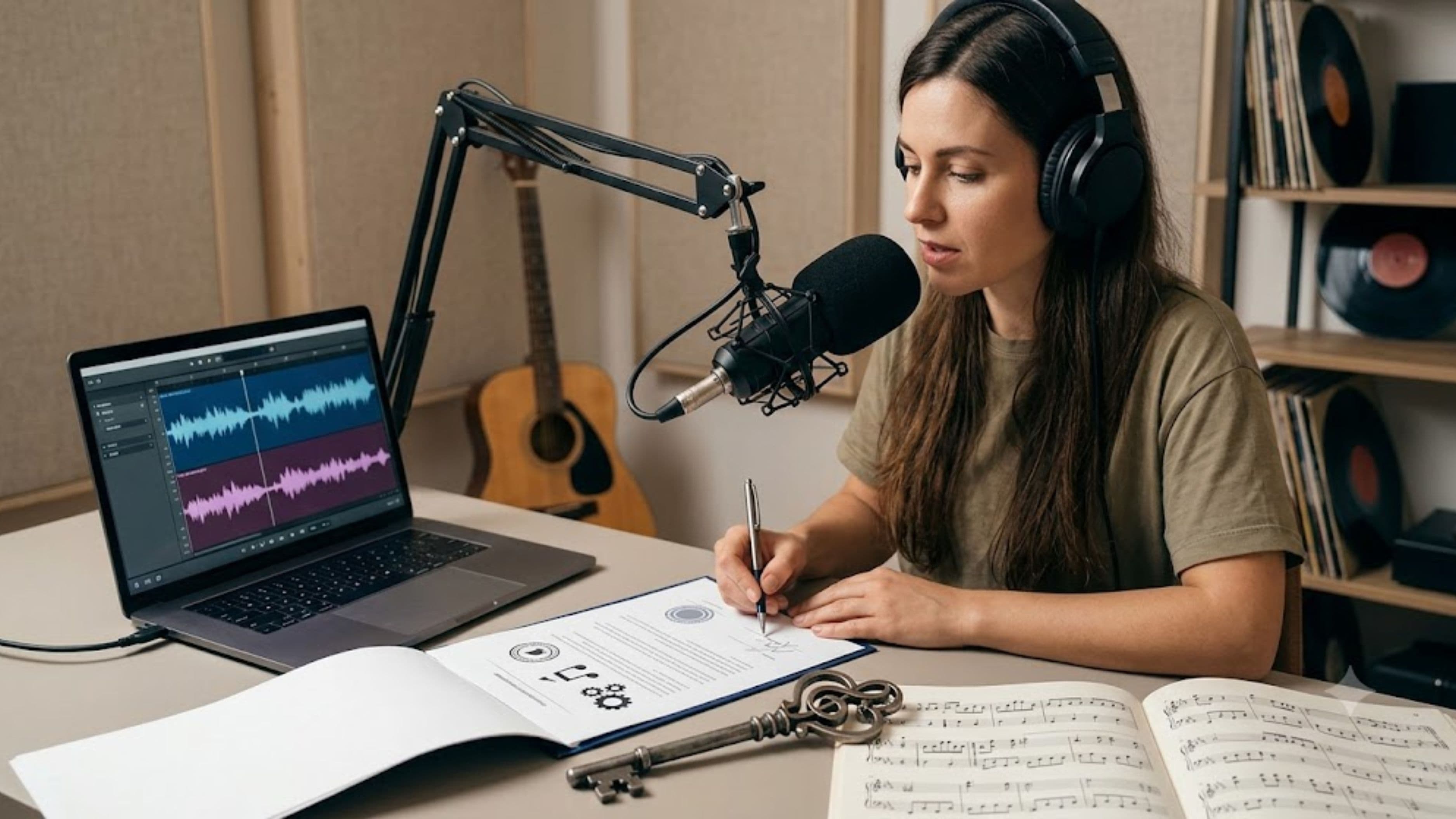
Music licensing exists in two distinct layers: the master recording (the actual audio file of a specific performance) and the underlying composition (the musical notes, chords, and lyrics as written). Every piece of commercially released music has both, and both require a license if you want to use it in your podcast.
This is where podcasters get caught out. Buying a song on iTunes doesn't give you the right to broadcast it. A Spotify subscription doesn't either. Even buying a CD gives you the right to listen personally, not to use the recording in a distributed audio production. The license you need for podcasting – specifically for on-demand audio distributed to potentially unlimited listeners – is a synchronization or mechanical license combined with a public performance right, and neither of those comes bundled with consumer purchase.
Television, film, and radio have established licensing infrastructure for this. Podcasting hasn't fully caught up, which means the licenses you'd need to legally play a mainstream commercial track in your podcast are genuinely difficult to obtain and prohibitively expensive for independent creators.
What Streaming Platforms Actually Do With Music
A common misconception is that once a podcast is on Spotify or Apple Podcasts, the platform handles music licensing the way it does for music streaming. It doesn't. Spotify licenses music for its music service. That licensing does not extend to podcast content hosted on the platform. If you include a 30-second clip of a Drake track in your podcast episode and distribute it on Spotify, you are personally responsible for that license – not Spotify.
Some platforms are stricter than others about enforcement. Spotify has taken episodes down for unlicensed music. Apple Podcasts has removed content. YouTube's Content ID system will flag audio that matches licensed recordings and either mute episodes, block them, or redirect monetization to the rights holder. The enforcement is uneven and inconsistent, but inconsistency isn't protection – episodes can be flagged months or years after upload when rightsholders or their representatives run systematic searches.
The Four Licensing Options That Actually Work for Podcasters
Understanding your options makes this much less overwhelming. There are essentially four approaches that give you legal access to music for podcast use.
Royalty-free music libraries are the most practical choice for most independent podcasters. These are libraries where the creator pays a one-time fee or subscription and gets the right to use the music in their productions without paying ongoing royalties per use. The term "royalty-free" is sometimes misunderstood – it doesn't mean free, it means the royalty payment is built into the upfront licensing fee.
Libraries like Epidemic Sound, Artlist, Musicbed, and Soundstripe are widely used in podcasting and video production. Epidemic Sound and Artlist both offer podcast-specific licensing tiers. Subscription costs vary from $10–$50/month depending on the platform and plan, but that covers unlimited tracks for the subscription period.
Creative Commons licensed music is music where the creator has chosen to share their work under a license that allows certain uses without direct payment. Not all Creative Commons licenses are appropriate for podcasting – you need to look specifically for CC licenses that permit commercial use (CC BY or CC BY-SA, for example) rather than licenses with a non-commercial restriction (CC BY-NC). Free Music Archive and ccMixter are good starting points. Always verify the specific license on each track before use, and attribute properly as the license requires.
Direct licensing from independent artists is an underused option that works well for music podcasts specifically. If you're running a show that features emerging artists or covers a specific scene, reaching out directly to independent musicians for permission to use their tracks serves both parties – you get music that fits your show, they get exposure to a targeted audience. The license can be informal (an email confirming permission for podcast use, retained as documentation) or more formal depending on the relationship and scale. Many independent artists are willing to grant podcast licenses for credit and link placement in show notes, especially for smaller shows.
Statutory licensing through a PRO is theoretically available but practically complicated for most podcasters. Performing Rights Organizations like ASCAP, BMI, and SESAC collect royalties for public performance of music and issue blanket licenses. However, these licenses typically cover public performance in traditional broadcast contexts and don't clearly extend to on-demand podcast distribution, which is treated differently in copyright law. The PRO licenses also only cover the composition rights, not the master recording rights – which means even with a PRO license, you'd still need to separately license the actual recording from the record label or artist. For most independent podcasters, PRO licensing is not a clean solution for podcast music use.
The Fair Use Question
Fair use – or its international equivalents like fair dealing – is the copyright doctrine that allows limited use of copyrighted material without permission under specific circumstances. People cite it frequently as a defense for using commercial music in podcasts. It's a far less reliable protection than most people assume.
Fair use is not a right – it's a defense that a court evaluates after infringement has been alleged, based on four factors: the purpose and character of the use, the nature of the copyrighted work, the amount used, and the effect on the market for the original work. "I only used 30 seconds" is not a fair use defense by itself. There's no length threshold that automatically qualifies as fair use.
Commentary, criticism, and education are fair use-adjacent purposes that do carry more weight in court evaluations – a podcast episode where a host plays a clip specifically to analyze or critique it is in a stronger position than one that plays it as background music or in a compilation. But even commentary-based fair use in podcasting is untested enough that relying on it is a genuine legal risk rather than a clear safe harbor. If your show is built around music criticism and you're playing short clips in the context of analytical discussion, the legal footing is meaningfully better than using music as a theme or background element. If you're not certain, consulting an attorney who works with media creators is worth the cost.
Interview Shows and Live Performance Recording
Music podcast formats that involve interviewing artists or recording live performances have their own licensing considerations worth understanding separately.
If an artist plays original music live during your podcast interview and you record and distribute that performance, you need a license – or, more practically, a direct permission agreement with the artist covering podcast distribution. Most independent artists will grant this willingly; get it in writing. If the artist is signed to a label, the label may control recording rights and you may need their approval as well.
Playing back a commercial recording during an interview – "let's listen to this track" – has the same licensing requirements as any other commercial recording use. It doesn't matter that you're in a conversation with the artist who made it; you're distributing that recording without the required license. The cleanest approach is to link to the official track in your show notes and describe it verbally rather than play it back.
Building a Music System That Scales
The practical approach most working podcasters settle on is a tiered system. Use a royalty-free library subscription for intro, outro, and background music – one subscription gives you access to hundreds of tracks and clear licensing terms for ongoing use. Reserve direct licensing conversations for specific cases where you want to feature a particular artist's music as part of a segment. Stay away from commercial recordings unless you've done the licensing work or have a legitimate fair use case with clear editorial purpose.
Keep documentation. When you license a track, save the license agreement or purchase confirmation. When you get direct permission from an artist, keep the email or written agreement. If a dispute arises months or years later, having documentation of your licensing is what protects you.
Revisit your existing episodes. If your early episodes used commercial music under the assumption that it would be fine, that assumption was incorrect and those episodes carry ongoing risk. The practical options are to replace the music with properly licensed alternatives and re-upload, or to remove the episodes from distribution while you address the licensing. This is uncomfortable if you're attached to the audio, but it's the cleaner path forward.
What to Watch Out For
Royalty-free doesn't mean license-free. Read the specific terms of any library you subscribe to. Some libraries exclude podcast use from standard plans and require a podcast-specific tier. Some limit the number of downloads per month. Some have restrictions on monetized content. Don't assume the subscription covers everything – check the licensing terms for your specific use case.
"For YouTube" licenses may not cover podcast distribution. Some royalty-free libraries license music specifically for video content and their standard agreements don't extend to audio-only podcast distribution. Epidemic Sound and Artlist both explicitly cover podcast use in their terms; smaller libraries may not. Always verify before publishing.
AI-generated music is not automatically license-free. Music generated by AI tools may still involve underlying training data with copyright implications that haven't been fully resolved legally. Using AI music generation tools with clear commercial licensing terms (like Soundraw or Mubert's commercial plans) provides more protection than using output from tools where the licensing terms are unclear.
Podfade doesn't protect you. Leaving an old episode published indefinitely even after you've stopped producing the show means any unlicensed music in those episodes continues to create infringement exposure. If you're winding down a podcast, review your back catalog and address any licensing gaps before walking away.
FAQ
Can I use a song if I credit the artist in the show notes? No. Credit is a moral and attribution practice, not a substitute for a license. Crediting the artist doesn't grant you the right to use the recording. If anything, clear attribution makes it easier for rights holders to identify unlicensed use.
What about music in the public domain? Music whose copyright has expired is in the public domain and can be used freely. For compositions (the sheet music and melody), this generally means work from composers who died more than 70 years ago (longer in some jurisdictions). However, specific recordings of public domain compositions may still be protected – a modern orchestra's recording of a Beethoven symphony is still covered by copyright even though Beethoven's compositions are not. Use specific recordings that are explicitly released under public domain or Creative Commons licenses.
Is there a safe number of seconds I can use without a license? No. The "30-second rule" and similar thresholds are myths that have no basis in copyright law. Any use of a copyrighted recording without a license is potential infringement regardless of length.
What happens if I get a DMCA takedown? Your hosting platform will typically remove the episode. You can file a counter-notice if you believe the takedown was incorrect, but this opens you to potential litigation if the rights holder pursues it. The practical response for most podcasters is to remove the offending content, replace it with licensed music, and re-upload the corrected episode.
Do I need a license for music I wrote and recorded myself? No. If you wrote the composition and own the master recording, you hold all the rights and can use it freely. This is one reason why original theme music commissioned from an independent musician (with a proper work-for-hire agreement transferring rights to you) is a clean long-term solution for podcast branding.
📚 Sources
U.S. Copyright Act and sound recordings – U.S. Copyright Office: https://www.copyright.gov/title17/
Podcast music licensing overview – Epidemic Sound: https://www.epidemicsound.com/blog/music-licensing-for-podcasts/
Creative Commons license types explained – Creative Commons: https://creativecommons.org/about/cclicenses/
Fair use factors under U.S. copyright law – U.S. Copyright Office: https://www.copyright.gov/fair-use/
Artlist podcast licensing terms – Artlist: https://artlist.io/licenses/