That's starting to change. A growing category of royalty management tools is bringing the kind of revenue tracking and rights administration that used to require a publisher or label into reach for individual artists and small teams. If you've never looked closely at what these tools actually do, what they cost, and where their limits are – this is a practical breakdown.
Why Royalty Collection Is So Complicated
To understand what these tools are solving, it helps to understand why music revenue is fragmented in the first place. When a song generates money, that money doesn't come from one place. It comes from multiple separate rights and royalty streams, each administered through different organizations, on different timelines, with different collection mechanisms.
A single track that gets played on Spotify generates performance royalties (paid to songwriters and publishers through performance rights organizations like ASCAP, BMI, or SESAC in the US), mechanical royalties (paid to songwriters and publishers for the right to reproduce the composition, now largely collected through the Mechanical Licensing Collective in the US), and master royalties (paid to the owner of the recording, distributed by the distributor or collected directly through streaming platform agreements). Sync placements in TV, film, or advertising generate separate sync fees and royalties. Radio airplay triggers additional performance royalties. YouTube streams generate Content ID revenue. International performances generate royalties through foreign PROs that may or may not have a collection agreement with your home PRO.
Most independent artists are registered with one PRO and have a distributor handling their master royalties. That catches the most obvious revenue streams. But many are not registered with the MLC for mechanicals, have no system for tracking international royalties, have never set up YouTube Content ID, and have no visibility into whether royalties from less prominent platforms are actually reaching them. The gaps add up.
What Royalty Management Tools Actually Do
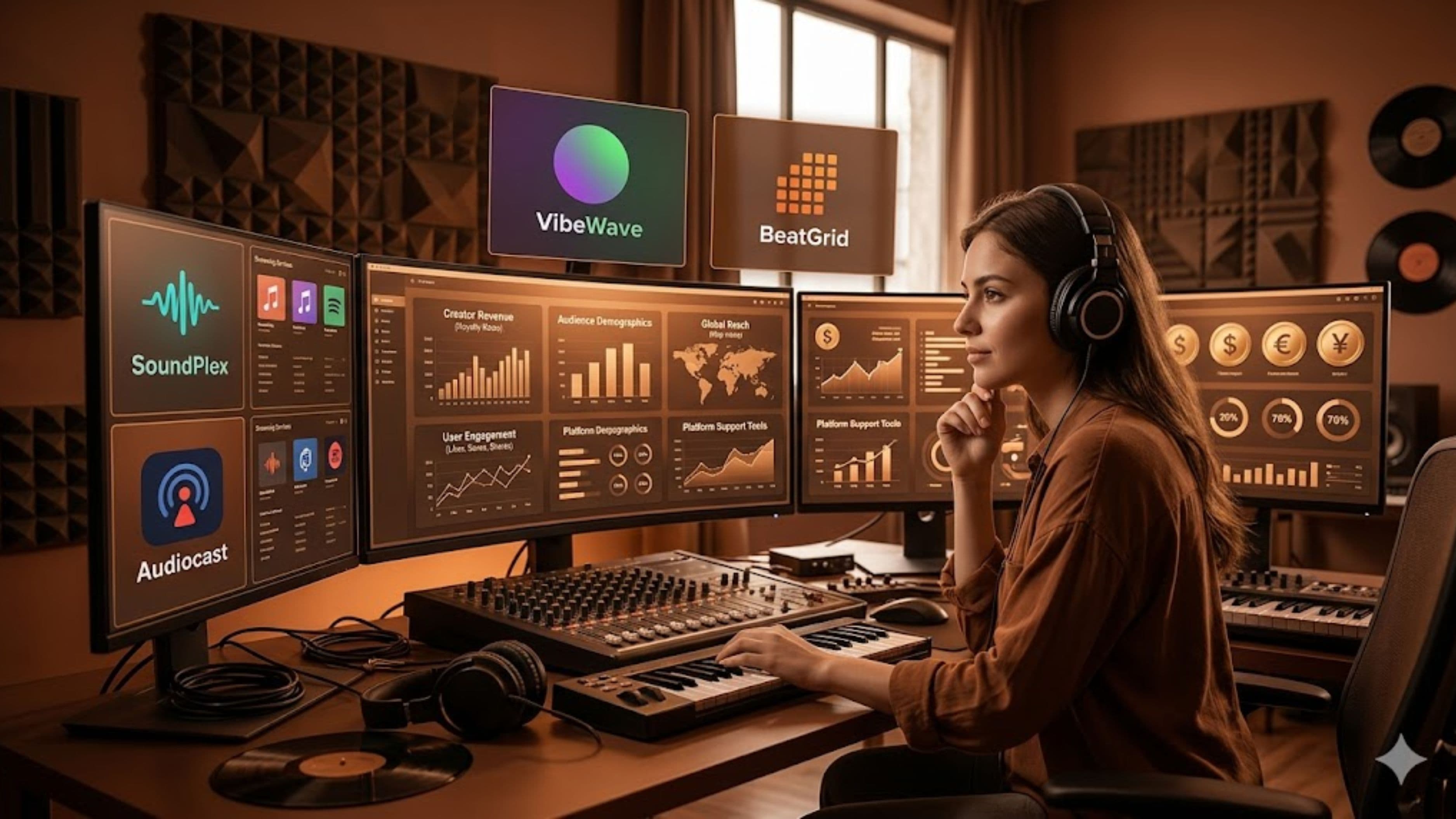
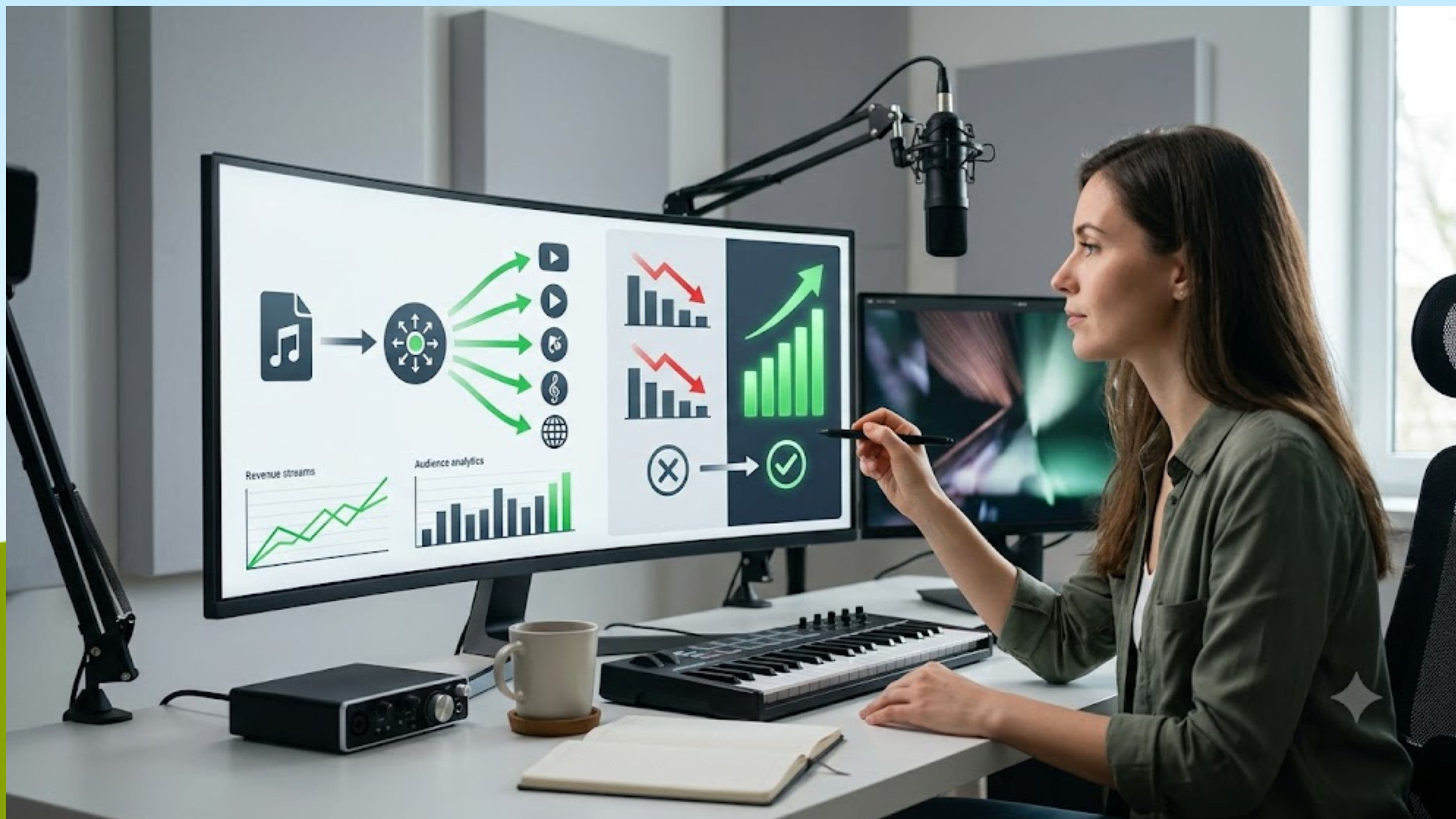
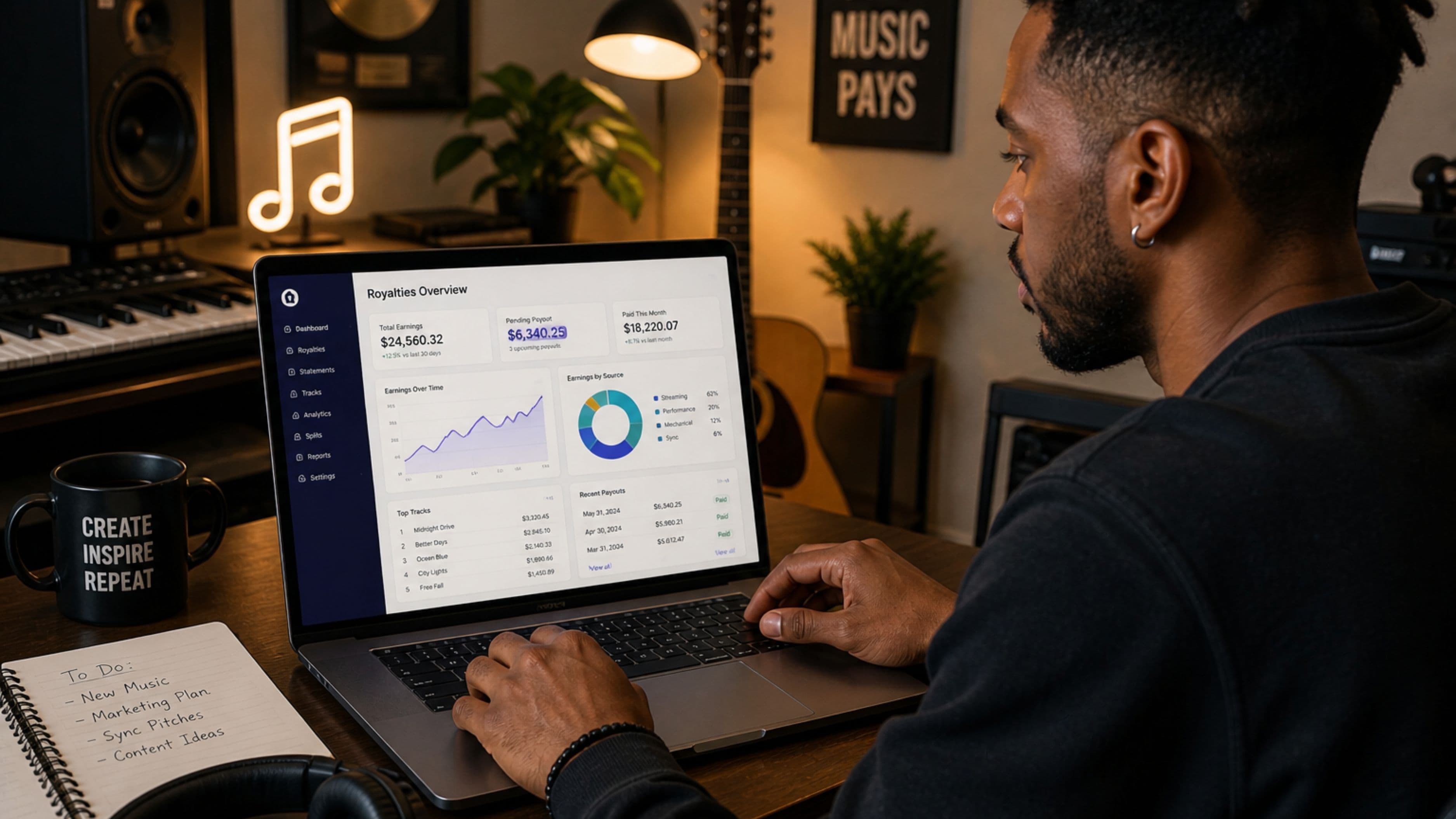
Royalty management platforms vary in scope, but the core function most of them share is aggregating royalty data from multiple sources into a single dashboard. Instead of logging into your distributor, your PRO account, your MLC account, and any other rights organizations separately – each with their own reporting formats and release timelines – you see your revenue in one place, with enough detail to understand where it's coming from and where it might be missing.
More sophisticated platforms go beyond aggregation. Some actively audit your catalog for unclaimed royalties and file recovery claims on your behalf. Others handle rights registration directly – registering your works with PROs, the MLC, and international royalty societies so the collection infrastructure is in place before money starts flowing, rather than after you've already missed it. Some offer publishing administration services that take on the ongoing management of your catalog's rights for a fee or percentage.
The reporting quality is often what creates the most immediate value. Understanding that you made $400 from Spotify streams last quarter is useful. Understanding that $280 came from the US, $60 from Germany, $40 from the UK, and $20 from other territories – and that you're not registered with the relevant German performance rights organization to collect the performance royalties that go alongside those streams – is actionable.
Key Platforms in the Space
Songtrust is one of the most established global publishing administration services available to independent artists. It registers your songs with collection societies in more than 60 countries, collects mechanical and performance royalties globally, and delivers them to you through a single account. The setup fee is $100 per songwriter, with an ongoing annual fee and a 15% commission on collected royalties. Songtrust is best suited for songwriters who want true global coverage without setting up their own publishing company or signing with a publisher.
DistroKid's Publishing Administration (powered by Songtrust) offers publishing admin integrated into the distributor's ecosystem. If you're already distributing through DistroKid, this is a lower-friction entry point to global publishing collection, though the underlying infrastructure is Songtrust's.
Soundcharts and Chartmetric are analytics platforms rather than royalty collection services, but they serve an important adjacent function – tracking where your music is being played, charted, and added to playlists across streaming platforms and radio. For artists trying to understand whether their royalty reports accurately reflect their actual performance, this kind of tracking data provides a useful cross-reference.
LANDR's Distribution and Royalty Reporting combines distribution with a royalty dashboard that aggregates revenue from major platforms. Like most distributor-based tools, it's strong on master royalties but limited on the publishing side unless you're also enrolled in their publishing admin option.
Tempo (formerly Jammber) focuses on royalty splits and payment management for collaborators – a specific pain point for artists who co-write or co-produce and need a reliable way to track, manage, and distribute payments across multiple contributors. For artists working in collaborative contexts, split management tools solve a real problem that general royalty dashboards don't address.
Boomplay and Audiomack have expanded their artist analytics and revenue dashboards specifically for African and diaspora markets, recognizing that international royalty collection for artists with significant African streaming audiences has historically been poorly served by platforms designed for Western markets.
The Gaps These Tools Still Don't Fully Solve
It's worth being direct about where the current generation of royalty management tools falls short, because the pitch from some platforms can make the process sound more complete than it actually is.
International collection remains genuinely incomplete for many territories. Even the most comprehensive global publishing admin services have affiliate relationships with collection societies in some markets rather than direct collection agreements. This means royalties from certain countries go through a secondary layer that can introduce additional delays and sometimes additional deductions. Coverage maps vary by provider – check specifically which territories are covered directly before assuming full global reach.
Timeliness is a structural challenge, not a technology problem. Music royalties are notoriously slow – performance royalties from live performances or radio can take 12–18 months to work through the collection system before reaching an artist, regardless of which platform you use to receive them. A royalty management tool can give you better visibility into what's been collected, but it can't accelerate the underlying collection process, which depends on PROs and collection societies that operate on their own timelines.
Streaming micro-royalties are real but modest. Some platforms encourage artists to sign up by highlighting all the unclaimed micro-royalties sitting in various collection accounts. While unclaimed royalties are a real phenomenon – particularly for artists who haven't registered their works properly – the amounts are often smaller than marketing materials imply for artists at early stages of catalog development. If your catalog generates modest streams, the administrative overhead of managing multiple royalty accounts may not be justified by the incremental revenue until you reach a certain scale.
Black box royalties are difficult to recover. The music industry has a structural problem with so-called "black box" royalties – money that collection societies have collected but cannot match to a specific rights holder due to incomplete metadata or missing registrations. Some royalty management platforms actively help with metadata completeness, which reduces future black box losses. Recovering money already in the black box is harder and often impractical for individual artists.
What This Means If You're an Independent Artist
The practical starting point for most independent artists isn't a sophisticated royalty management platform – it's making sure the basic infrastructure is in place first.
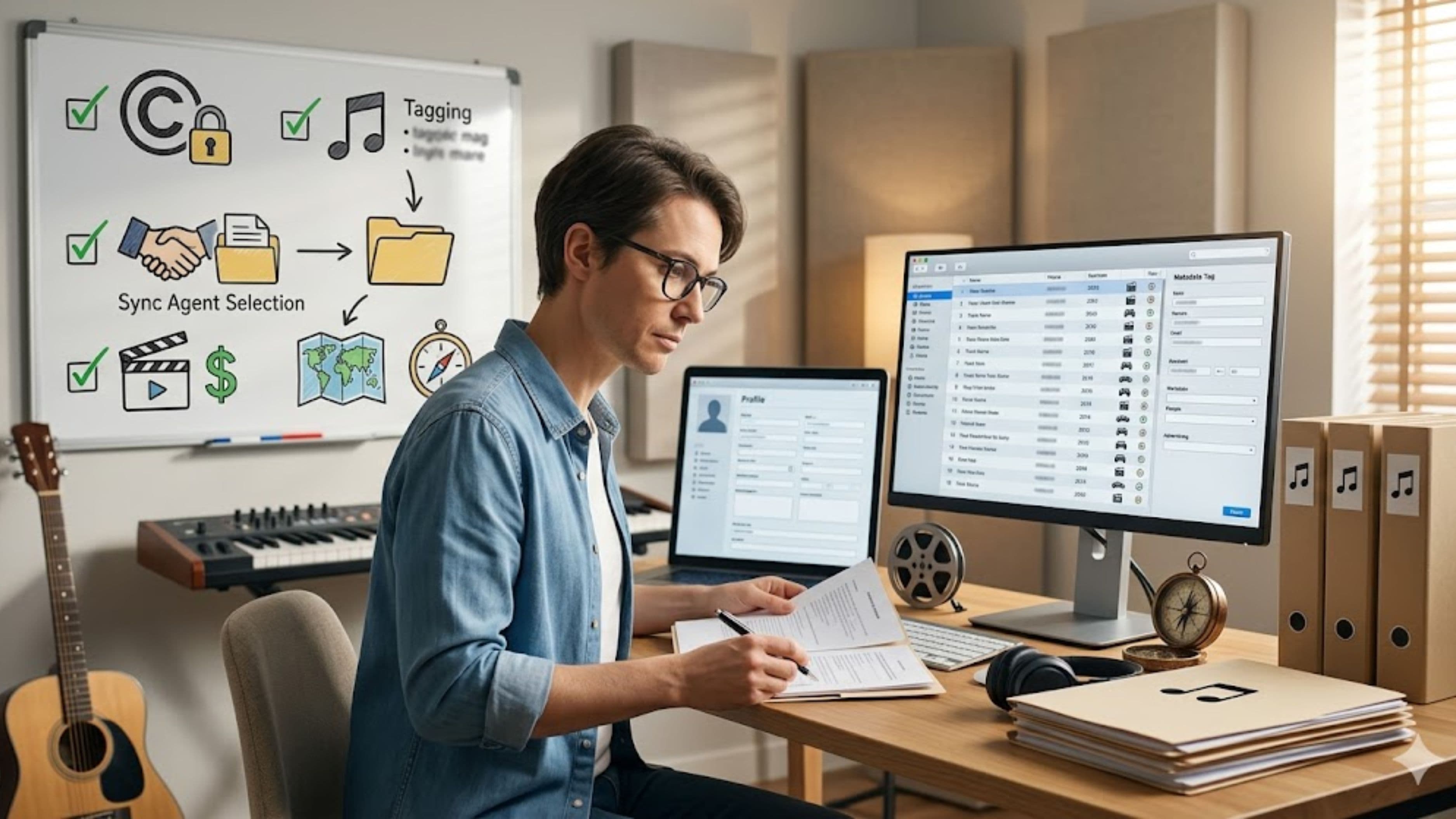
That means being registered with a PRO (ASCAP, BMI, or SESAC in the US), registering your songs with that PRO, enrolling in the Mechanical Licensing Collective at themlc.com to collect US mechanical royalties from streaming, and setting up YouTube Content ID through your distributor or a third-party service to capture music used in YouTube videos. These four steps alone recover a significant share of the revenue that most independent artists are currently missing, and none of them require a paid platform subscription.
Once that foundation is in place, the case for a publishing administration service like Songtrust becomes clearer if you have genuine international streaming activity. If a meaningful share of your plays are coming from Germany, Japan, Brazil, or other markets with active collection societies, registering for global publishing collection will generate real revenue that you'd otherwise forfeit. The break-even analysis is relatively simple: if Songtrust's 15% commission on collected royalties exceeds the annual fee cost, the service is net positive.
For artists managing split payments across multiple collaborators, a tool like Tempo solves a specific administrative problem that becomes increasingly painful at scale and is worth the overhead even at modest catalog sizes.
What to Watch Out For
Some services in this space market themselves aggressively around "unclaimed royalties" language that can create unrealistic expectations. The implication is that there are large pools of money waiting with your name on them. For well-established artists with significant catalog history, this can be true. For artists with smaller catalogs and recent release histories, the unclaimed royalty opportunity is real but usually more modest. Evaluate any service on its actual collection infrastructure and fee structure, not on marketing claims about money you're supposedly owed.
Watch for percentage-based fees that compound across multiple layers. If your distributor takes a cut, your PRO takes an administrative deduction, and a publishing admin service takes 15–20% on top of that, the combined overhead starts to become meaningful relative to the revenue generated. Know exactly what each service charges and on what base before layering multiple services.
Finally, metadata quality is the foundation of everything. Royalty management tools can only collect and match royalties for music that's properly registered with complete, accurate metadata – ISRC codes for recordings, ISWC codes for compositions, correct songwriter splits, and consistent artist name formatting across platforms. Before investing in any royalty management tool, audit your catalog metadata to ensure it's complete and consistent. Incomplete metadata is the most common reason royalties go uncollected, and no platform can fix it after the fact without manual correction.
FAQ
Do I need a publishing admin service if I'm already with a PRO? Being registered with a PRO covers performance royalties in your home country. A publishing admin service like Songtrust collects mechanical royalties and extends your performance royalty collection to international territories through affiliate collection agreements. If you have meaningful streaming activity outside your home country, a publishing admin service collects revenue that your PRO registration alone doesn't capture.
What is the MLC and do I need to register with it? The Mechanical Licensing Collective (MLC) is the organization designated by US copyright law to collect mechanical royalties from US streaming services on behalf of songwriters and publishers. It launched in 2021 as part of the Music Modernization Act. If you're a US songwriter and haven't registered your works with the MLC at themlc.com, you're likely leaving US mechanical streaming royalties uncollected. Registration is free.
How long does it take to see royalties after registering? After registering your works, expect 3–6 months before the first meaningful royalty payments appear, and in some cases longer for international collections. Royalty collection pipelines have inherent delays – performance royalties from streaming in a given quarter may not be distributed until 6–12 months later depending on the collection society. Registering earlier rather than later preserves your eligibility; the timing of payment follows the collection cycle regardless.
Can I manage all my royalties through one platform? Not completely, at current. No single platform handles 100% of royalty collection across all rights types and territories. A practical stack for most independent artists involves a distributor (for master royalties), a PRO registration (for performance royalties), MLC enrollment (for US mechanicals), and optionally a publishing admin service (for international mechanicals and performance). Aggregation dashboards can give you a unified view, but the underlying collection infrastructure remains distributed.
The Bottom Line for Independent Artists
Royalty management tools aren't magic – they don't create revenue that wouldn't exist otherwise, and they can't compress the industry's inherently slow collection timelines. What they do is reduce the information gap between what you've earned and what you can see, and close the registration gaps that cause royalties to go uncollected in the first place. For artists serious about their catalog as a long-term asset, getting the infrastructure right early matters more than any single tool choice. Start with the free registrations, then evaluate paid services against the actual revenue they're likely to generate for your specific catalog and audience.
📚 Sources
The Mechanical Licensing Collective. How to register as a songwriter. – https://www.themlc.com/register
ASCAP. Royalty collection and distribution overview. – https://www.ascap.com/help/royalties-and-licensing/royalties
Songtrust. How global publishing administration works. – https://songtrust.com/how-it-works
Music Modernization Act. Summary of the MMA. U.S. Copyright Office – https://www.copyright.gov/music-modernization/
International Federation of the Phonographic Industry. Global music report 2024. – https://www.ifpi.org/ifpi-global-music-report/
Soundcharts. Music analytics platform overview. – https://soundcharts.com/blog/music-royalties-guide