The Outcome You're Actually After
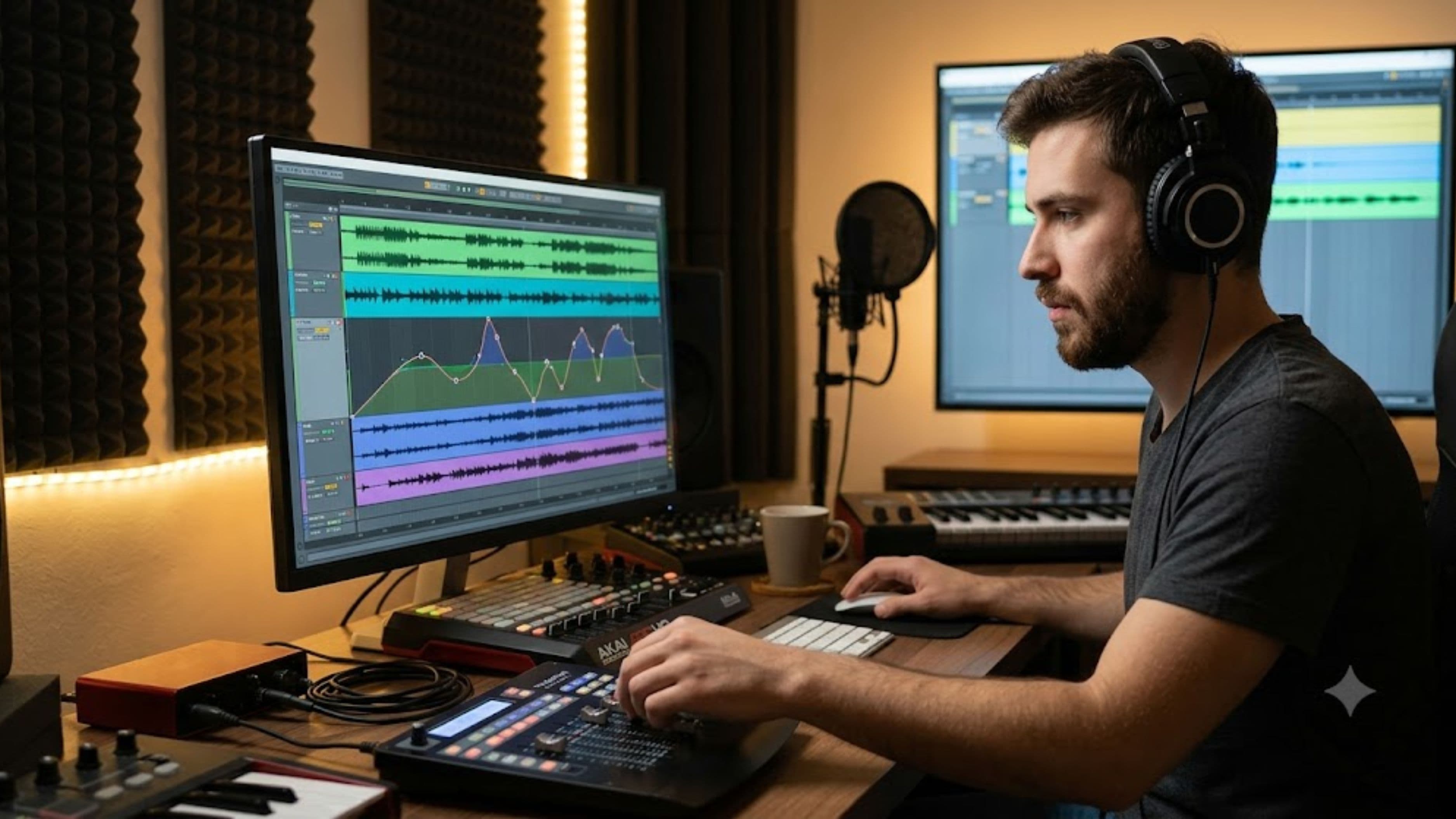
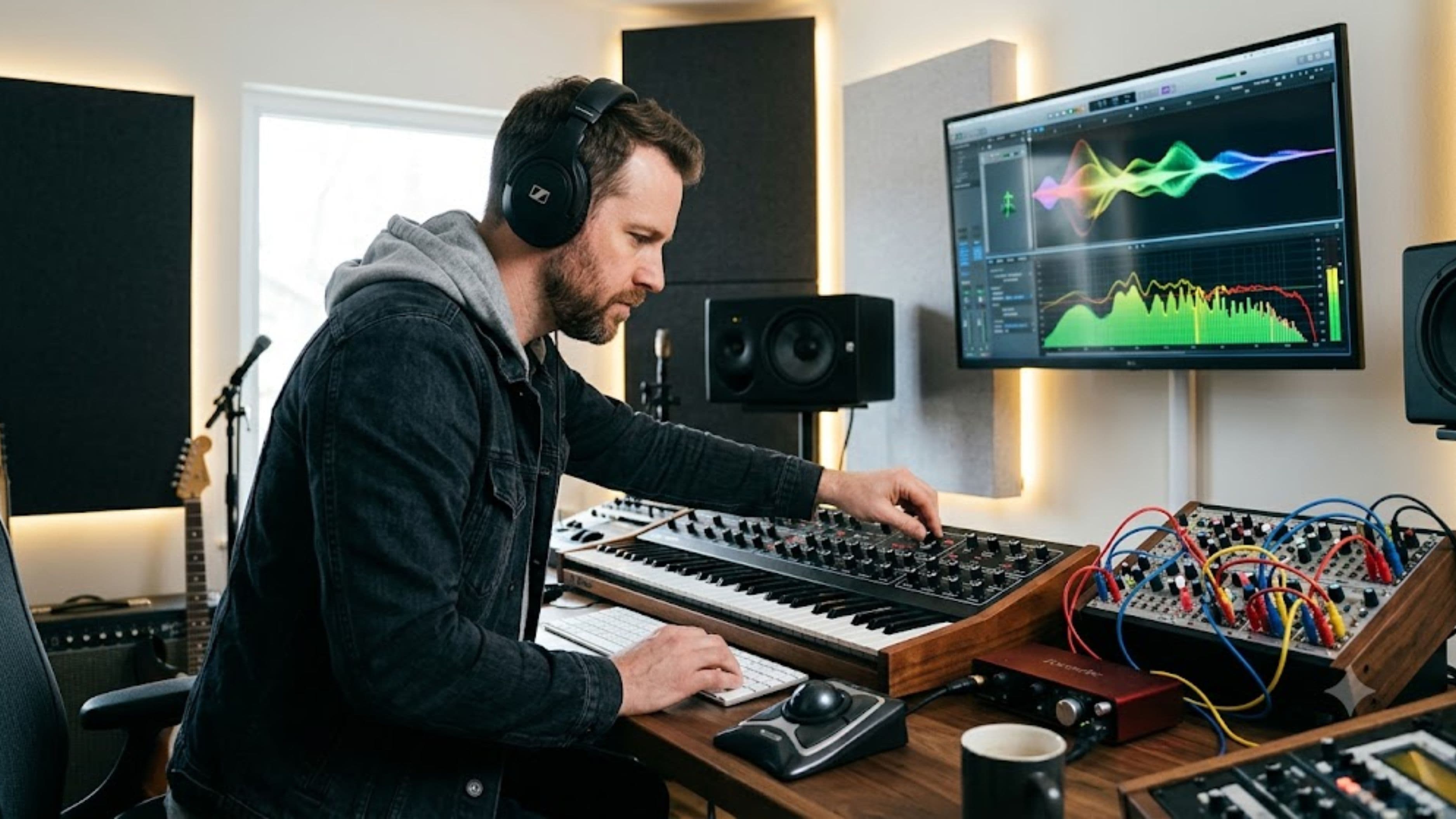
The goal here isn't memorizing every scale and mode in isolation, it's connecting theory concepts to the music you're already making or listening to, so theory becomes a tool that explains and expands what you already do instinctively, rather than a separate academic subject you're forcing yourself through. Done right, this process takes weeks to start feeling useful, not months, because you're mapping new vocabulary onto existing musical intuition instead of building everything from zero.
Step 1: Start With What You Already Play or Write
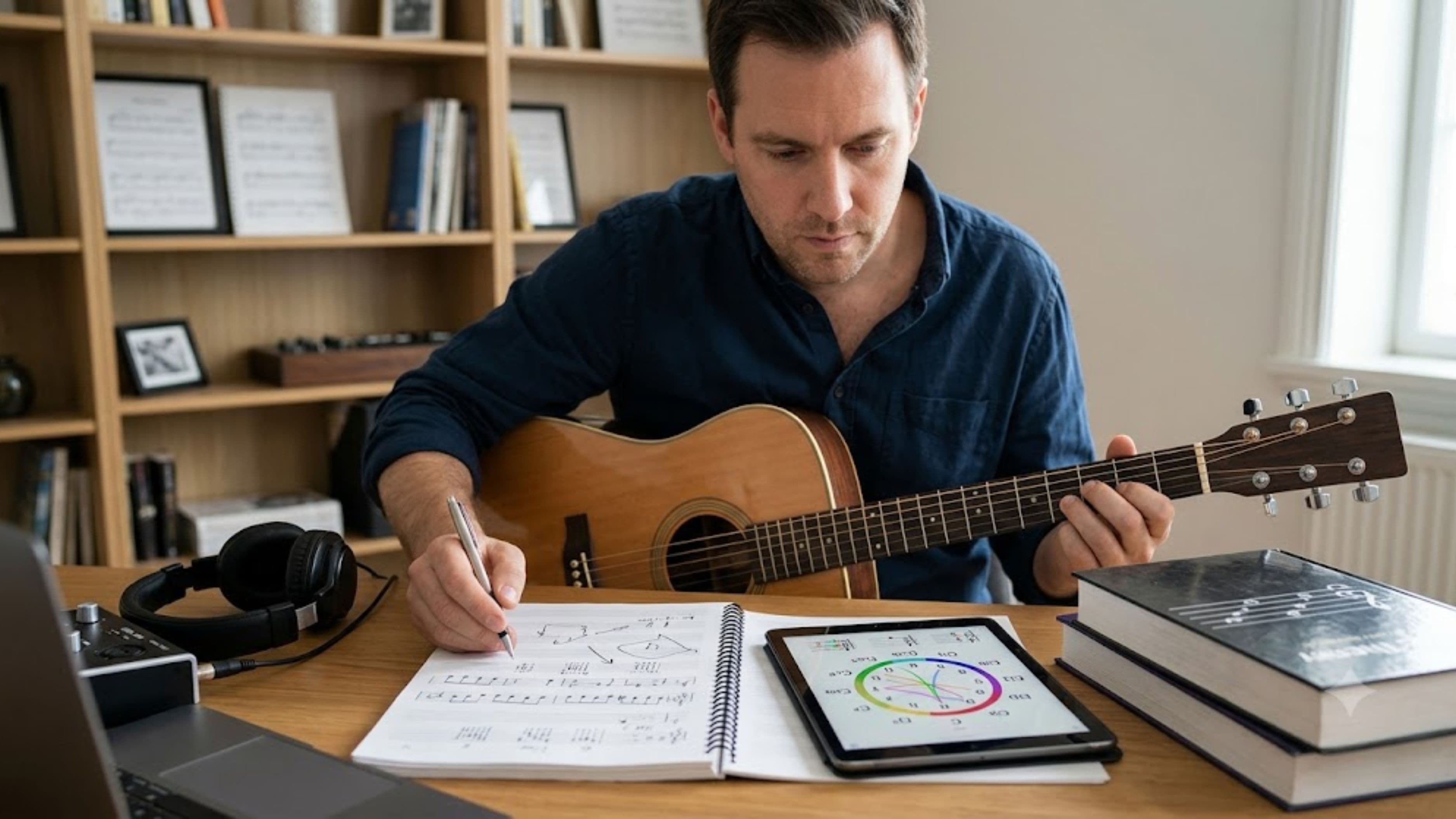
Before opening a theory textbook, pull up something you've already written, recorded, or regularly play, a chord progression you use often, a melody you've hummed for years, or a beat you've built multiple times without knowing exactly why it works. This becomes your reference point for every theory concept you learn from here forward, since connecting new vocabulary directly to music you already understand intuitively is dramatically more effective than learning concepts in the abstract first.
If you don't have your own material handy, pick two or three songs you know extremely well instead, ideally spanning a range of styles you're interested in. The specific material matters less than having something concrete and familiar to anchor new concepts to as you go.
Step 2: Learn Just Enough Notation to Communicate, Not to Read Fluently
A lot of adult learners get stuck early because they assume theory requires fluent sheet music reading first. It doesn't, especially if you're working primarily in a DAW, with chord charts, or by ear. Learn to recognize note names on a staff, basic rhythm notation, and chord symbols, enough to look up a resource or communicate with another musician, without necessarily committing to full sight-reading fluency unless that's specifically a goal for you.
This distinction matters because a lot of adult learners burn out trying to build sight-reading speed before they've even touched harmony or rhythm concepts, when reading fluency and theory understanding are genuinely separate skills that don't need to be tackled simultaneously.
Step 3: Learn Intervals and Chord Construction Through Your Reference Material
Rather than memorizing interval names and chord formulas in isolation, work through them using the song or progression you identified in step one. If your reference chord progression is a common one, say a I-V-vi-IV pattern, learn what those roman numerals actually mean in terms of scale degrees, and identify exactly which notes and intervals make up each chord in the progression you already know by ear.
This approach means every new concept immediately clicks into something you already recognize, rather than sitting as an abstract rule you're not sure how to apply. Once you can look at a chord symbol and immediately hear or visualize it because you've connected it to real music you already know, the underlying theory starts reinforcing itself naturally through your existing playing or listening habits.
Step 4: Study Scales Through the Lens of the Genres You Actually Work In
Different genres lean on different scales and modes far more than general theory education usually emphasizes upfront. If you're producing hip-hop or R&B, understanding the minor pentatonic scale and how it interacts with common chord loops will get you further, faster, than starting with a full major scale and mode system built around classical music conventions. If you're writing folk or pop, focus on major and natural minor scales first, since that's where the overwhelming majority of that repertoire actually lives harmonically.
This targeted approach means you're not spending weeks on modes or scales that are largely irrelevant to the music you actually want to make, at least not until you've built a solid foundation in the scales most directly useful to your specific style.
Step 5: Apply New Concepts Immediately, Not Later
The single biggest difference between theory that sticks and theory that fades within a month is immediate application. Every time you learn a new concept, whether that's a chord extension, a mode, or a rhythmic subdivision, use it in something you're actively writing or playing within the same week, even in a small, imperfect way. Waiting to "finish learning theory" before applying it is exactly how adult learners lose momentum and eventually abandon the process altogether.
This doesn't need to be a polished result. Adding a single seventh chord into a progression you already know well, or trying a borrowed chord from a parallel minor key just to hear what it does, is enough to reinforce the concept meaningfully and connect it to your ear rather than just your memory.
Tips for Better Results
Use ear training alongside written theory rather than treating them as separate skills learned in sequence. Being able to hear an interval or chord quality, not just identify it on paper, is what actually makes theory functionally useful when you're writing or playing in real time rather than analyzing after the fact.
Set a narrow, specific goal rather than a vague one like "learn music theory." Something like "understand why this specific chord progression works" or "learn how to write a convincing bridge section" gives you a clear stopping point and a practical reason to keep going, rather than an open-ended subject that never feels finished.
Revisit your own older material periodically as you learn more theory. Music you wrote before you understood why certain choices worked often becomes newly interesting once you can actually explain the harmonic or rhythmic decisions you made instinctively, which reinforces both your theory knowledge and your confidence in your existing instincts.
Common Mistakes to Avoid
Don't start with a beginner method book designed for children or absolute music newcomers, assuming it's the only valid entry point. These resources are built around an audience with zero prior musical exposure, and adult learners with existing playing experience often find them slow and disconnected from anything they actually care about applying.
Don't try to learn every scale, mode, and chord type before applying any of it practically. This front-loaded approach leads to a lot of memorized, disconnected information that fades quickly without the reinforcement that comes from actually using concepts in real music.
Don't assume you need formal sight-reading fluency before theory becomes useful. Plenty of working musicians and producers have strong theoretical understanding built primarily around chord charts, DAW piano rolls, and ear-based recognition rather than traditional staff notation fluency.
FAQ
How long does it realistically take to feel comfortable with basic music theory as an adult? Most adult learners with some existing playing experience start feeling real, functional comfort with foundational concepts within four to eight weeks of consistent, applied practice, though this varies based on how much time you dedicate weekly and how directly you're connecting concepts to music you're already making.
Do I need to learn to read sheet music fluently to understand theory? No, basic notation literacy is helpful for looking things up and communicating with other musicians, but full sight-reading fluency is a separate skill that isn't required to build genuinely useful theory knowledge, especially if you work primarily by ear or in a DAW.
Is it better to take a structured course or learn theory independently? Both can work well, and the right choice depends on your learning style. A structured course provides built-in sequencing and accountability, while independent learning offers more flexibility to focus specifically on concepts relevant to your own music, provided you stay disciplined about applying what you learn.
Can learning theory actually hurt my natural, intuitive songwriting instincts? Generally no, when approached the way described here, connecting new concepts to what you already do rather than replacing your instincts with rules. Theory tends to expand and clarify existing instincts rather than override them, provided you keep applying it to music you actually care about making.