The good news is that most artists are making the same fixable mistakes. Once you understand how curators actually think and what they need from a pitch, you stop competing against everyone else and start standing out for the right reasons.
Here's how to do it properly.
Understand What Curators Are Actually Managing
Before you write a single word of a pitch, it helps to understand the job on the other side. A playlist curator – whether they're managing an editorial playlist at a major DSP, running an independent Spotify playlist with 50,000 followers, or operating a blog-style playlist channel – is essentially a taste editor. Their playlist's reputation depends on every track they add. A bad pick damages trust with their audience. A great pick builds it.
That means curators aren't just evaluating your music in isolation. They're evaluating whether your track fits the specific mood, genre, energy, and listener expectation of their particular playlist. A technically well-produced track that doesn't fit the vibe of the playlist is still a no. This is why generic pitches – "I think your listeners will love this" – fail so consistently. They don't demonstrate that you've actually listened to the playlist, understood its identity, or thought seriously about whether your music belongs on it.
The artists who get added regularly are the ones who make a curator's job easier by clearly making the case for fit, not just for quality.
Step 1: Research Before You Reach Out
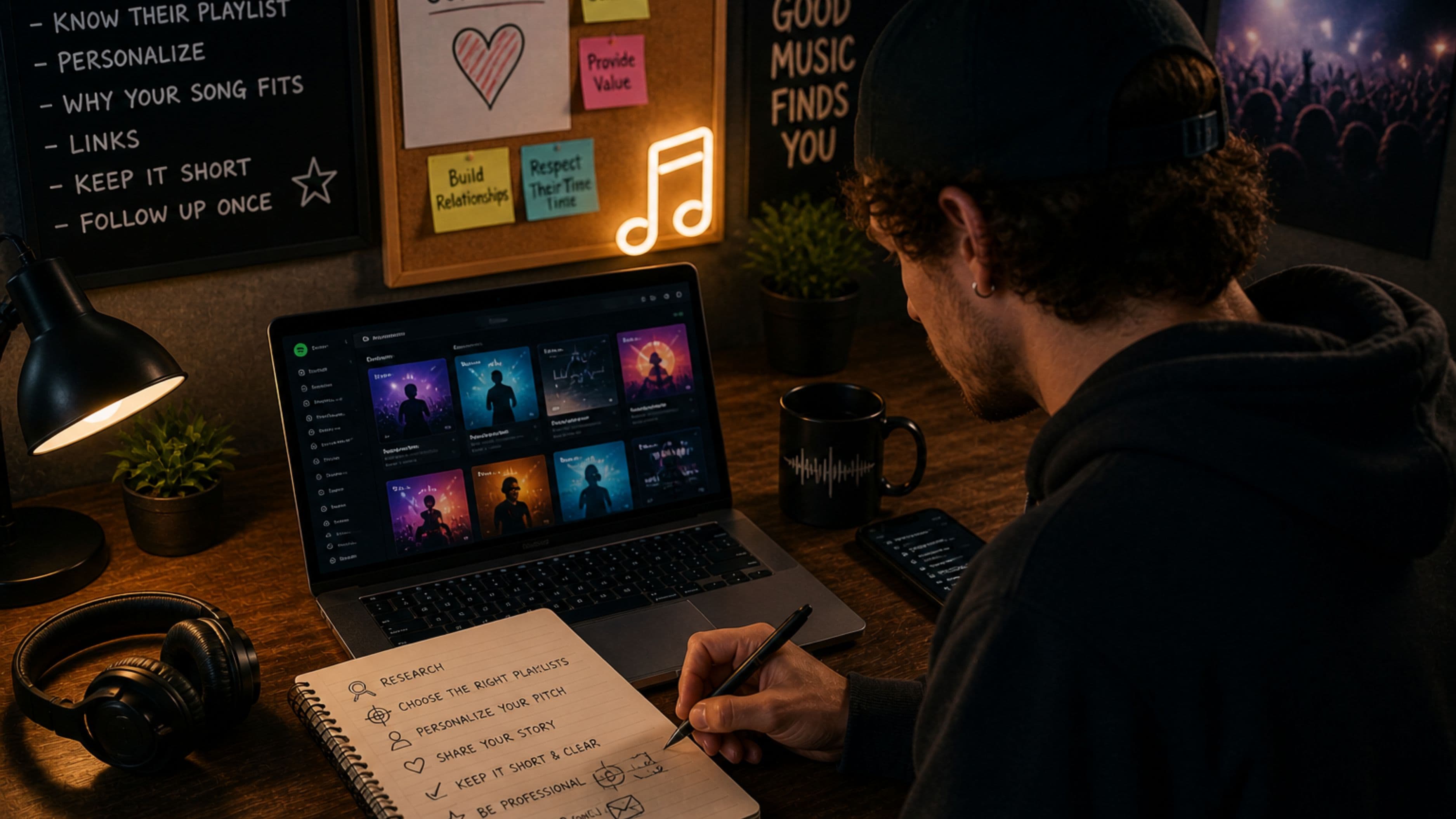
Pitching without researching is the single most common reason musicians get ignored. Find playlists that genuinely match your sound – not aspirationally, but actually. If your track is a lo-fi bedroom pop song, pitching to a high-energy workout playlist because it has 200,000 followers is a waste of both your time and the curator's.
When you find a playlist that seems like a good match, listen to at least ten to fifteen tracks on it before you send anything. Pay attention to the tempo range, the production style, whether tracks tend to be vocals-forward or instrumental, and the general mood. Check when the playlist was last updated – a playlist that hasn't been touched in eight months may be dormant and not worth your energy. Look at how the curator presents themselves: do they have a website, a Submithub profile, an email address, or a social presence where they talk about the kind of music they're looking for? All of that information shapes how you should approach them.
The research phase isn't a formality. It's what separates a pitch that gets opened from one that gets ignored.
Step 2: Use the Right Submission Channels
There are essentially three ways to reach playlist curators, and each one works differently.
Spotify for Artists editorial pitching is the most important one to know about. Spotify allows artists to pitch unreleased music directly to their editorial team through the Spotify for Artists dashboard, but only before the track goes live. You get one pitch per release, and it needs to be submitted at least seven days before the release date. If you miss that window, you can't use this channel for that track. Editorial playlists – Discover Weekly, Release Radar, genre-specific editorial lists – are governed by a separate algorithm and editorial team, and this is your only direct line to them. Use it for every release, without exception.
Submithub and Groover are the two most widely used platforms for reaching independent playlist curators and music blogs. Both work on a credit system where you pay a small fee per submission, and curators are required to respond within a set timeframe. This is a real advantage over cold email, where non-response is the norm. Submithub shows curator acceptance rates and genre preferences publicly, which makes it easier to target your submissions. Groover has a strong European curator network and works well for artists trying to build international reach. Neither platform guarantees placement, but they dramatically increase the odds that your music gets actually heard.
Direct outreach via email or social media is slower and less predictable, but it works for curators who don't use either platform and is often the right approach for blog-style or niche community playlists. The bar for quality is higher here because there's no platform enforcing a response, so your pitch needs to be notably well-crafted.
Step 3: Write a Pitch That Respects the Curator's Time
A good pitch is short, specific, and demonstrates genuine familiarity with the playlist. It is not a biography, a press release, or a list of everything you've ever accomplished. The goal is to give a curator three things in under a minute of reading: what the track sounds like, why it fits their playlist specifically, and where to listen to it.
Start with the music, not with yourself. Many artists open with career history or accolades before the curator has any reason to care. Lead with the track – the title, a one-sentence description of the sound and mood, and the direct link. Something like: "I'm pitching a track called [Title] – a mid-tempo indie folk song built around fingerpicked guitar and close-mic'd vocals, sitting somewhere between Adrianne Lenker and Phoebe Bridgers." That's immediately more useful than "I'm an independent artist who's been making music for ten years."
Then connect the track to the playlist specifically. Name the playlist. Reference one or two tracks on it that yours might sit alongside. This shows you've actually listened and aren't blasting the same template to a hundred curators. One honest, specific sentence about fit is worth more than three paragraphs of general enthusiasm.
Keep the whole pitch to five to eight sentences. Include the streaming link – not a download, not an attachment, a direct stream link. Make it easy for the curator to press play and decide in thirty seconds. Close with a polite, no-pressure sign-off. You're not asking for a favour, you're making a professional introduction.
Step 4: Make Sure Your Music Profile Is Ready
A strong pitch that leads a curator to an underdeveloped artist profile is a missed opportunity. Before you start pitching, make sure your Spotify for Artists profile is complete – that means a current artist photo, a filled-in bio, your social links, and at least a few tracks with proper metadata (genre tags, mood tags, ISRC codes). A curator who likes your track will check your profile, and if it looks neglected, it creates doubt about whether you're a serious artist or a one-off submission.
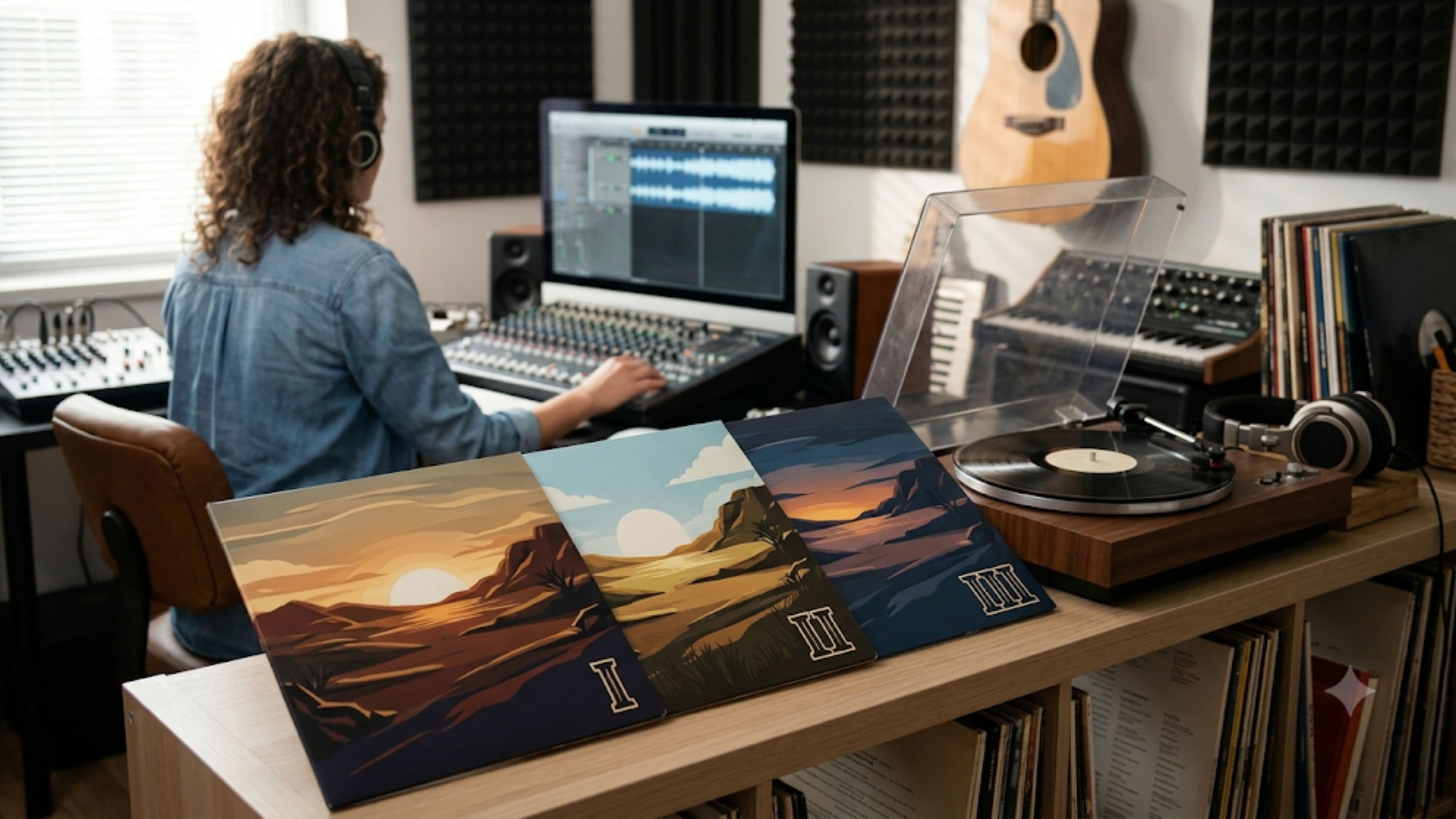
Your release should also have proper artwork. Playlist curators making editorial decisions notice unprofessional cover art, and it can influence whether a track feels like it belongs in a curated environment. None of this needs to be expensive – clean, intentional visuals matter more than big production budgets. The overall impression you're creating is: this person takes their craft seriously.
Step 5: Follow Up Once, Then Move On
If you've submitted through Submithub or Groover, the platform handles the response timeline and there's no need to follow up at all. If you've sent a direct pitch and haven't heard back after seven to ten days, one polite follow-up is appropriate. Keep it brief: a single sentence acknowledging you sent a pitch recently, a reattached link in case it was missed, and nothing else. Don't guilt-trip, don't express frustration, don't send the same pitch again. If there's still no response after the follow-up, move on.
The pitching process is a volume game played with quality inputs, not a negotiation. Some curators will love your track and not add it simply because they just refreshed the playlist last week. Others will add it without ever responding to your email. The artists who build momentum through playlisting do it by consistently releasing good music, consistently submitting it well, and treating each non-response as neutral data rather than a rejection.
What to Watch Out For
Pay-to-play schemes outside of legitimate platforms. There are services that promise playlist placement for a flat fee, often claiming connections to Spotify editorial or offering guaranteed streams. Most of these violate Spotify's terms of service and can result in your tracks being removed or your account flagged. Legitimate platforms like Submithub charge for submissions, not for placements – the distinction matters.
Playlists with inflated follower counts but low engagement. Before you invest time pitching to a particular playlist, check whether the follower count matches the actual stream counts on recently added tracks. A playlist with 80,000 followers where recent tracks have 200 streams each is almost certainly built on purchased followers and won't move the needle for you.
Pitching too early. For Spotify editorial pitching specifically, too early means more than seven days before release. For independent curators, too early means sending music that hasn't been mixed and mastered to a professional standard. Pitch when the music is genuinely ready, not as soon as you have a rough recording.
Frequently Asked Questions
How many curators should I pitch to per release? There's no fixed number, but quality targeting beats volume every time. Ten well-researched pitches to genuinely relevant playlists will outperform a hundred generic submissions. That said, Submithub makes volume more manageable once you've got the targeting right – many artists send 20 to 40 pitches per release using the platform.
Do I need a publicist to get on playlists? Not necessarily, especially for independent and mid-tier playlists. Editorial pitching through Spotify for Artists is available to all artists directly. Many independent artists build meaningful playlist placement entirely through direct submissions and Submithub without professional PR.
What genre of playlists should I target? Start with exact genre playlists that match your sound, then look at mood-based and activity-based playlists where your track could realistically fit. Mood playlists (late night, focus, melancholy, hype) often have broader audiences and less genre-specific gatekeeping than pure genre lists.
Does playlist placement still matter in 2025? Yes, though the landscape has shifted. Editorial playlists remain high-value placements for algorithmic reasons – being added to a Spotify editorial playlist signals to the algorithm that the track has been vetted and can affect your Discover Weekly and Radio recommendations for months. Independent playlists matter more for community building and niche audience discovery than for raw stream numbers.
The Pitch Is a Skill, Not a Lottery
Getting onto playlists doesn't happen by luck or by volume alone. It happens when you put good music in front of the right curators through the right channel with a pitch that makes their decision easier, not harder. That's a learnable skill, and like most skills, it gets better with practice and iteration.
Track your submissions, notice which framing gets responses, and refine your approach with each release. The artists who figure this out early have a real edge – not just in playlist reach, but in how they think about positioning their music to any audience.
📚 Sources
Spotify for Artists – How to pitch music to Spotify editors: https://artists.spotify.com/en/blog/how-to-pitch-music-to-spotify-editors
Submithub – How Submithub Works: https://www.submithub.com/blog/how-submithub-works
Groover – About Groover: https://groover.co/en/blog/what-is-groover
Music Business Worldwide – Spotify's editorial playlist strategy explained: https://www.musicbusinessworldwide.com/spotify-explains-its-playlist-strategy
Hypebot – How independent artists can get playlist placements: https://www.hypebot.com/hypebot/2023/04/how-independent-artists-can-get-playlist-placements.html
Digital Music News – The truth about playlist promotion services: https://www.digitalmusicnews.com/2022/08/17/fake-playlist-promotion-spotify