What Podcast Distribution Actually Is
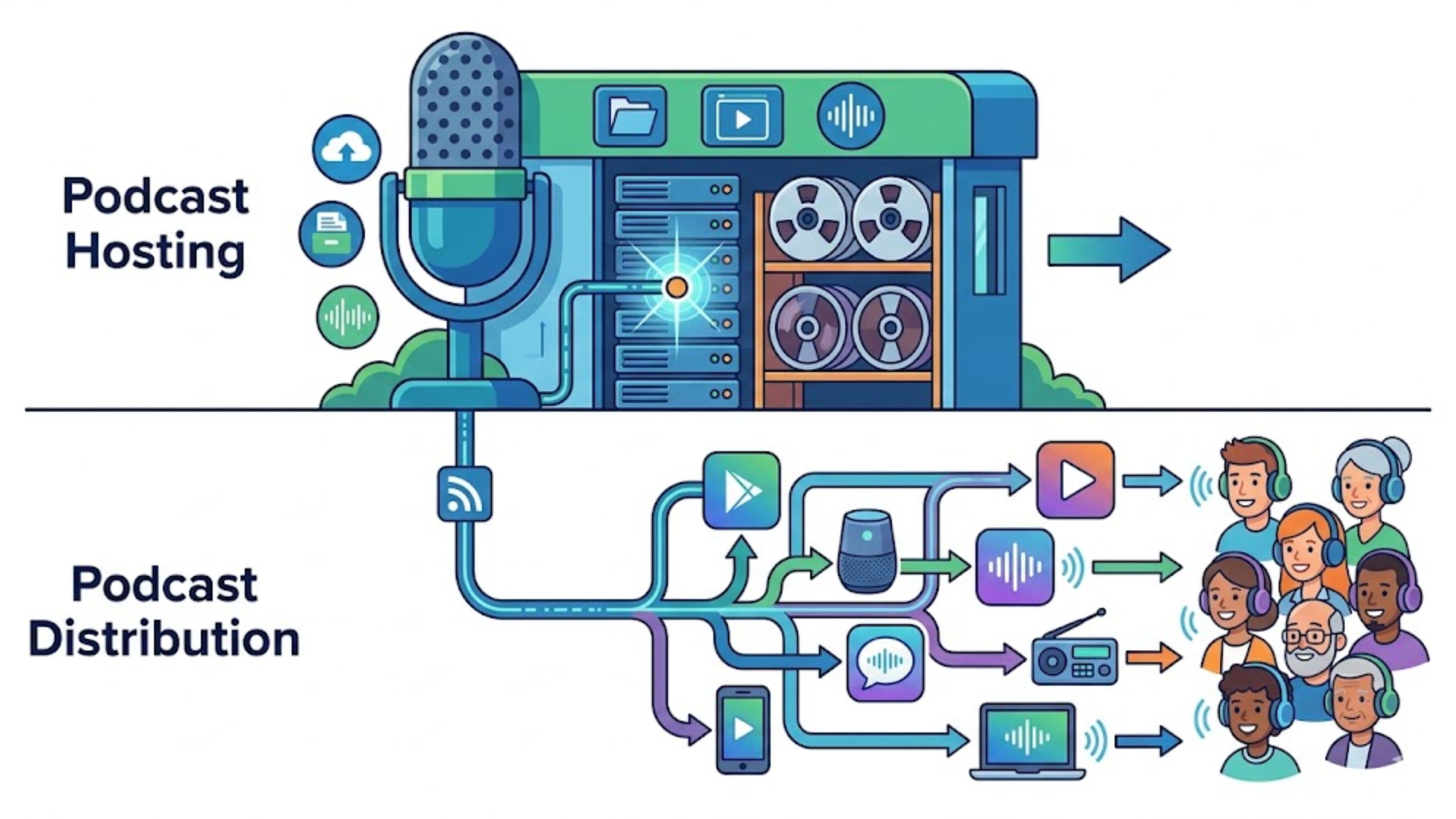
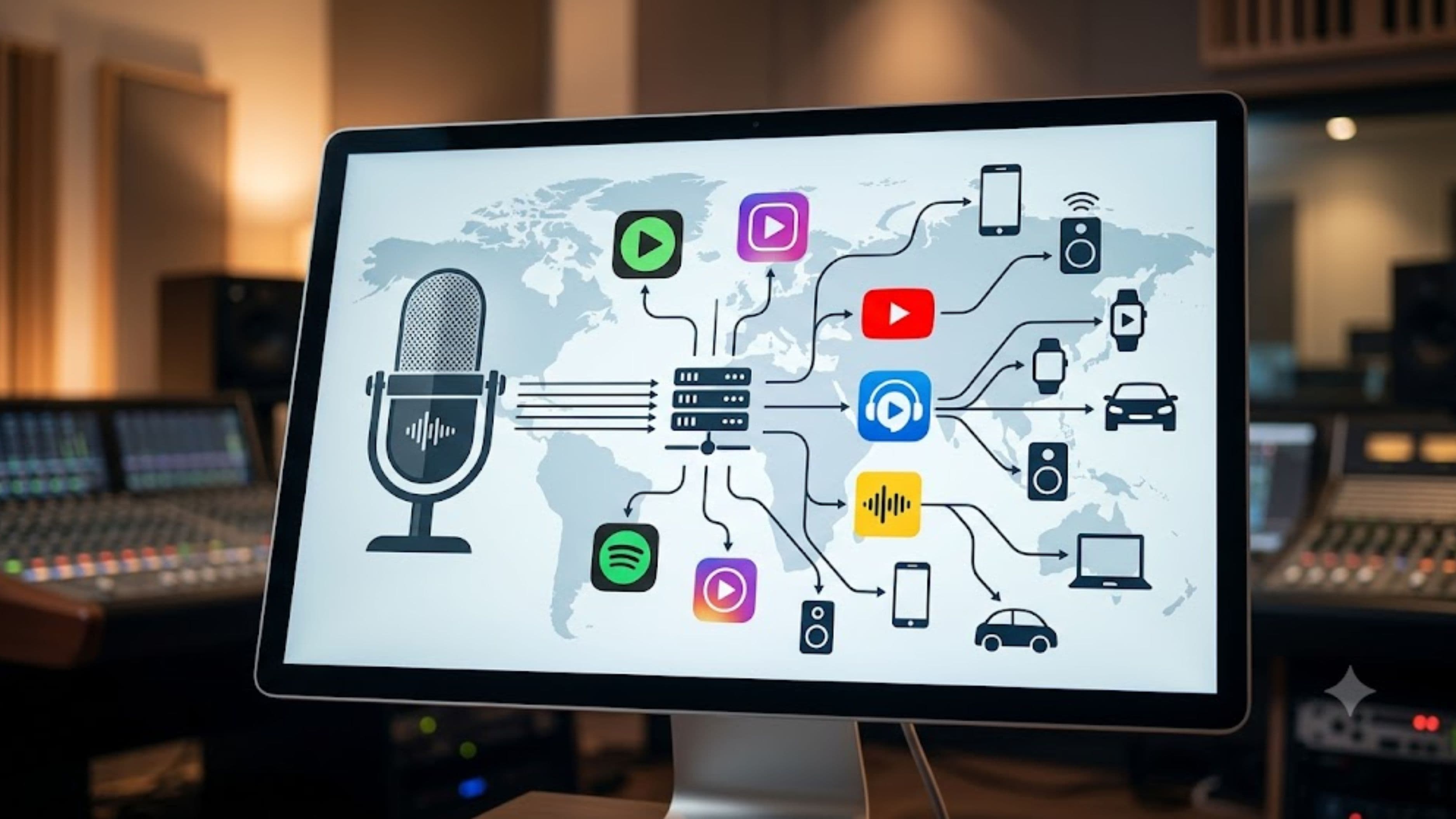
Podcast distribution refers to the process of getting your podcast's audio file and episode information onto the various platforms where listeners actually find and play podcasts, Apple Podcasts, Spotify, YouTube Music, and dozens of smaller platforms. This isn't something you do manually for each platform individually; instead, a podcast hosting service publishes your episode once and distributes it automatically to all connected platforms through a single feed, meaning listeners on any platform can find and subscribe to your show without you needing to separately upload to each one.
Why it matters: without proper distribution, your podcast might exist as an audio file somewhere but remain invisible on the actual platforms where most listeners discover and consume podcast content, severely limiting your potential audience regardless of how good the content itself is.
How the Distribution Process Actually Works
Your podcast hosting platform generates an RSS feed, a structured file containing your show's information and episode details, that gets submitted to each individual platform, Apple Podcasts, Spotify, and others, when you first set up your show. Once submitted and approved, new episodes you upload to your hosting platform automatically appear across all these connected platforms without requiring separate manual submission for each new episode.
Real-world example: a podcaster uploading a new episode to their hosting platform doesn't need to separately upload that same episode to Apple Podcasts, Spotify, and other platforms individually, since the RSS feed connection handles this distribution automatically across all platforms already connected to the show.
What to Actually Look for in a Distribution Service
Reliable, wide platform coverage. A good hosting and distribution service should reliably distribute to all major platforms, Apple Podcasts, Spotify, YouTube Music, Amazon Music, and additional smaller but still relevant platforms, without requiring extra manual work on your part for each one.
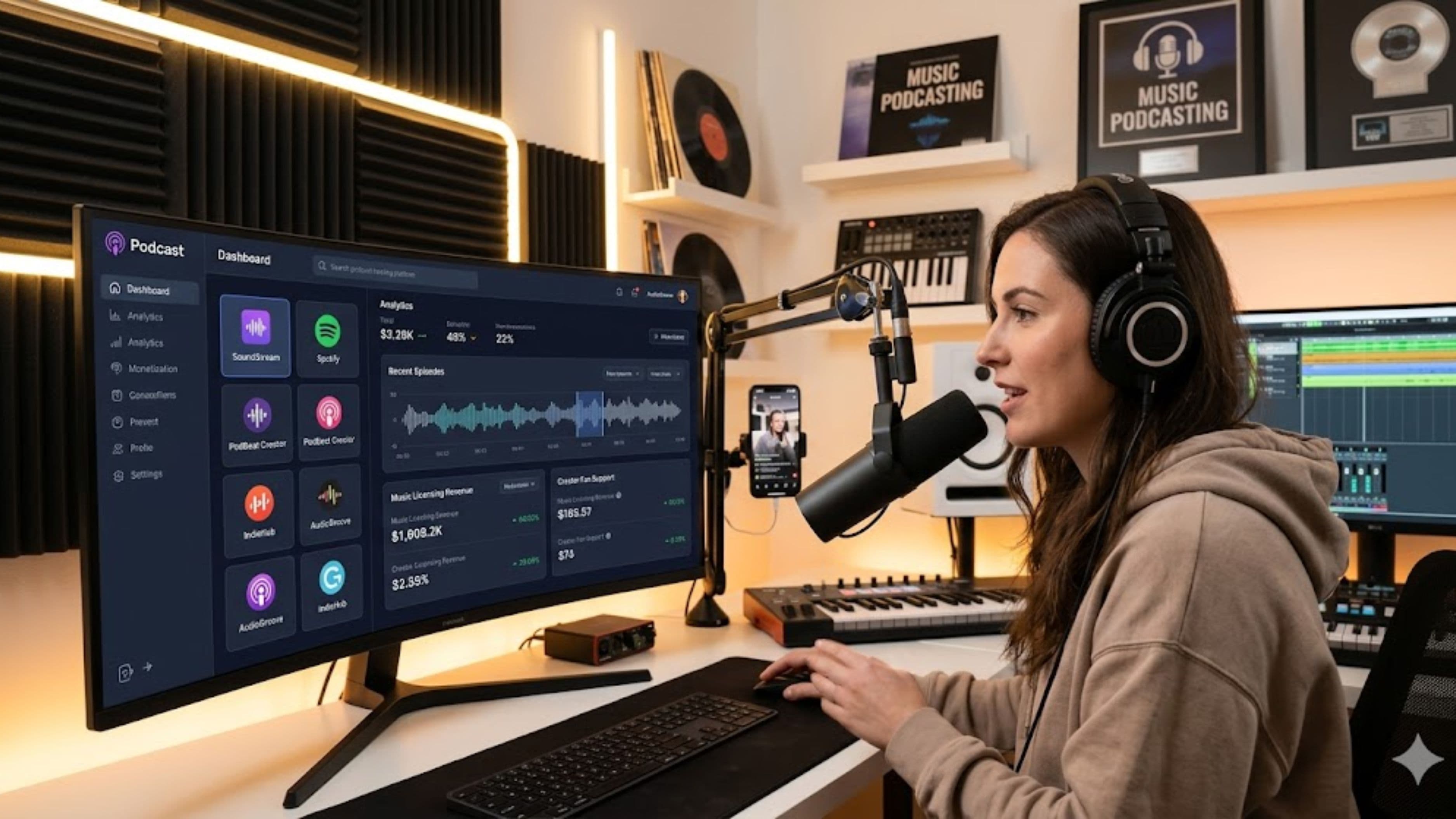
Analytics depth. Since distribution and hosting are typically bundled together in the same service, checking what analytics detail is included, retention curves, geographic data, platform breakdowns, matters for understanding your growth, not just getting your show technically distributed.
Reliable uptime and audio delivery. Your hosting platform is responsible for actually serving your audio files to listeners, and unreliable hosting can result in playback issues or slow loading times that directly hurt listener experience and retention.
Tool Review: Common Distribution and Hosting Options
Several established hosting platforms, including Libsyn, Buzzsprout, and Spotify for Podcasters, handle distribution as a core function, typically bundled with hosting, analytics, and sometimes basic monetization tools. Pros: these platforms generally offer reliable, wide distribution with minimal manual setup required beyond the initial submission process. Cons: pricing and feature depth vary meaningfully between platforms, and some free tiers come with limitations on file storage, analytics depth, or monetization options that may matter as your show grows.
Verdict: for most independent podcasters starting out, a hosting platform with straightforward, reliable distribution and reasonably transparent analytics is generally worth prioritizing over platforms offering more advanced features you may not need yet, since basic reliable distribution and clear growth data matter more early on than advanced monetization tools you're not yet ready to use.
What to Watch Out For
Avoid distribution services that require separate manual uploads to each individual platform, since this defeats much of the purpose of using a distribution service in the first place and creates unnecessary ongoing work. Be cautious of platforms with unclear or restrictive terms around ownership of your content and audience data, since some platforms' terms of service are more restrictive than others regarding your ability to migrate your show elsewhere later if needed. Check whether a free tier's limitations, storage caps, limited analytics, would meaningfully constrain your show's growth before committing, since switching hosting platforms later can be more disruptive than choosing an appropriately scaled option from the start.
FAQ
Do I need to pay for podcast distribution? Many hosting platforms offer free tiers with basic distribution included, though they often come with limitations on storage, analytics depth, or episode count that may become restrictive as your show grows.
Can I switch podcast hosting platforms later without losing my audience? Generally yes, since podcast platforms are built around portable RSS feeds, though the process requires some technical care to ensure your existing subscriber base transfers properly to the new feed without disruption.
Do all podcast platforms require separate approval before my show appears there? Most platforms require an initial submission and approval process when you first set up distribution, but subsequent episodes typically appear automatically once your feed is connected and approved.
📚 Sources
Podnews, "Podcast Hosting and Distribution Explained" – podnews.net
Edison Research, "The Podcast Consumer Report" – edisonresearch.com