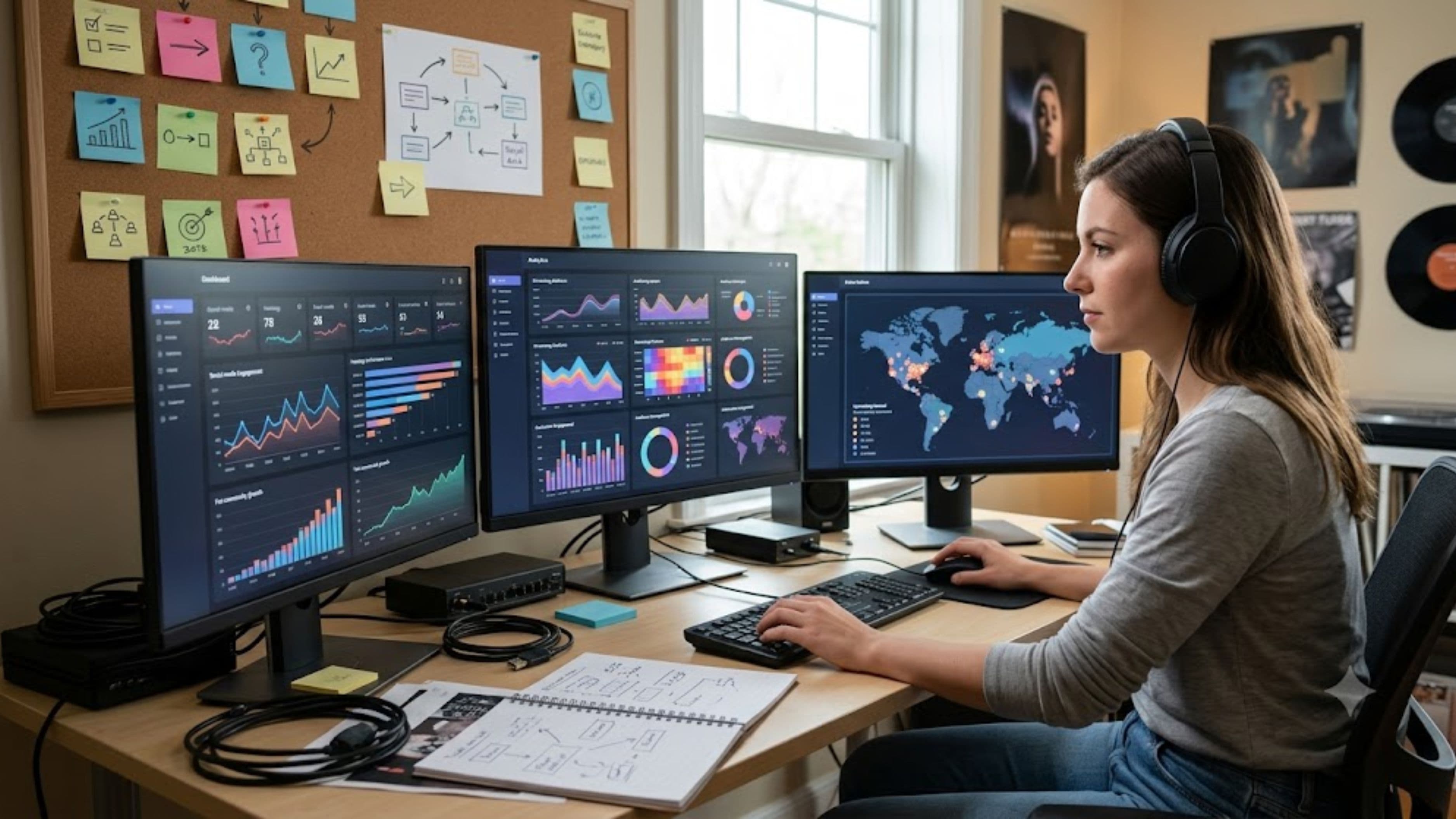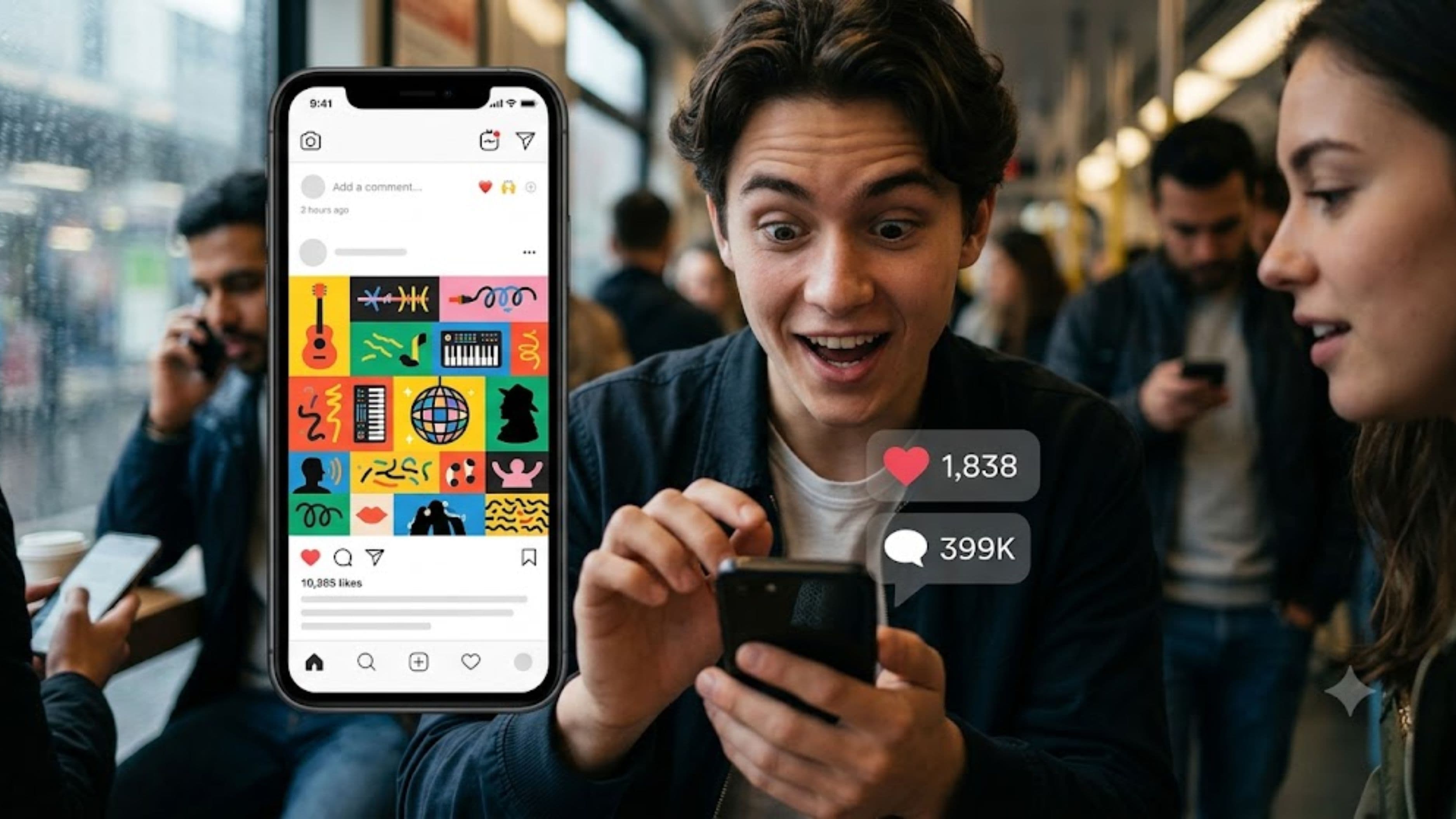
The modern signing conversation increasingly starts with a spreadsheet. Streaming numbers, playlist adds, follower growth rates, save-to-stream ratios, TikTok sound usage, audience demographics, engagement velocity – these metrics are now standard inputs in A&R decisions at every major label and most significant independents. Labels aren't just reacting to artists they discover; they're monitoring data signals across platforms in real time, identifying artists whose numbers suggest breakout potential before the breakout happens.
This shift has significant implications for how artists develop careers, what labels are actually looking for, and what it means to be "discovered" in 2026.
How the Data-Driven A&R Process Actually Works
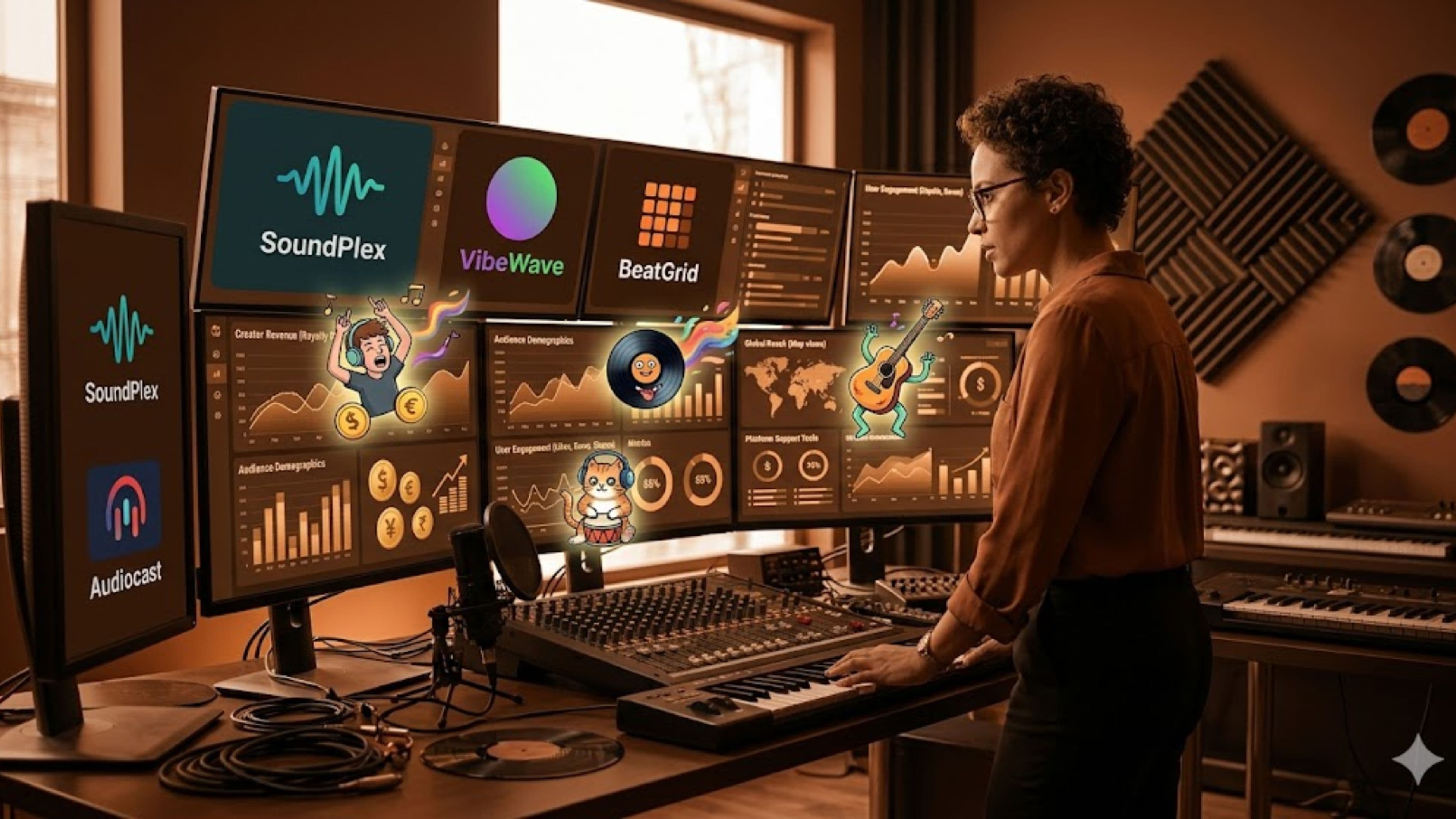
The tools that enabled this shift are relatively recent. Platforms like Chartmetric, Soundcharts, and Spotify for Artists provide granular data on streaming behavior, audience geography, playlist penetration, and follower growth that wasn't systematically accessible before roughly 2015. Labels now have analysts – sometimes entire data teams – whose job is to monitor these signals across tens of thousands of artists simultaneously, flagging accounts where the numbers are moving in ways that suggest organic momentum.
The specific signals vary by label and by format, but a few patterns appear consistently in how this gets described by people working in A&R. Unusual save rates – where a high percentage of listeners are saving a song to their library rather than just streaming it once – suggest genuine audience connection rather than passive consumption. Rapid growth in a specific geography, particularly a market the label has good distribution in, signals real traction. A song being organically used in TikTok videos without any paid promotion shows authentic cultural uptake. Multiple of these signals converging on the same artist in a short window is what gets the email sent.
Chartmetric, which is widely used across the industry, lets analysts build custom alert systems that flag artists when they cross specific thresholds – a certain number of playlist adds per week, a particular follower growth rate, a streaming velocity that suggests something is connecting. The scale of surveillance this enables is different in kind from what was possible before: a single analyst can now monitor more artists than an entire A&R department could previously track manually.
What Labels Are Actually Looking for in the Numbers
Understanding the specific metrics that matter helps clarify what the data-first approach is actually measuring – and what it isn't.
Streaming velocity is one of the most watched signals. It's not just total streams; it's the rate of growth and whether it's accelerating. An artist with 50,000 monthly listeners who doubled that number in 90 days without a major playlist add or press campaign is showing something organically driven. An artist with 500,000 monthly listeners whose numbers have been flat for a year is showing the opposite, even though the raw number looks more impressive.
Playlist penetration still matters, but the type of playlist matters. Being added to algorithmically generated personal playlists (Spotify's Discover Weekly, Release Radar) signals that the algorithm has identified real listener affinity for the music. Being added to major editorial playlists matters for reach, but it's partly a reflection of label relationships rather than pure organic demand. Analysts at labels can distinguish between these, and organic algorithmic traction carries more weight in the data conversation than a well-placed editorial add.
Geographic audience distribution reveals a lot about whether an artist's fanbase is genuinely cross-market or concentrated in one small pocket. An artist with 80% of their listeners in their home city has local traction but not necessarily scalable momentum. An artist whose audience is spreading across multiple markets with no obvious promotional push is showing something the algorithm is doing on its own – which is what labels are most interested in.
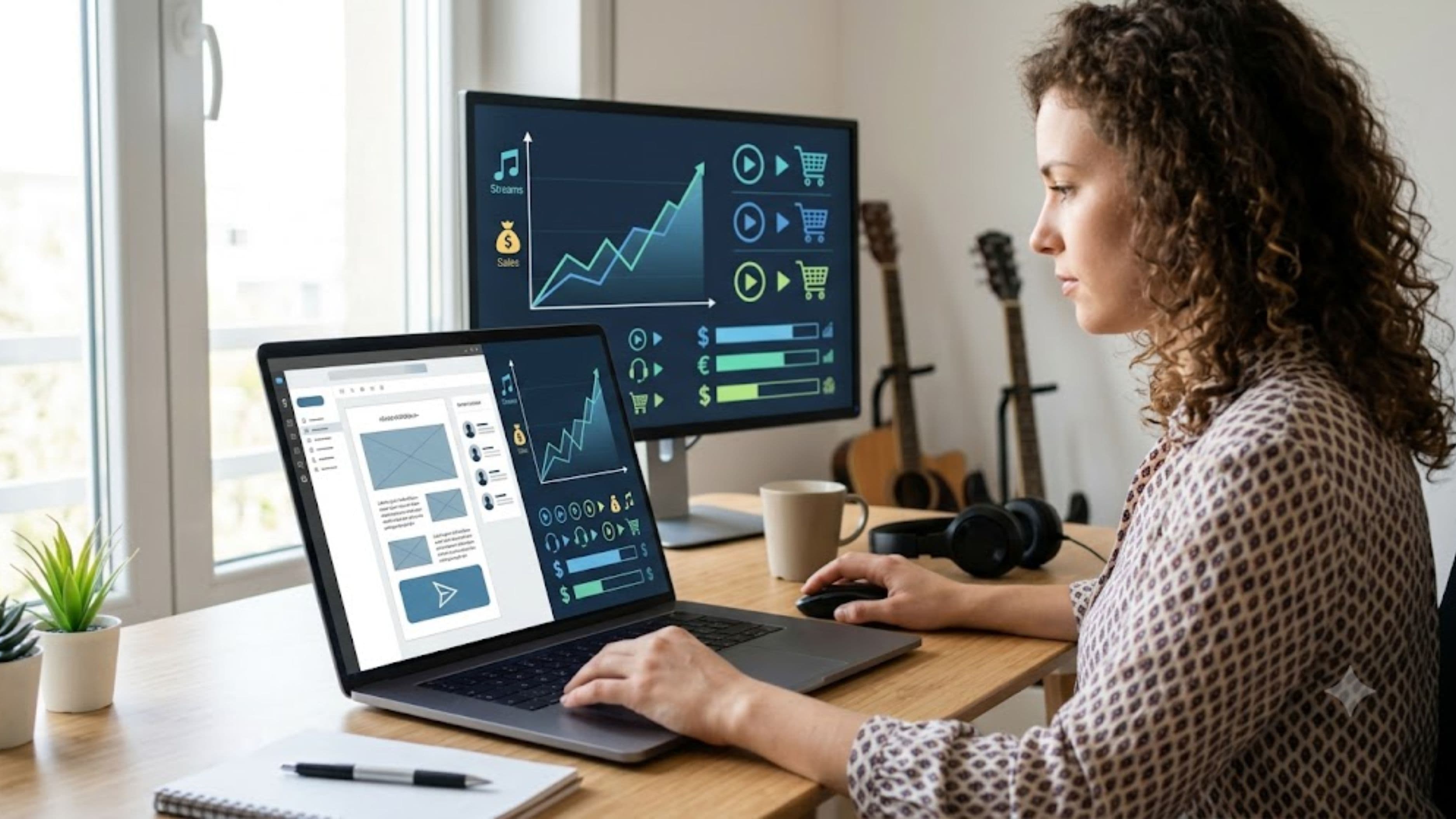
Social media conversion – the degree to which social following actually converts to streams and saves – matters because large social audiences don't always translate into music consumption. A TikTok creator with 2 million followers and 40,000 monthly Spotify listeners has an audience that follows them as a personality, not as a musician. A creator with 50,000 TikTok followers and 180,000 monthly listeners has an audience that cares about the music specifically. The second artist is more interesting to a label despite the smaller social number.
What This Means for Independent Artists
The data-driven A&R approach has a double-edged effect on independent artists. On one side, it creates a more meritocratic discovery pathway – if your numbers are moving, labels will find you regardless of whether you have connections, industry relationships, or a manager with the right contacts. The spreadsheet doesn't care who you know.
On the other side, it creates a new kind of pressure. Artists who understand this dynamic – and many do – start thinking about their releases in terms of the signals they're sending to potential label interest rather than purely in terms of the music. Release strategy, platform behavior, playlist pitching, TikTok seeding – all of these can be optimized to make the numbers look right. The risk is that optimizing for the metrics substitutes for developing the genuine audience connection the metrics are supposed to measure.
There's also a survivorship problem with data-driven signing. Labels are identifying artists who have already found momentum without them – which means the value they can add to the deal is less obvious. If an artist already has 300,000 monthly listeners, a genuine social following, and a proven ability to release independently, the label's pitch has to account for why signing makes sense at all. Some artists in this position are finding that the data leverage works both ways: strong numbers give them negotiating power and the ability to demand better deal structures than an unknown artist would receive.
The Limits of the Data Approach
The data-driven model has genuine limitations that the industry is beginning to reckon with. The most significant is that it identifies what has already worked rather than predicting what will. An artist showing strong numbers today is being measured against the cultural context of six months ago when those streams were generated. Whether that artist connects in six months, when the cultural landscape has shifted, is not something the data tells you.
There's also a selection bias problem. Artists who are generating data-visible momentum tend to be those who understand how to use social media and streaming platforms strategically. Artists who make genuinely unconventional music – the kind of thing that builds slowly through critical reputation, word of mouth, and live performance rather than algorithmic spread – often don't generate the kind of fast-moving numbers that trigger label alerts. Some of the most significant artists of the past decade fit this profile. Data-driven A&R would likely have missed many of them.
Labels are aware of this, and most claim to use data as one input rather than the only one. The honest answer is that it varies by label and by A&R exec. At major labels under financial pressure to hit targets, the data case for a signing is increasingly what gets the deal through the approval process internally – which means the data has become more than just an input; it's also a risk-management tool for justifying decisions to executives and financial stakeholders.
What Artists Should Actually Do With This Information
Understanding that this is how the industry works now doesn't mean you should reverse-engineer everything you do to produce metrics. The data signals that labels care about are downstream effects of genuine audience connection – you can't reliably manufacture them without building something real first. Artists who attempt to game the metrics without building actual listeners tend to produce fragile numbers that don't hold up under scrutiny.
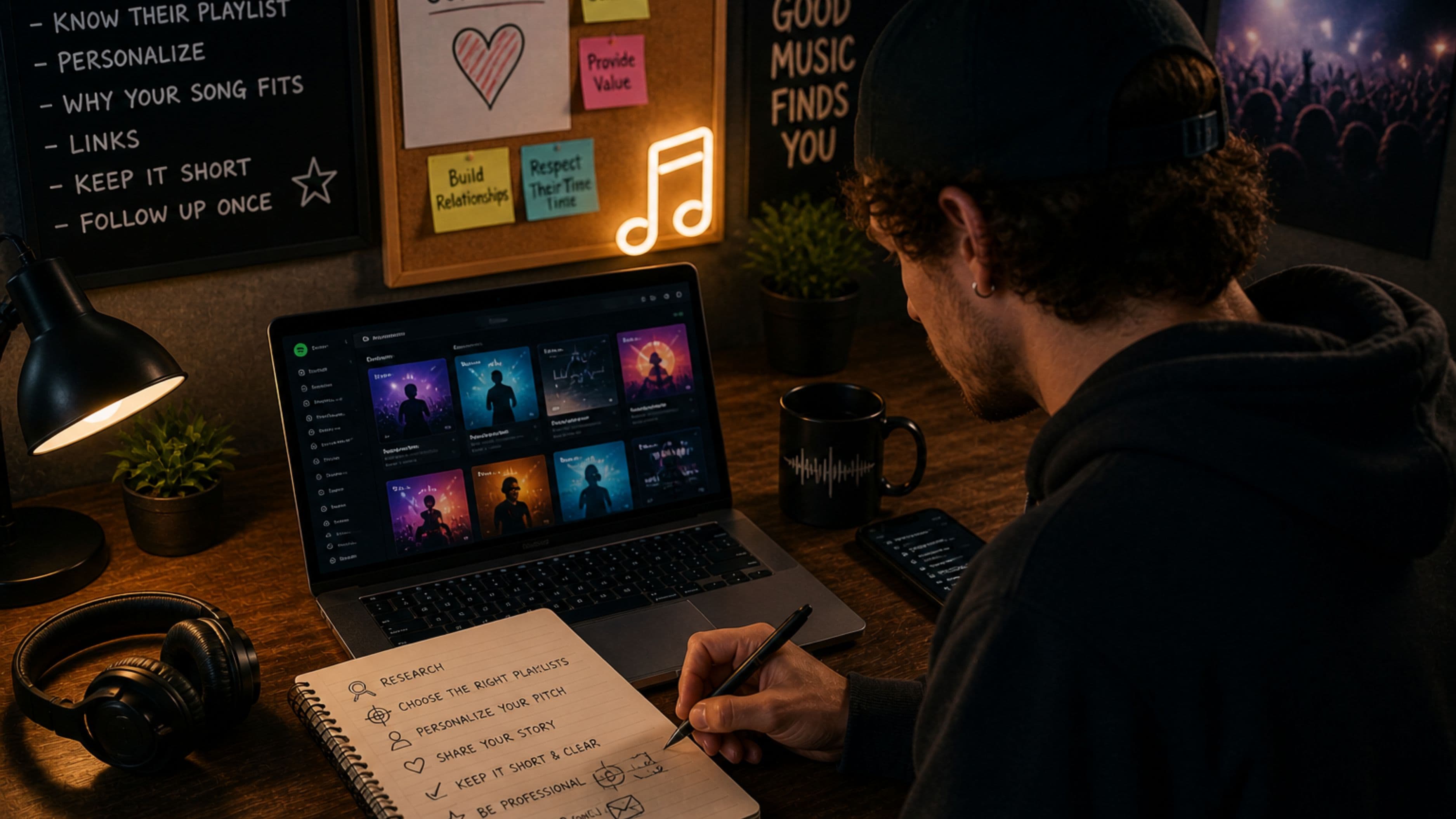
What you can do is stop being invisible in ways that are entirely preventable. Claiming and properly optimizing your Spotify for Artists and Apple Music for Artists profiles, consistently pitching new releases for playlist consideration through official channels, releasing regularly enough to give the algorithm something to work with, and distributing through services that provide proper metadata and analytics – these are table-stakes behaviors that affect your data visibility without compromising the work.
Beyond that, understanding your own data is genuinely useful. Knowing which tracks are driving the most saves, which playlists are sending the most streams, which geography is growing fastest – this is information that shapes smart release and touring decisions regardless of whether a label ever gets involved. The same tools that labels use for discovery (Chartmetric has a free tier, Spotify for Artists is free) are available to independent artists. Using them to understand your own momentum is a different thing from optimizing for someone else's metrics – and it's worth doing.
FAQ
Do labels still care about live performance in the data era? Yes, and it often strengthens the data case. An artist with strong streaming numbers who also sells out regional shows demonstrates a fanbase that exists offline – which is a meaningful signal about durability and touring revenue potential. Live performance data (ticket sales through platforms like Songkick and Bandsintown) is increasingly part of the monitoring picture.
Can you get signed without strong streaming numbers? It's still possible, particularly at independent labels that work with longer development timelines and less pressure to justify signings quantitatively. It's significantly harder at majors, where the data case has become almost a prerequisite for getting serious internal attention. Viral moments, significant sync placements, and strong press can substitute to some degree, but even these typically need to produce data-visible effects to sustain label interest.
What's the minimum threshold of streaming data that gets label attention? There's no universal number, and thresholds vary by genre, geography, and label size. The more important factor is trajectory. An artist crossing 50,000 monthly listeners while doubling month over month is more interesting than an artist at 500,000 who's been flat. Velocity and momentum matter more than raw size at the discovery stage.
Is it worth hiring someone to pitch for playlists and improve your data? Playlist pitching services vary enormously in quality and legitimacy. Official playlist pitching through Spotify for Artists (for releases at least seven days out) is free and should always be done. Third-party pitching services that promise placement on major curated playlists are often overstating their influence and sometimes use practices that violate platform terms. If you use one, research it carefully and be skeptical of guaranteed results.
How do labels verify that streaming numbers are organic? Platforms do actively monitor for artificial streaming, and artists caught with fraudulent streams risk having their catalogs removed from distribution. Labels have internal tools to cross-reference engagement quality – an artist with high streams and abnormally low saves, minimal playlist algorithmic pickup, and no geographic logic to their listener distribution raises flags. The data tells more than just the headline numbers when you look at it in detail.
📚 Sources
Music Business Worldwide – How data is reshaping A&R at major labels: https://www.musicbusinessworldwide.com/how-data-is-reshaping-ar/
Chartmetric – How music analytics informs A&R decisions: https://chartmetric.com/blog/how-music-analytics-informs-ar
Spotify for Artists – Understanding your streaming data: https://artists.spotify.com/en/blog/understanding-your-streaming-data
Billboard – The rise of data-driven A&R in the streaming era: https://www.billboard.com/pro/data-driven-ar-streaming-era/
Hypebot – Independent artist data strategy for label interest: https://www.hypebot.com/hypebot/2024/01/independent-artist-data-strategy.html
Soundcharts – Music industry analytics and A&R tools: https://soundcharts.com/blog/music-industry-analytics