
Registering your own publishing company has gone from an obscure industry move reserved for artists with label connections to a practical, accessible step that any serious independent artist can complete in a few hours. What it unlocks – and why the shift is accelerating – is worth understanding whether you're releasing your first EP or your fifth album.
What a Publishing Company Actually Is
Publishing is the side of music rights that covers songwriting and composition – separate from the master recording. When a song is played on the radio, streamed on Spotify, performed at a venue, or licensed for a TV show, two separate sets of royalties are generated: master royalties (which go to whoever owns the recording) and publishing royalties (which go to the songwriter and their publisher).
If you write your own music and haven't set up any publishing structure, you're still the publisher by default – but you may not be collecting everything you're owed. Registering a publishing entity and affiliating it with a Performing Rights Organization (PRO) like ASCAP, BMI, or SESAC puts the infrastructure in place to collect publisher-side royalties that would otherwise go uncollected or be absorbed into the system without reaching you.
A publishing company doesn't have to be a complex legal structure. Many artists register as a sole proprietor DBA (doing business as) with a publishing name – something like "Midnight Catalog Music" or "[Your Name] Publishing" – affiliated with their PRO. That's enough to claim publisher shares and begin collecting properly. Others form an LLC for additional liability protection and tax flexibility, which makes more sense as catalog and income grow.
Why the Shift Is Happening Now
Several things have converged to make artist-owned publishing more accessible and more valuable simultaneously, and the timing of both matters.
On the accessibility side, publishing administration platforms like Songtrust, DistroKid's publishing arm, and CD Baby Pro have dramatically simplified the registration and collection process. Where setting up publishing previously required understanding a complex web of PROs, sub-publishers, and international licensing agreements, these platforms now handle global royalty collection through a single registration.
For a flat annual fee or a modest revenue share, an independent artist can have their catalog registered in over 60 territories without a traditional publishing deal. That's infrastructure that simply wasn't accessible to independent artists at this price point five years ago.
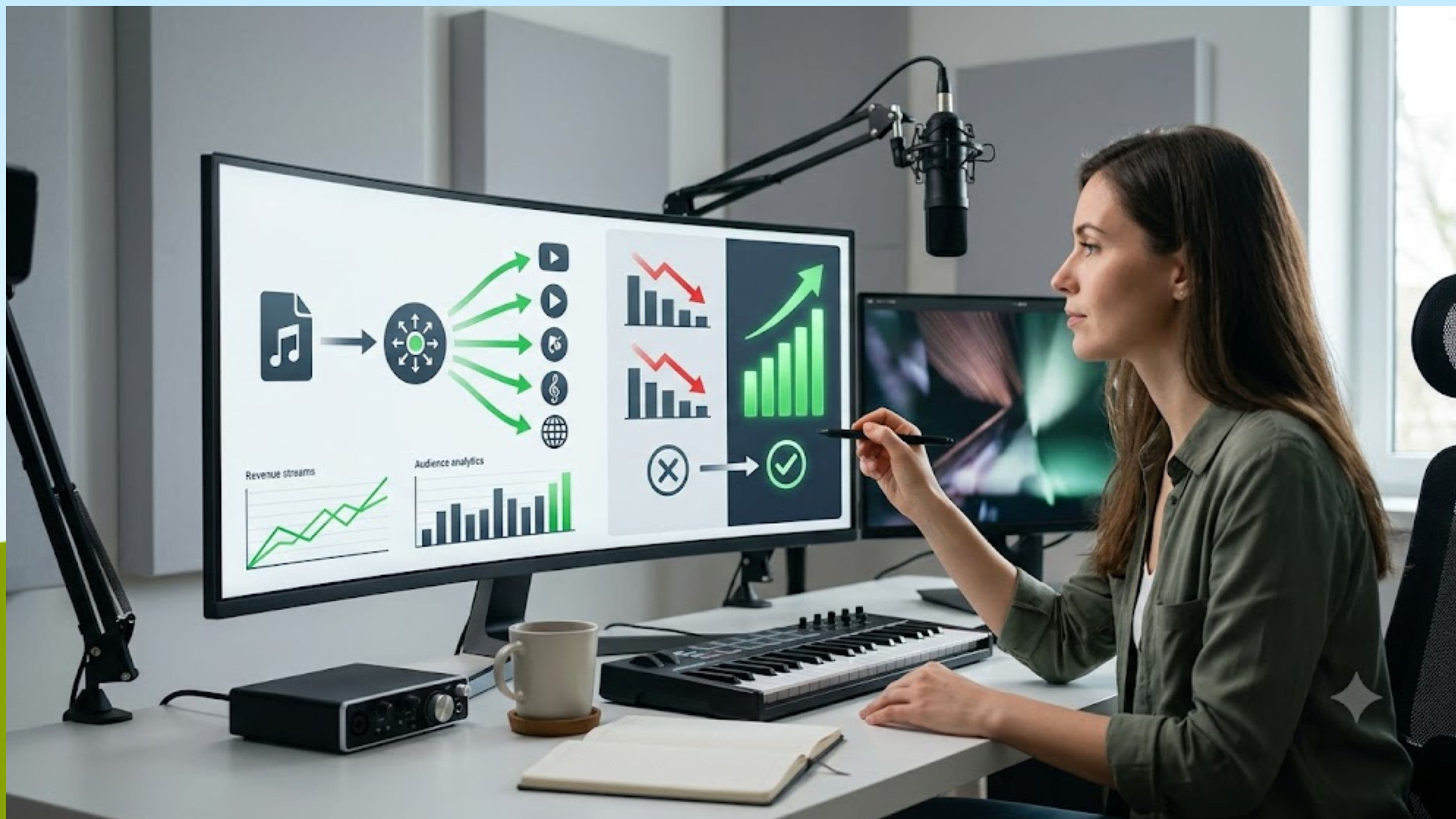
On the value side, the catalog economy has matured in ways that make owning your publishing rights more financially significant than it used to be. Sync licensing – the placement of songs in TV shows, films, commercials, video games, and social media – has become a meaningful income stream for independent artists whose music matches what music supervisors are searching for. Streaming has increased the volume of performance royalty generation even as per-stream rates remain contested. And catalog acquisition has become a major investment category, with funds paying significant multiples for independent catalogs with clean rights histories. Owning your publishing means you control what you sell and when.
The third factor is awareness. The conversation about artist rights and ownership has been public, persistent, and increasingly specific over the past several years. Artists at every level have absorbed the message that their publishing is valuable and that giving it away – or leaving it uncollected – has real costs. That awareness is translating into action, particularly among artists who came up watching the streaming economy develop and who never had a reason to hand publishing rights to a traditional publisher.
What You Actually Collect With Your Own Publishing
Understanding what's at stake financially requires knowing what royalties flow through publishing and which ones artists most commonly miss.
Performance royalties are generated every time a song is publicly performed or played. This includes radio airplay, live performances, streaming (through separate mechanical and performance streams depending on the territory), and background music in public venues. PROs collect these on behalf of songwriters and publishers. If you're registered as both songwriter and publisher with your PRO, you collect both the writer share (typically 50%) and the publisher share (typically 50%) of performance royalties. Artists without a registered publishing entity often only collect the writer share – the publisher share sits uncollected or is absorbed.
Mechanical royalties are generated when a song is reproduced – every stream on a service like Spotify, every digital download, every physical album sale. In the U.S., these are collected through the Mechanical Licensing Collective (MLC) for digital uses. Registration with the MLC, which is free, ensures you're receiving mechanical royalties that streaming services are legally required to pay. Many independent artists, particularly those who released music before the MLC's launch in 2021, have unclaimed royalties sitting in the system waiting to be matched to a registered owner.
Sync licensing fees are negotiated directly and represent one of the higher-value opportunities for catalog owners. When a music supervisor wants to use your song in a production, they need to clear both the master recording and the publishing (sync) license. If you own your publishing, you negotiate and receive that fee directly rather than splitting it with a publisher. Sync placements for independent catalog range from a few hundred dollars for small productions to tens of thousands for major advertising campaigns or prominent TV placements.
The Practical Steps to Set It Up
The process is more straightforward than most artists expect, and starting sooner rather than later matters because you can't collect royalties retroactively for periods before your registration was in place.
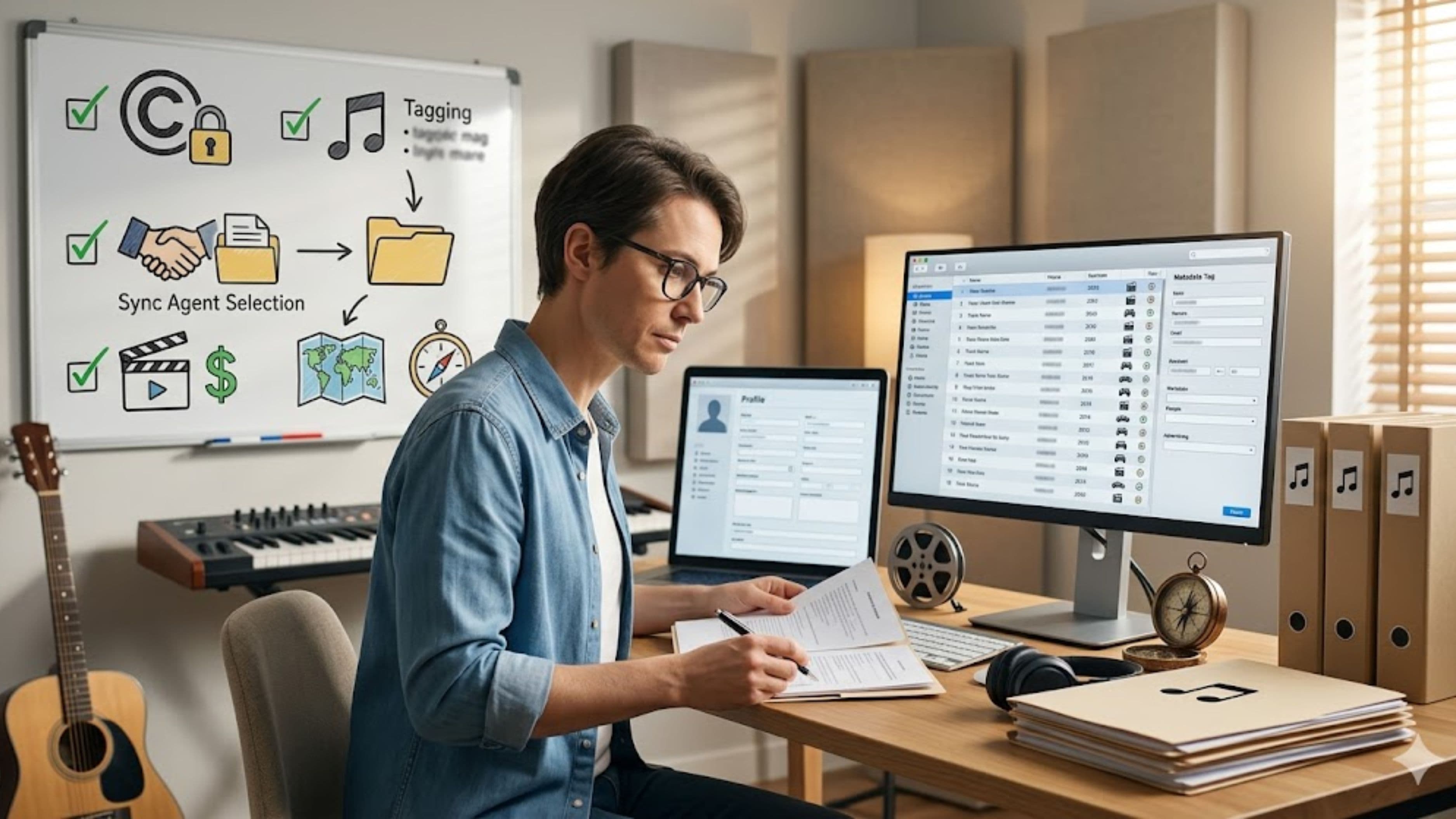
The first step is choosing a PRO if you haven't already. ASCAP and BMI are the two largest in the U.S. and both are free to join as a songwriter. To register as a publisher with either organization, there's a one-time registration fee – currently $150 for ASCAP publisher membership and $150 for BMI. You choose a unique publishing name, confirm it isn't already in use, and complete the registration. At that point you can begin registering your works under your publishing entity and claiming both writer and publisher shares.
The second step is deciding whether to use a publishing administrator. Platforms like Songtrust ($99 setup fee, then 15% of collected royalties) or DistroKid's publishing offering handle global royalty collection beyond your PRO's reach – sub-publishing deals in other countries, international mechanical royalties, and royalties from territories your PRO doesn't directly collect in. For artists with international listeners, this is worth the fee. For artists whose audience is primarily domestic, direct PRO membership may be sufficient in the short term.
The third step is registering your catalog – every song you've released or plan to release. This means creating an ISRC code for each recording and an ISWC code for each composition, then registering those with your PRO and your distributor. It's administrative work, but it's the step that actually creates the match between your music and the royalties it generates.
The fourth step is registering with the MLC if you're in the U.S. and haven't already. Registration is free and ensures you're in the system to receive digital mechanical royalties.
The Rights You Retain and Why That Matters Long-Term
Owning your own publishing isn't just about collecting more royalties now. It's about controlling a long-term asset.
A publishing catalog has compounding value. Every new song you release adds to it. Every sync placement adds to its track record. Every year of streaming royalties establishes a baseline income that makes the catalog more attractive to whoever might want to acquire it – whether that's a publishing fund, another artist's label, or a licensing company. When you own your publishing, you decide whether to sell any of it, how much of it, and at what terms. When a traditional publisher owns it, those decisions belong to them.
The other practical dimension is creative control over licensing. A traditional publisher may license your music to advertisers, films, or brands without your approval depending on the terms of your deal. If you're your own publisher, you approve every sync use. For artists who care about where their music appears – and many do – that control has genuine value beyond the financial.
What to Watch Out For
Publishing administration has gotten simpler, but there are still decisions that matter and mistakes worth avoiding.
Choosing a publishing name that's already in use creates registration problems that can delay your ability to collect. Check PRO databases before settling on a name. ASCAP's database is searchable online and lets you verify that your chosen name is available before you pay the registration fee.
Overlooking international registration leaves money on the table if you have listeners outside your PRO's territory. Most U.S.-based PROs have reciprocal agreements with international counterparts, but coverage varies. A publishing administrator with sub-publishing deals fills those gaps more comprehensively than direct PRO membership alone.
Signing a publishing deal without reading the reversion clause is a significant risk for artists who do work with traditional publishers. Many standard deals require the publisher to exploit your music within a certain period – if they don't, rights should revert. Deals without clear reversion terms can tie up your catalog indefinitely even if the publisher isn't actively working it. If you're considering any publishing partnership beyond pure administration, have a music attorney review the contract.
Waiting too long to register is the most common practical mistake. Royalties generated before registration typically can't be claimed retroactively. If you've been releasing music without a publishing entity in place, the royalties generated during that period may be difficult or impossible to recover in full. The sooner you register, the sooner the clock starts on collection.
FAQ
Do I need a publishing company if I'm just starting out? You don't need a formal LLC to start – a DBA registration affiliated with a PRO is enough to begin collecting publisher shares. The question isn't whether you need one; it's whether you want to collect the full royalties your music generates. If you're releasing music that people will hear, the answer is yes.
What's the difference between a PRO and a publishing administrator? A PRO (ASCAP, BMI, SESAC) collects performance royalties in territories covered by their agreements. A publishing administrator collects a broader range of royalties globally – including mechanical royalties and royalties from territories not directly covered by your PRO. Many artists use both: a PRO for performance royalties and an administrator like Songtrust for global mechanical and additional royalty streams.
Can I have my own publishing company and still work with a label? Yes, with important nuance. If you sign to a label that has a publishing arm or requires a co-publishing deal as part of the recording agreement, that affects your publishing ownership. Many independent label deals don't touch publishing at all, which means you retain full control. Always clarify publishing terms in any label or distribution agreement before signing.
How long does it take to start receiving royalties after registering? PRO royalties typically have a lag of three to six months from when they're generated to when they're paid out. Mechanical royalties through the MLC have a similar cadence. Registering now means royalties generated from this point forward will be collected and paid on that cycle. It's not instant, but the clock doesn't start until you register.
Is it worth registering older music that's already been released? Yes – for future royalties. While you generally can't claim royalties generated before your registration was in place, registering existing catalog ensures future performance and mechanical royalties are collected correctly. If your older music is still being streamed or performed, there are ongoing royalties to collect going forward.
📚 Sources
ASCAP – How to Register a Publishing Company: https://www.ascap.com/help/ascap-membership/publisher-membership
BMI – Publisher Registration Information: https://www.bmi.com/publishers
Mechanical Licensing Collective – Register and Claim Royalties: https://www.themlc.com/
Songtrust – Publishing Administration for Independent Artists: https://songtrust.com/how-it-works
Music Business Worldwide – Independent Publishing Catalog Economy: https://www.musicbusinessworldwide.com/