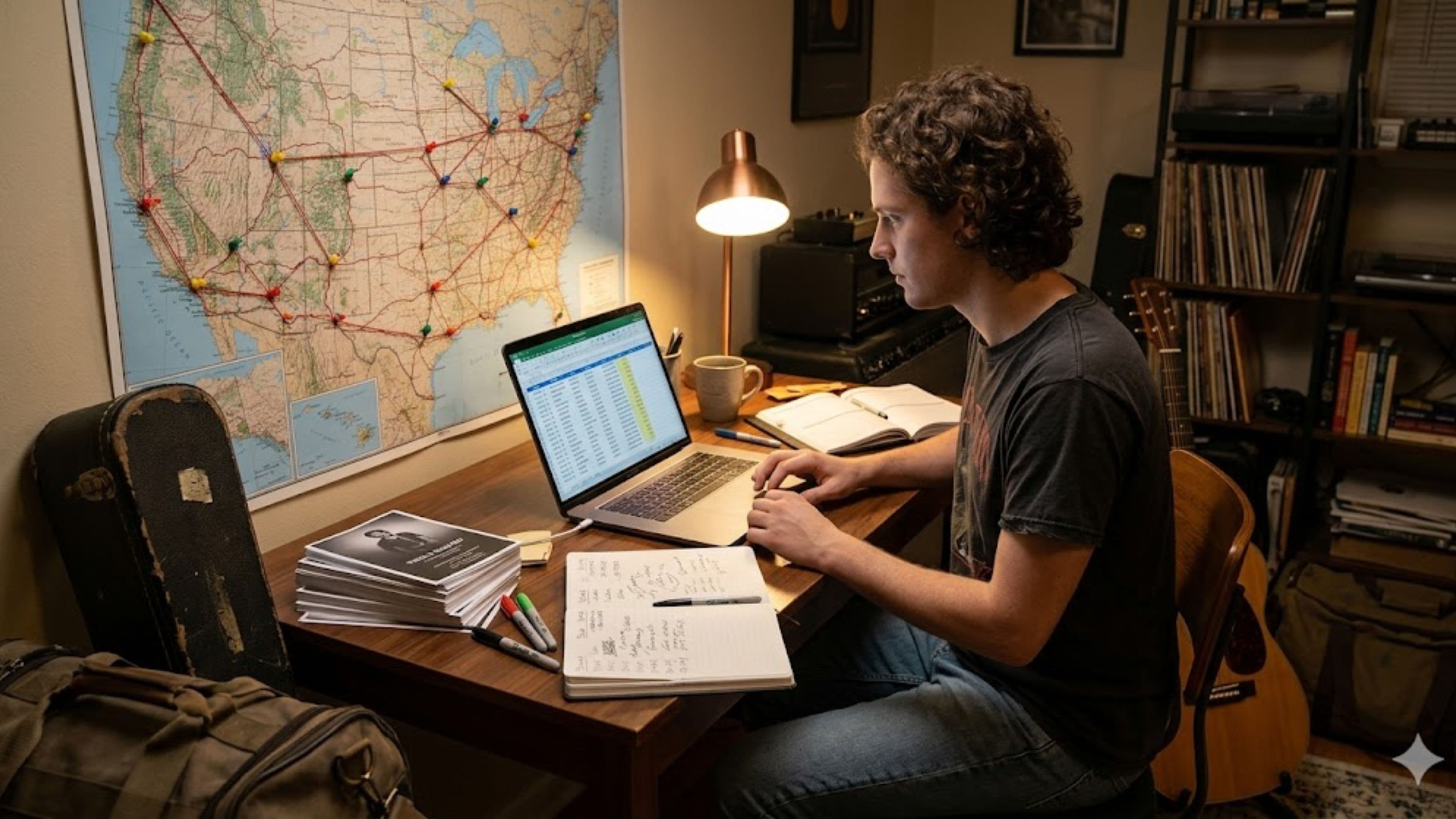
If you're an independent artist ready to take a run at multiple cities on your own, this guide covers the actual mechanics: how to sequence the process, what the common pitfalls are, and how to approach the whole thing without burning yourself out or losing money you don't have.
Start With Routing, Not With Venues
The instinct when planning a multi-city tour is to start reaching out to venues you want to play. Hold off. Routing comes first, and getting it wrong creates a cascade of problems – extra driving days, budget drain, and shows that are physically impossible to get to on time.
Routing means plotting the geographic order of your shows so that you're moving in a logical direction rather than zigzagging across a map. If you're based in Chicago and heading to the East Coast, a rational route runs east through Cleveland, Pittsburgh, Philadelphia, New York, and Boston – not Chicago to New York to Cleveland to Boston to Philadelphia. That may sound obvious, but it's surprisingly easy to let one exciting booking opportunity pull you out of sequence and wreck the efficiency of the whole run.
The practical tool for this is a simple map. Plot every city you're targeting, draw a route that minimizes backtracking, and identify which cities fall naturally on that route versus which ones require a significant detour. Cities that require a 200-mile detour off your main routing are worth bypassing unless you have a specific reason to go there – a strong existing fanbase, a relationship with a booker, or a support slot opportunity.
Build Your Target City List Before Outreach
Before you contact a single venue, build a clear list of target cities and for each one, identify two or three specific venues worth pitching. Research matters here. You want venues that are the right size for where you're at as an artist – a 50-capacity room when you're pulling 20–30 people per show is better than a 300-capacity room where you look to the promoter like you're playing to a half-empty house.
Look at other artists at your level and see where they've been playing. Bandsintown, Songkick, and individual venue websites are useful for this. If artists with a similar draw and fanbase are regularly playing a specific venue in Indianapolis or Richmond, that venue is probably a better fit for you than one you found by googling "best indie music venue." Social proof from similar artists is more useful than website aesthetics.
For each city, rank your venue preferences. Pitching your top choice first is the obvious move, but having a second and third option ready means a rejection from your first choice doesn't stall the whole process. A quick "no" from one venue with a follow-up to the next venue keeps momentum going.
How to Pitch Venues Without a Booking Agent
Venue bookers receive dozens of pitch emails per week. Most of them go unread or get a form rejection. Getting through requires being direct, professional, and making it easy for the booker to evaluate you quickly. The pitch email isn't where you tell your story – it's where you give them the information they need to decide whether to say yes.
A functional venue pitch covers a few things concisely: who you are and what your music sounds like (one to two sentences), where else you're confirmed on the tour so the booker can see you're serious and not cold-emailing randomly, your draw in that city or region if you have any history there, your streaming and social numbers if they're meaningful, and your proposed date or date window. Keep it to five to eight sentences. Attach a press photo and include a link to your best two or three songs – not a full press kit as an attachment, which many bookers won't open.
The follow-up is more important than most artists realize. Bookers are busy and even interested ones sometimes don't respond to the first email. A polite follow-up two weeks after the initial pitch is standard and appropriate. Sending a second follow-up two weeks after that is reasonable. Anything beyond that starts to feel like pressure, which isn't what you want with someone you're hoping to have an ongoing relationship with.
The timing of outreach matters significantly. For a tour happening in spring, you should start reaching out in late fall or early winter – three to four months in advance is the minimum for multi-city runs, and five to six months is better. Venues have competing holds and commitments, and trying to book a tour six weeks out almost always means settling for whatever dates are still available rather than what works best for your routing.
Understanding the Different Deal Structures
When a venue confirms your date, the financial arrangement is part of what you're agreeing to. Understanding the common deal structures prevents unpleasant surprises on payday.
A door deal (also called a flat door deal) gives you a percentage of ticket revenue – typically 70–85% for the artist. If the show sells 40 tickets at $10 each, you get $280–$340. Your risk is that if nobody shows up, you make nothing. This is the most common structure for emerging artists.
A guarantee plus percentage gives you a fixed floor – say $150 – plus a percentage of the door above a certain break-even threshold. This protects you from a total washout while still giving the venue confidence that you're invested in promotion.
A straight guarantee is a fixed payment regardless of the door. These are harder to get without a track record, and venues offering them to new-to-market artists typically set them low to offset their risk. They're more common as you build a relationship with a venue over multiple bookings.
A co-bill or split bill usually means all artists share the door equally or according to a negotiated split. If you're the headliner with a stronger draw, push to negotiate a draw-weighted split. If you're the support act, the standard is to take the smaller portion and treat the show as a relationship-building opportunity more than a payday.
For self-booked tours, door deals are the reality for most shows. Building in enough cities and managing expenses tightly is what makes the economics work.
The Financial Side: Budgeting the Tour
Self-booked tours at the indie level often don't profit. Knowing that going in and planning accordingly is more useful than pretending the numbers will add up to income. The more realistic goal for many first multi-city runs is covering costs, building relationships in new markets, and testing your draw in cities you haven't played before.
The major expense categories are fuel or travel (by far the largest for most artists driving a van), lodging, food, merchandise production, and the practical costs of performance – strings, drumsticks, cables, maintenance for the vehicle you're touring in. Couch-surfing at friends' and fans' places or using platforms like Crash (the musician housing network) significantly reduces lodging costs, which is often the second-largest expense after fuel.
A rough budget calculation: estimate driving miles for the full route, divide by your vehicle's miles per gallon, multiply by the current gas price, and add 20% for buffer. Add lodging costs for nights when you're not staying for free. That gives you the floor your shows need to cover before you're making anything. Merchandise is the variable that most self-booked tours rely on to actually turn a positive number – door deals alone often don't cover costs at small venues.
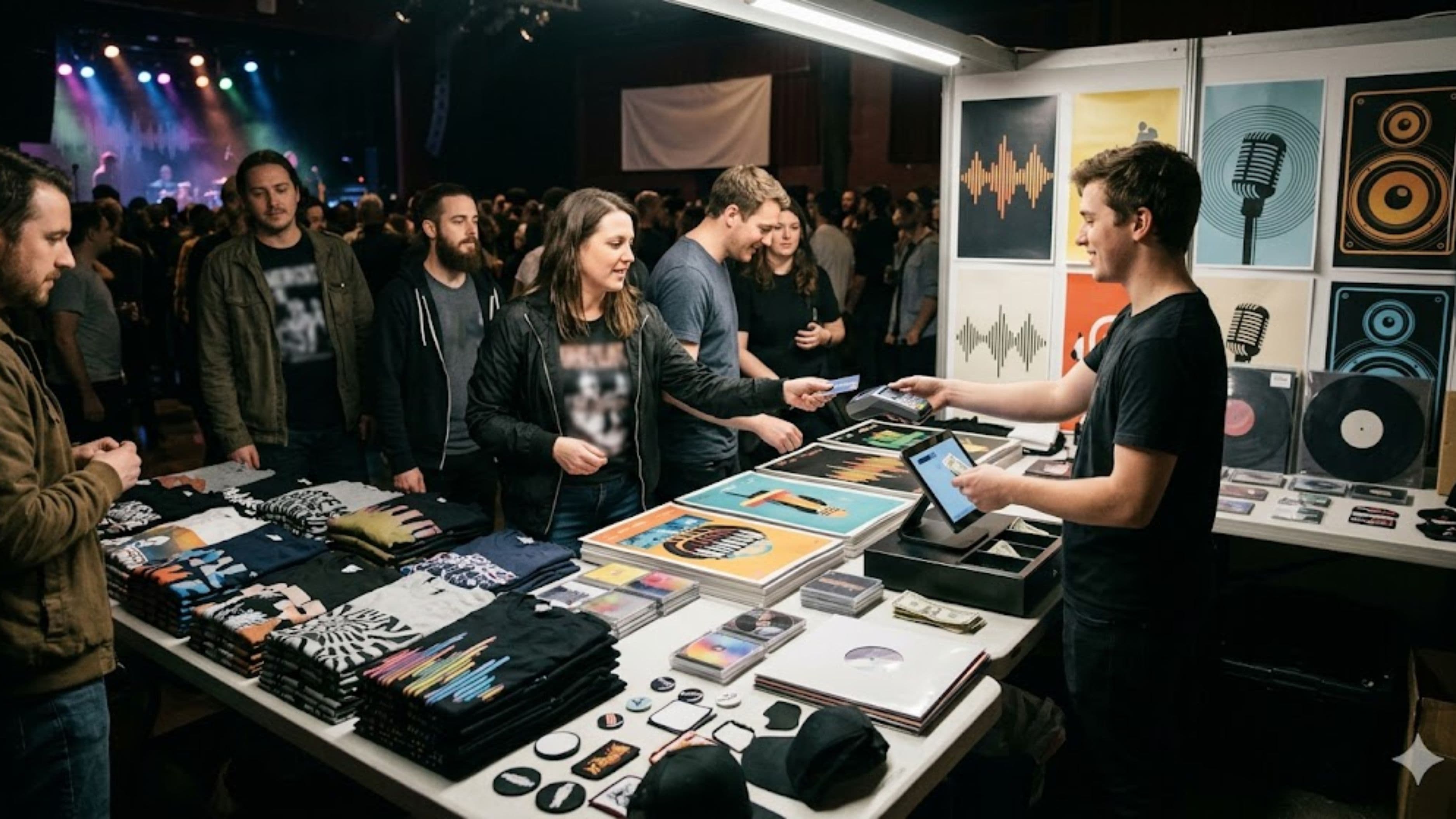
Merch production, done before the tour, is worth investing in even at a small scale. A short run of t-shirts and CDs or vinyl typically costs $200–$600 depending on quantities and quality. The revenue potential per show is $50–$200 or more at a well-attended show, and merch contributes to your brand visibility in ways that pure ticket revenue doesn't.
Promotion: Your Responsibility, Not the Venue's
One of the most expensive misconceptions self-booking artists carry into touring is that the venue will handle promotion. In most cases for new-to-market artists, the venue puts you on their calendar and that's about it. Getting people into the room is largely your job.
This means starting market-level promotion three to four weeks before each show. Update your Bandsintown and Songkick profiles for every date – both platforms power the "events" feeds that fans check when looking for shows in their city, and many fans discover shows through those apps rather than through social media. Post consistently about each city in the weeks leading up to the show, with some of that content being specific to that city rather than a blanket "we're on tour" announcement.
Local press outreach – music blogs, alt-weeklies, local radio – is worth doing for each city even if the return rate is modest. A two-sentence email to a local music writer or radio show host with a short bio, streaming links, and show details takes ten minutes per city and occasionally converts into coverage that brings people out who wouldn't have come otherwise. The hit rate is low but the effort is low too.
Connecting with local artists in each city and inviting them to co-promote the show is one of the most effective local promotion tactics available. If a local artist on the bill has their own fanbase, even 20–30 people, that directly impacts your draw. This is another reason why co-bill opportunities are worth considering even when the financial split isn't favorable – local artists bring local audiences.
What to Watch Out For
Venues that take payment in cash only and don't provide settlement documentation are a real thing, and they're harder to deal with at the end of a long show night when you're tired and ready to pack up. Agree in writing on the deal structure before you confirm the date and ask for a settlement sheet at payout.
Overloaded routing is a slow-build disaster. Too many cities in too few days with too many driving hours produces shows where you perform exhausted to a thin crowd you didn't have time to promote to properly. A rest day or a day-off buffer between high-drive legs costs you a potential show slot but saves the quality of the ones on either side.
Verbal confirmations that don't become written ones leave you vulnerable to a venue changing the date, canceling, or having no memory of the conversation. Get every confirmed date in writing – email confirmation is fine – before you announce the show publicly, turn down competing dates, or buy flights.
Waiting too long to announce hurts ticket sales. People need lead time to plan to attend shows, especially on weeknights. Announcing a show two weeks out in a city where nobody knows who you are gives you very little time to build awareness. Six weeks is a better minimum; eight to ten weeks gives the show real time to build.
FAQ
How many cities should a first self-booked tour include? Four to six cities is a manageable range for a first run. This is enough to make the trip feel like a real tour – building momentum, developing relationships in multiple markets – without the logistical and physical load of a 15-city run that could overwhelm the organizational capacity of a single artist managing everything alone.
Do I need a registered business entity to book a tour? Not legally required, but useful. A sole proprietorship or LLC makes it easier to have a business bank account for tour finances, receive payments professionally, and eventually work with a booking agent or manager as the artist project grows. At minimum, having a dedicated touring budget account keeps money clear.
What happens if a venue cancels close to the show date? This happens, particularly with smaller independent venues. Having a venue contract or at least an email confirmation with cancellation terms gives you some recourse, but in practice small venues rarely pay cancellation fees. The more practical protection is having a backup venue in each city – one you've already made contact with but haven't confirmed – so you have a fallback if your primary date falls through.
How do I find support acts or co-bills in cities I've never played? Social media searches for artists in the target city who play in the same genre, reaching out to local promoters who may have suggestions, and platforms like GigMix and GigSaloon connect touring artists with local acts looking for shows. Bookers at the venue can often suggest local artists to fill out a bill – they have an interest in the show doing well and usually know the local scene.
Is it worth hiring a booking agent for a self-booked tour? Booking agents typically work with artists who already have a track record – touring history, streaming numbers, and a draw that justifies their commission (usually 10–15% of tour gross). For most artists at the early multi-city tour stage, self-booking builds the track record that eventually makes the conversation with an agent productive. An agent who believes in the artist can book better rooms and negotiate better deals; but that conversation goes better after you've demonstrated you can sell tickets.
Outro
Self-booking a multi-city tour isn't glamorous, and the logistics don't get easier with experience so much as they become familiar. The artists who run successful self-booked runs are usually the ones who treat the business side as seriously as the performance side – who do the routing work before the outreach, write clear pitch emails, follow up consistently, budget honestly, and promote each city like it's the only show on the run. That approach won't guarantee a sellout in every room, but it builds the kind of track record, relationships, and fanbase development that eventually changes what's possible.
📚 Sources
Bandsintown for Artists – Tour Dates and Fan Notifications: https://artists.bandsintown.com
Songkick for Artists – Tourbox and Fan Demand Tools: https://www.songkick.com/artist-signup
Crash – Free Musician Housing Network: https://www.crashmusician.com
Music Industry How To – How to Book Your Own Tour: https://www.musicindustryhowto.com/how-to-book-your-own-tour
DIY Musician (CD Baby Blog) – Touring on a Budget: https://diymusician.cdbaby.com/musician-tips/touring-on-a-budget