What a Show Promoter Actually Does
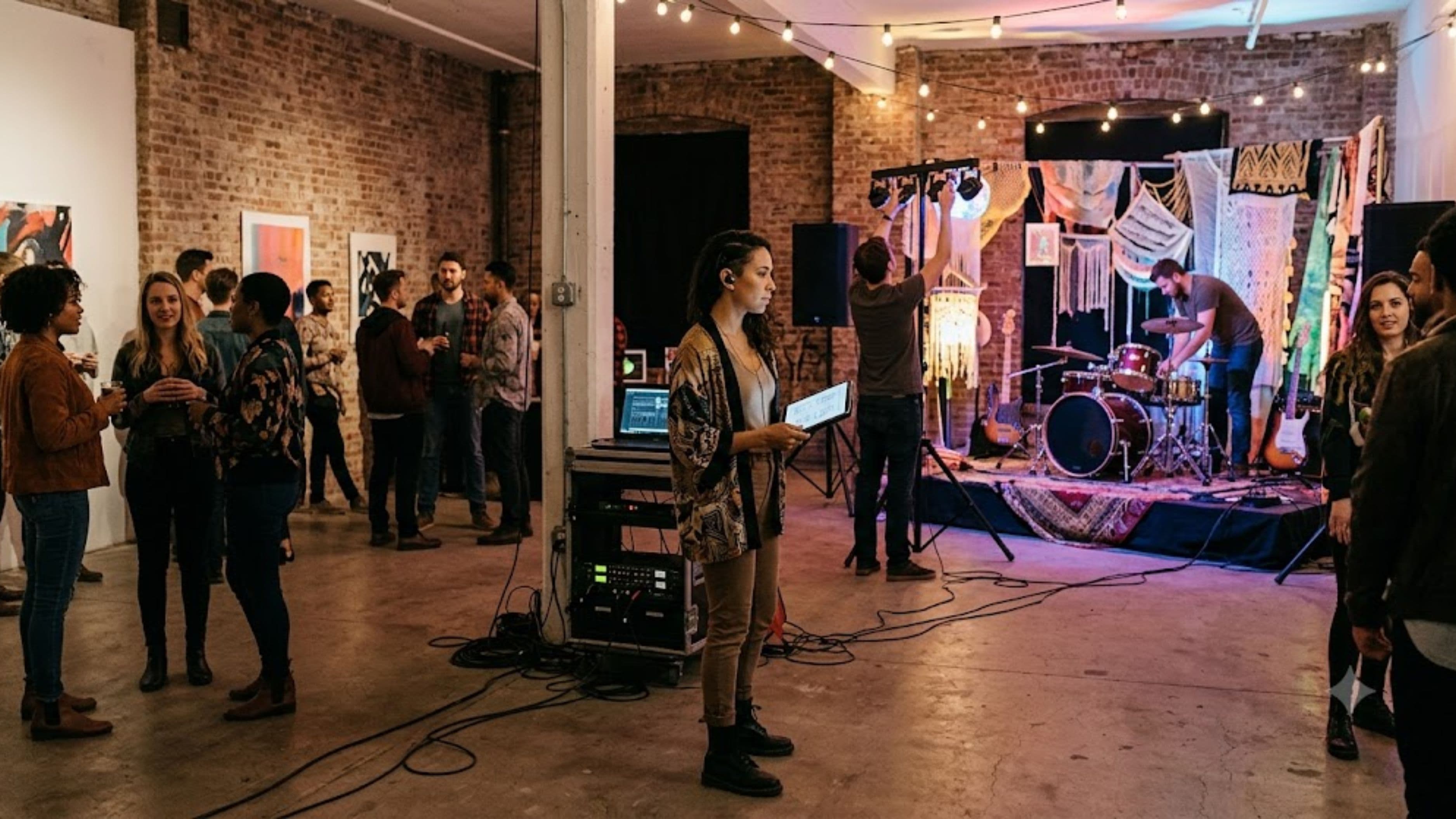
A promoter typically handles marketing and ticket sales for a show, sometimes securing the venue as well, in exchange for a percentage of ticket revenue or a flat fee. Their role can range from minimal (posting a show on their existing event calendar) to substantial (running a full advertising campaign, handling press outreach, and managing ticket sales infrastructure).
Understanding exactly what level of involvement you're getting is one of the most important things to clarify before signing, since promoter agreements can look similar on paper while representing very different levels of actual service and effort behind the scenes.
Get Specific About What "Promotion" Actually Includes
Vague language like "the promoter will market the show" leaves too much room for interpretation and disappointment. A stronger agreement specifies concrete deliverables: how many social media posts, whether paid advertising is included and at what budget, whether the promoter will pursue local press or radio placement, and what email marketing or existing mailing list access you'll receive.
Asking for specific examples of how the promoter has marketed similar shows in the past, including actual attendance numbers where possible, gives you a more realistic sense of what to expect than a general description of their promotional capabilities.
Understand the Revenue Split and When Costs Get Deducted
Most promoter agreements involve the promoter taking a percentage of ticket revenue, but the details of how and when that percentage applies matter significantly. Some agreements calculate the promoter's cut from gross revenue, while others deduct certain expenses (venue rental, advertising costs, ticketing platform fees) before calculating the split, which can meaningfully change your actual take depending on how those deductions are structured.
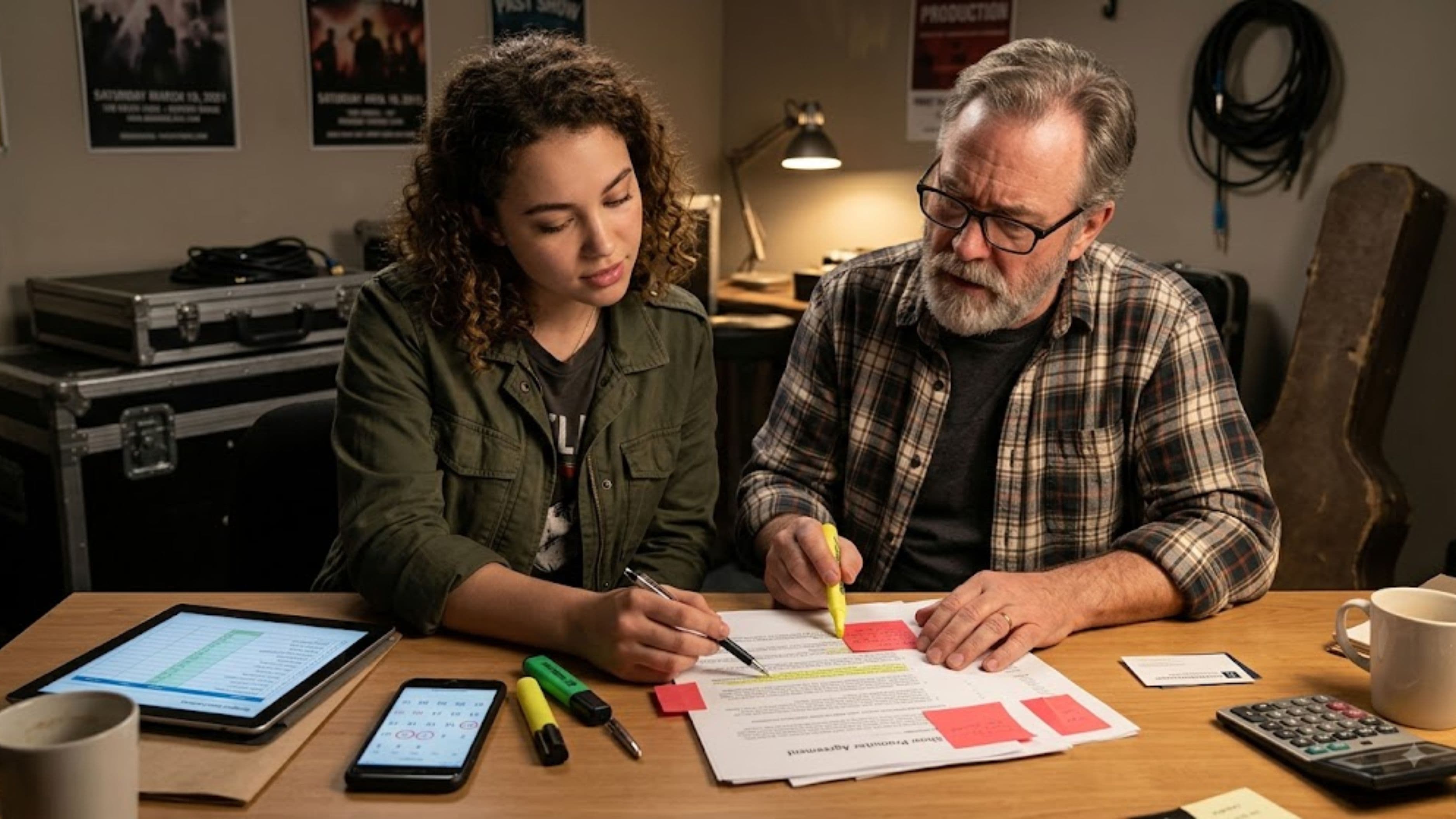
Getting a clear, itemized breakdown of exactly which costs get deducted before the revenue split is calculated, rather than a vague reference to "expenses," protects you from unexpected deductions showing up after the show that significantly reduce your final payment.
Clarify Who Handles Ticket Sales and Payment Processing
Understand which platform will be used for ticket sales, who has access to the sales data during the lead-up to the show, and how quickly you'll receive your portion of the revenue after the event. Some promoters are slow to release payment, sometimes taking weeks or longer, particularly if there's any ambiguity in the contract about specific payment timelines.
A contract that specifies an exact payment timeframe, such as within 14 business days of the show, protects you from open-ended payment delays that can otherwise become difficult to resolve after the fact.
Watch for Exclusivity Clauses
Some promoter agreements include exclusivity terms that prevent you from working with other promoters in a specific geographic area or timeframe. While this isn't inherently unreasonable, particularly for a promoter making a significant investment in marketing your show, it's worth understanding exactly how broad this restriction is and for how long it applies.
An overly broad exclusivity clause, covering a large geographic radius or an extended time period well beyond the specific show being promoted, can limit your ability to book other opportunities in your market, so it's worth negotiating this scope down to something more specific and reasonable if the initial terms feel overly restrictive.
Understand What Happens If the Show Underperforms
Ask specifically what happens if ticket sales fall short of expectations. Some agreements include a minimum guarantee regardless of attendance, while others leave the artist's payment entirely dependent on ticket sales performance, which shifts significant financial risk onto the artist, particularly for a show they may have limited direct control over promoting themselves.
Understanding this risk allocation before signing helps you decide whether the specific deal makes sense for your current situation, particularly if you're relying on the promoter's stated marketing plan to reach an audience you don't already have direct access to yourself.
Clarify Cancellation Terms and Force Majeure
Contracts should specify what happens if the show needs to be cancelled or rescheduled, whether due to the artist, the promoter, the venue, or unforeseen circumstances like severe weather. A specific, mutually agreed cancellation policy, including any fees or refund obligations, prevents ambiguity and potential disputes if plans change.
This is also where force majeure language, covering circumstances beyond either party's reasonable control, becomes relevant. A clearly defined force majeure clause protects both parties from unfair financial obligations in genuinely unpredictable situations.
Get Everything in Writing, Including Verbal Promises
A common source of frustration for independent artists comes from verbal assurances made during initial conversations that never make it into the actual written contract, whether that's a promised marketing budget, a specific promotional platform, or an assurance about audience turnout expectations. If a promoter makes a specific commitment during your discussions, ask for it to be included explicitly in the written agreement rather than relying on the verbal conversation alone.
Key Takeaway
The most important protections in a promoter agreement usually aren't the headline revenue split, but the specifics buried further into the contract: what promotional activities are actually guaranteed, how expenses are deducted before the split is calculated, when and how you'll actually get paid, and what happens if the show doesn't go as planned. Reading past the first page and asking for clarity on these specific terms tends to prevent the majority of disputes that arise after a show has already happened.
What to Watch Out For
Be cautious of promoters unwilling to put specific promotional commitments in writing, since a hesitancy to commit to specifics in the contract itself is often a signal that the actual promotional effort may fall short of what was verbally described. Watch for vague expense deduction language that could allow for costs to be added after the fact without your prior knowledge or approval. And be wary of open-ended payment timelines without a specific deadline, since this is one of the more common sources of prolonged payment disputes between artists and promoters.
FAQ
Is it normal for a promoter to take a percentage of merchandise sales too? This varies by promoter and market. Some agreements are limited strictly to ticket revenue, while others include a smaller merchandise cut. This should be explicitly clarified and included in the written agreement either way.
What's a reasonable percentage for a promoter to take? This varies significantly based on the promoter's level of involvement, market, and the specific services provided, and there isn't a single universal standard. Comparing the proposed split against the specific promotional deliverables being offered is more useful than comparing against a general industry benchmark alone.
Should I work with a promoter for every show? Not necessarily. For shows in markets where you already have a strong existing following, self-promotion combined with venue support may be more cost-effective than a promoter's cut, while a promoter's reach can be genuinely valuable in a newer market where you don't yet have an established audience.
📚 Sources
American Federation of Musicians – Contract Resources for Musicians – https://www.afm.org/resources/
Recording Academy – Advocacy and Artist Resources – https://www.grammy.com/advocacy