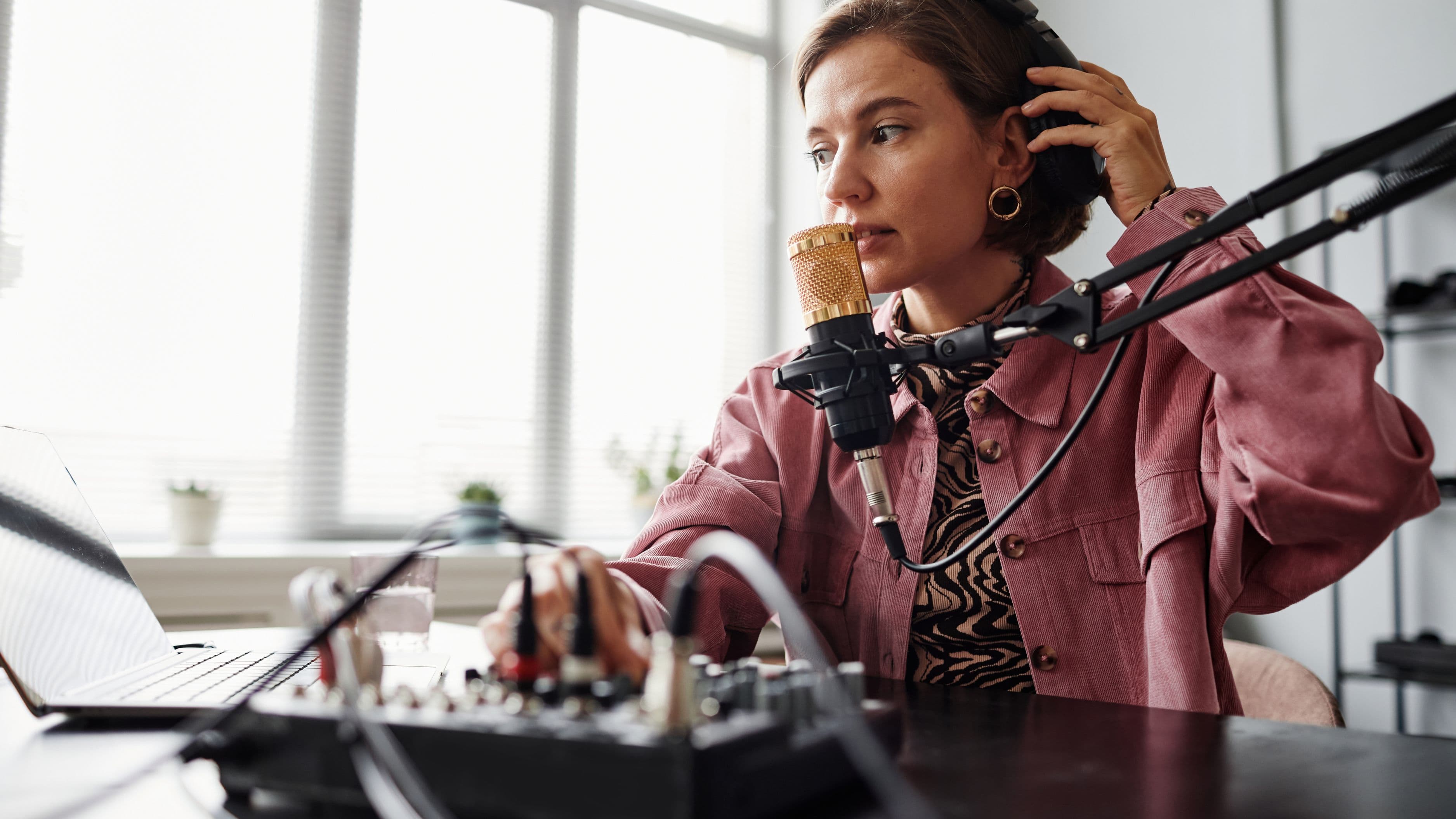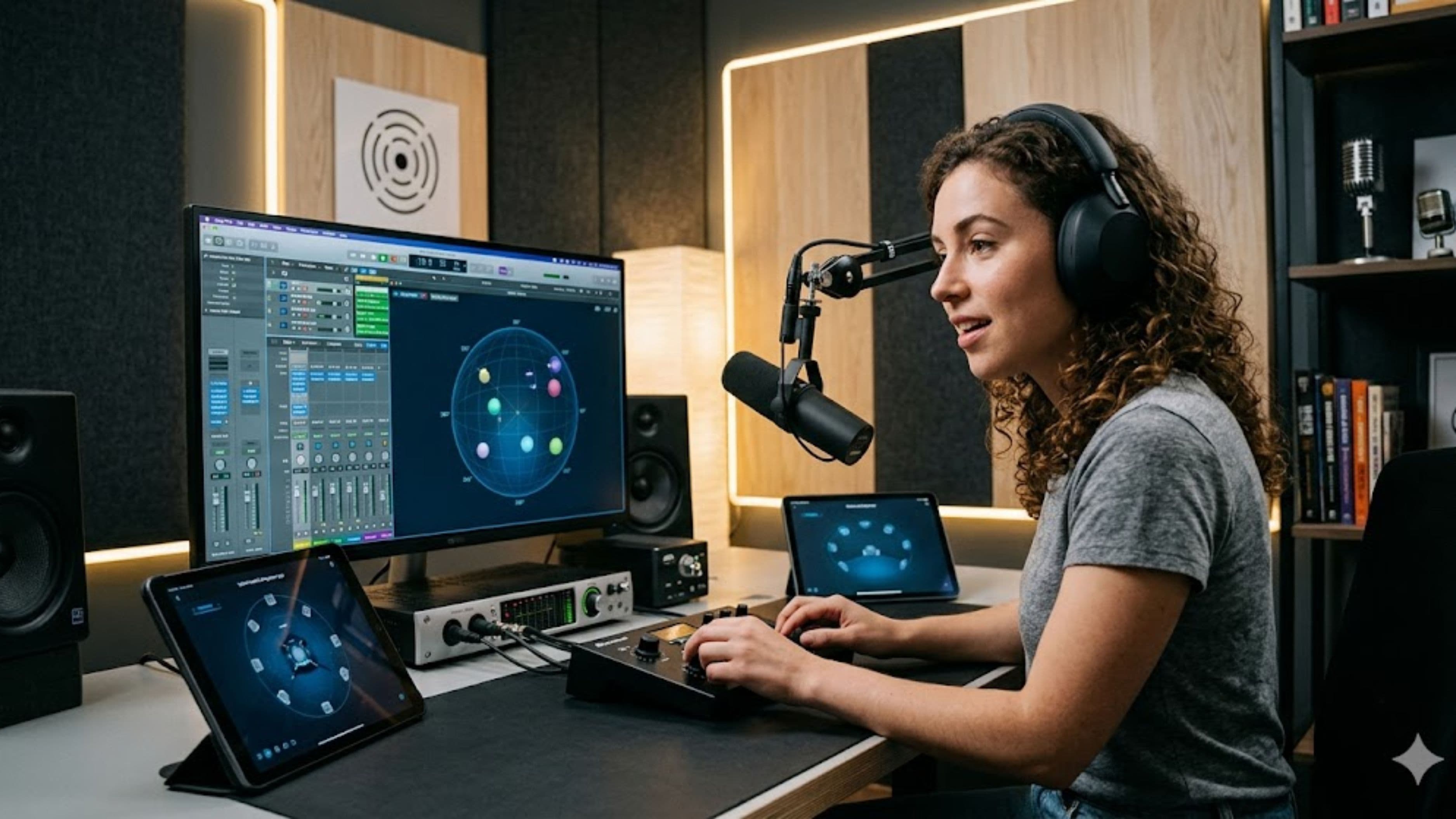
Spatial audio is moving from concert halls and film post-production into the hands of independent podcast creators. What that means in practice, how it changes the listening experience, and whether it's worth pursuing as a creator right now – that's what this breaks down.
What Spatial Audio Actually Is
Spatial audio is a broad term for audio technologies that create the perception of sound existing in three-dimensional space rather than just left-to-right stereo. Instead of placing sound on a flat horizontal plane, spatial audio can position sounds above, below, in front of, behind, and all around the listener.
The underlying technology has existed for decades in professional film and music production – Dolby Atmos, for example, has been used in cinema since the early 2010s. What's changed is the distribution layer. Apple Music, Apple Podcasts, and Tidal now support spatial audio playback natively. AirPods Pro and AirPods Max include head-tracking hardware that adjusts the audio field as the listener moves their head, making the effect even more convincing. The infrastructure for spatial audio to reach everyday listeners at scale now exists in a way it simply didn't three years ago.
For audio described as binaural – a specific spatial audio technique using two microphone placements or post-processing that mimics how human ears naturally receive sound – standard headphones are all you need. No special speaker setup required. That's a meaningful shift for podcasting, where 90%+ of listening already happens through earbuds or headphones.
Why It Changes the Listening Experience
The difference between stereo and spatial audio in a listening context is easier to feel than to describe. In standard stereo, a podcast conversation sounds like it's happening inside your head, with voices placed somewhere between your left ear and right ear. In spatial audio, voices can sound like they're in the room with you – positioned at conversational distance, coming from a specific point in front of you rather than from inside your skull.
For a medium built on intimacy – the listener feeling like they're part of a conversation, a story, or a thought process – that perceptual shift has real implications. Podcast listeners often describe the best shows as feeling like being in the room with someone they trust. Spatial audio moves that experience closer to literal rather than metaphorical.
For narrative and documentary-style podcasts, the creative possibilities go further. Sound design elements – ambient environments, sound effects, multiple voices in different locations – can be placed exactly where they'd exist in physical space. A story about a crowded market can put the market sounds around the listener while a narrator's voice remains steady directly in front. The directional information that human hearing uses to interpret environments becomes a storytelling tool.
How Creators Are Using It Now
The practical application of spatial audio in podcasting is still early, but the patterns of adoption are becoming visible.
Narrative and true crime podcasts have been the most active early adopters, for obvious reasons. A genre that lives on immersion and scene-setting benefits more immediately from dimensional audio than a straightforward two-person interview show. Producers who work in that space are beginning to treat spatial audio as a production layer – not a gimmick to show off but a tool for placing the listener inside scenes the way filmmakers use cinematography to control visual perspective.
Some sports and live event podcasters are experimenting with spatial audio to recreate the experience of being in a venue. The ambient crowd noise, the commentary position, the sense of spatial scale – these all translate meaningfully into binaural audio in ways that flat stereo doesn't capture.
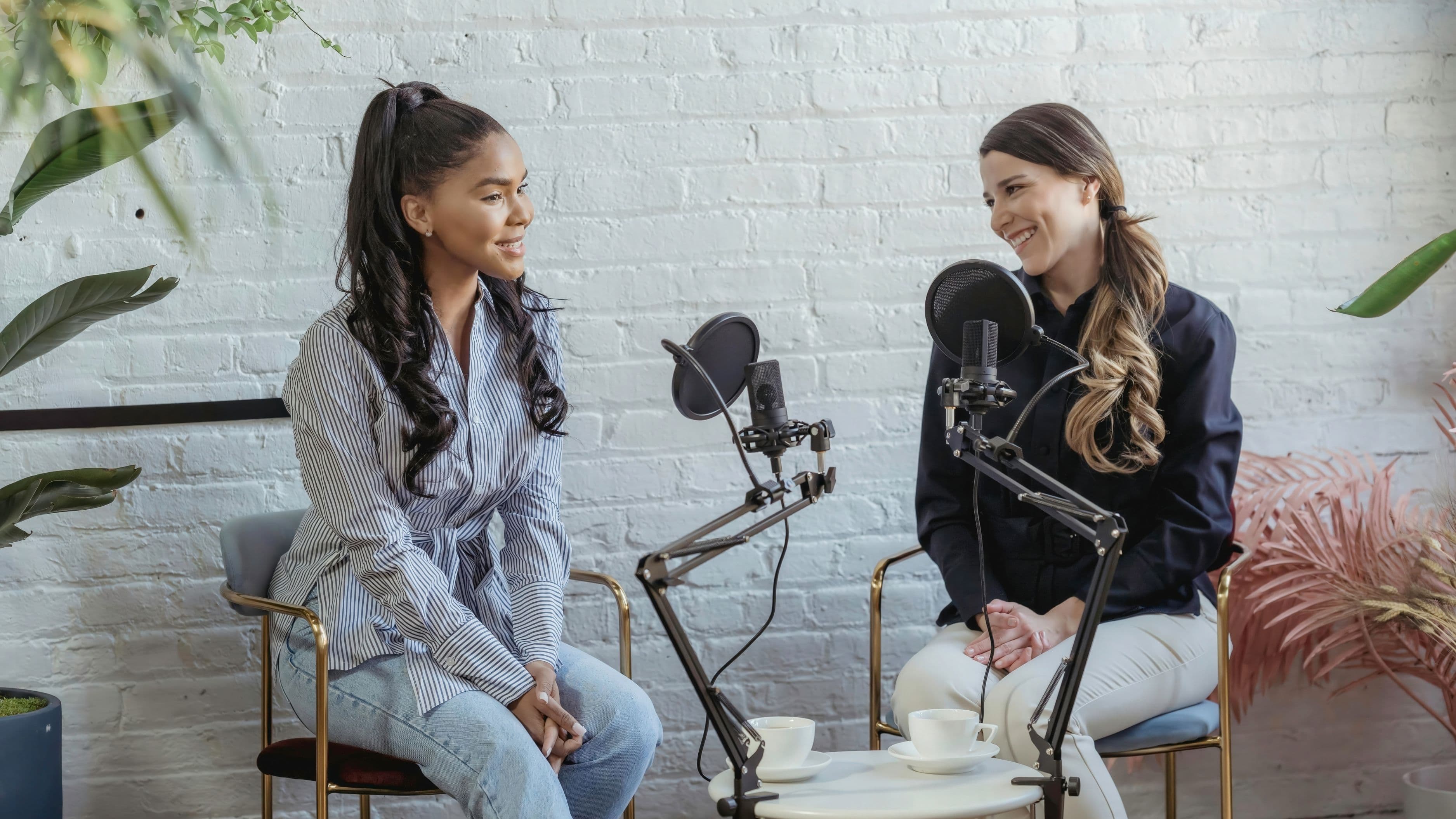
Interview and conversational podcasts are the format where spatial audio's current impact is most subtle. The honest answer is that for a standard two-host conversation show, full spatial audio production adds complexity without proportional listener benefit for most audiences. The format is already intimate. Where spatial audio adds value here is in smaller ways: slightly different positioning for each voice to reduce the "two voices coming from one point" effect, better natural reverb simulation to make remote recordings feel more cohesive, and improved width and depth in the stereo field even without full 3D placement.
The Tools Available to Independent Creators
This is where the practical picture gets both more accessible and more honest about the current ceiling.
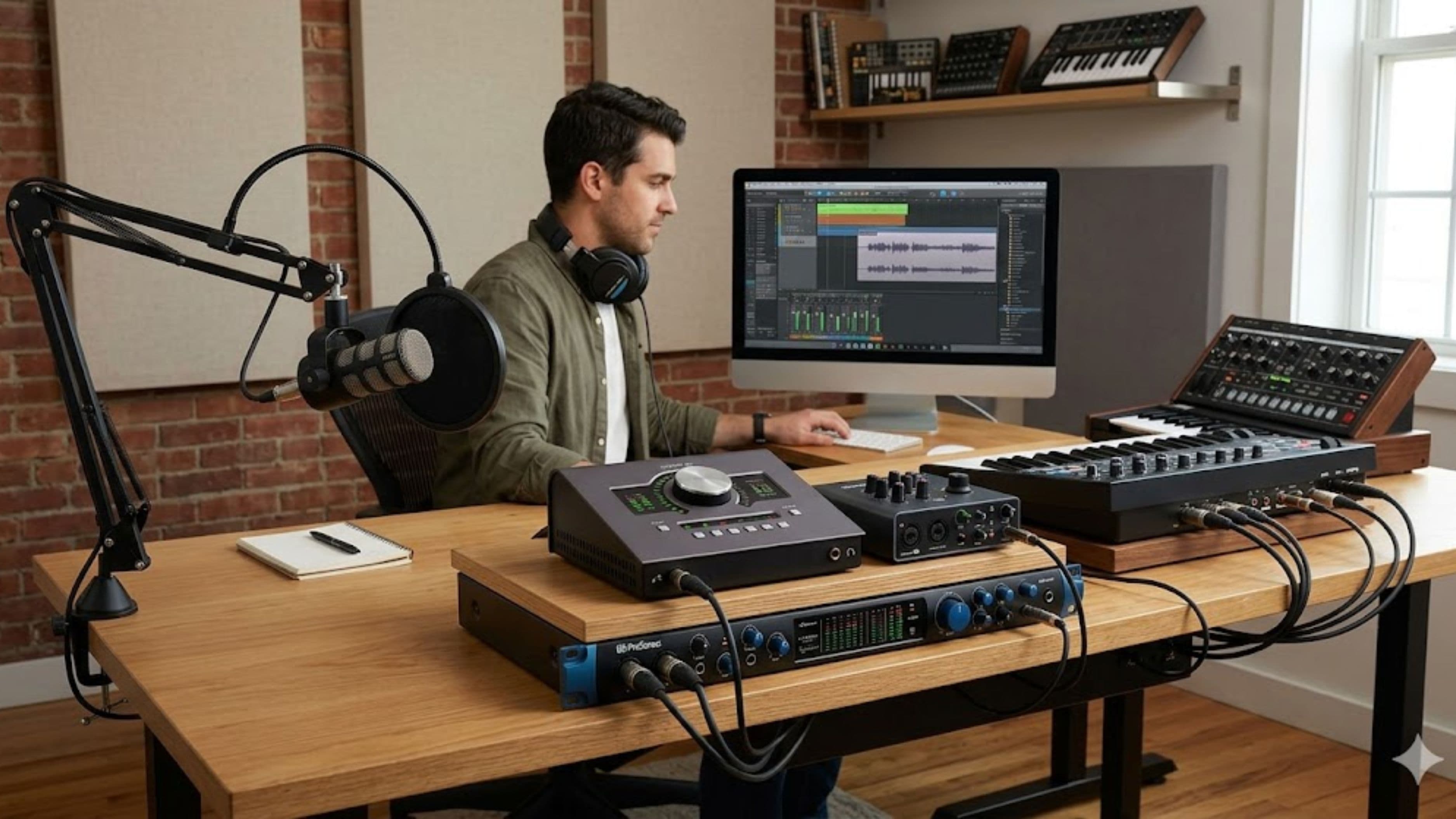
Logic Pro and Pro Tools both support Dolby Atmos mixing natively, which means producers already working in these environments can output spatial audio mixes without additional software. Logic Pro's spatial audio workflow is particularly accessible for independent creators already in the Apple ecosystem, and Apple Podcasts supports Dolby Atmos delivery.
DearVR Pro and DearVR Micro are spatial audio plugins that work within standard DAWs and are widely used by creators transitioning from traditional stereo mixing. They allow you to position individual audio elements in three-dimensional space without a full Atmos setup, and they're significantly cheaper than a professional spatial audio suite.
Sennheiser AMBEO Orbit is a free plugin that adds spatial characteristics to stereo audio, offering an accessible entry point for podcasters who want to experiment with width, depth, and positioning without committing to a full spatial audio production pipeline.
Amazon Alexa Spatial Audio and Apple's Spatial Audio framework are the distribution endpoints – the platforms where spatial audio content actually reaches listeners. Both have their own encoding requirements. Apple's implementation through Dolby Atmos in Apple Podcasts is currently the most creator-accessible pipeline with a meaningful listener base at the other end.
The realistic picture for independent creators is that full spatial audio production with head-tracking support requires a meaningful investment in time to learn, processing setup, and potentially gear. A more accessible middle path – binaural processing, thoughtful stereo widening, and careful directional placement of elements – captures a significant portion of the perceptual benefit at a fraction of the production complexity.
What the Listener Experience Actually Requires
One dimension that matters as much as the production side is what listeners need on their end to perceive the effect. This is where the gap between potential and current scale is honest.
Spatial audio with head-tracking works best – sometimes exclusively – with AirPods Pro or AirPods Max connected to Apple devices. On standard earbuds or headphones, binaural audio still produces an expanded, more three-dimensional listening experience, but the head-tracking effect is absent. On speakers, spatial audio collapses largely toward standard stereo, and the specific placement effects disappear.
Apple's installed base of AirPods users is substantial – estimates put AirPods as the dominant earbud in the US market. But spatial audio's full immersive potential is specifically tied to that hardware combination, not just headphone listening in general. As a creator, that means a significant portion of your audience will hear an improved stereo experience but not the full spatial effect – at least until compatible hardware becomes more universal.
What to Watch Out For
Spatial audio in podcasting comes with real opportunities and a few traps worth knowing before you invest time in the production shift.
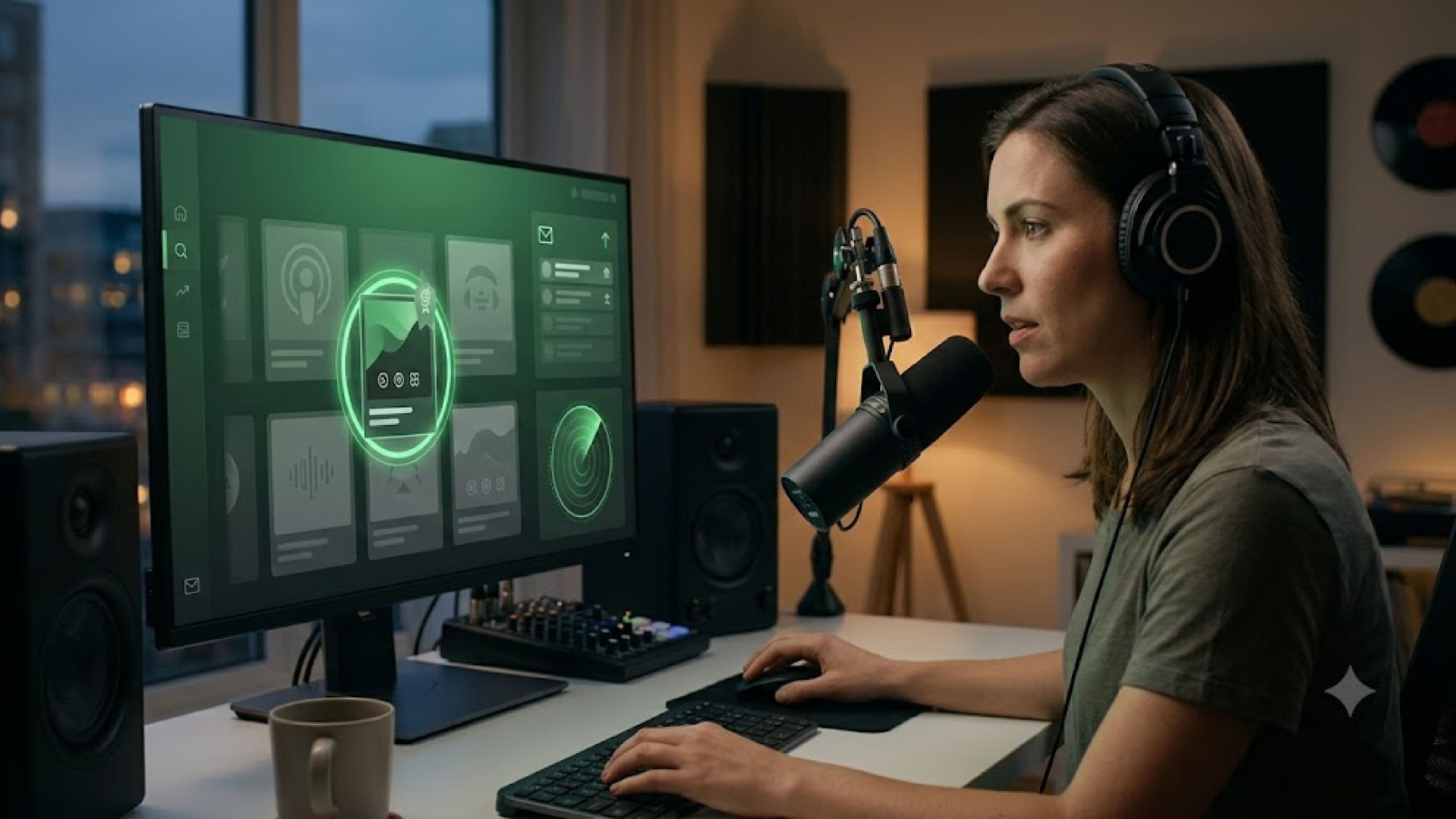
Mixing problems that go unnoticed in stereo become obvious in spatial audio. Phase inconsistencies, poorly edited room tone, frequency buildup – these issues are more audible in a spatial mix because the listener's perception of space is more sensitive. Before investing in spatial audio production, the underlying audio quality needs to be solid. A spatial mix of mediocre source audio doesn't produce an immersive experience; it produces an expansive version of mediocre audio.
Spatial audio is not yet a discoverability driver. No major podcast platform currently uses spatial audio as a search or recommendation filter the way video quality occasionally influences YouTube recommendations. Making spatial audio content right now is a listener experience investment, not a growth hack.
The production time investment is real. Spatial audio mixing takes longer than stereo mixing. Positioning elements, checking the mix across multiple listening environments, encoding for Atmos delivery – this adds time to a workflow that independent creators are already managing. Be realistic about whether the output is worth the added production time for your specific format.
Not all podcast formats benefit equally. A two-person conversational podcast gains less from full spatial audio treatment than a narrative documentary does. Applying expensive production technique to a format where the effect is marginal is a misallocation. Match the tool to the format honestly.
FAQ
Do listeners need special equipment to hear the difference? For the full head-tracking spatial effect, yes – AirPods Pro or AirPods Max connected to compatible Apple devices. For binaural audio without head-tracking, standard headphones or earbuds produce a noticeably wider and more three-dimensional sound than flat stereo, though less dramatic than the full experience. On speakers, most spatial audio effects diminish significantly.
Can I add spatial audio to existing episodes after the fact? You can apply binaural processing and stereo widening to existing stereo recordings using plugins like Sennheiser AMBEO Orbit. True spatial audio with individual element positioning requires access to the original multitrack session files – you can't decompose a stereo bounce back into separate elements. Post-processing existing stereo improves width and depth but isn't the same as a purpose-built spatial mix.
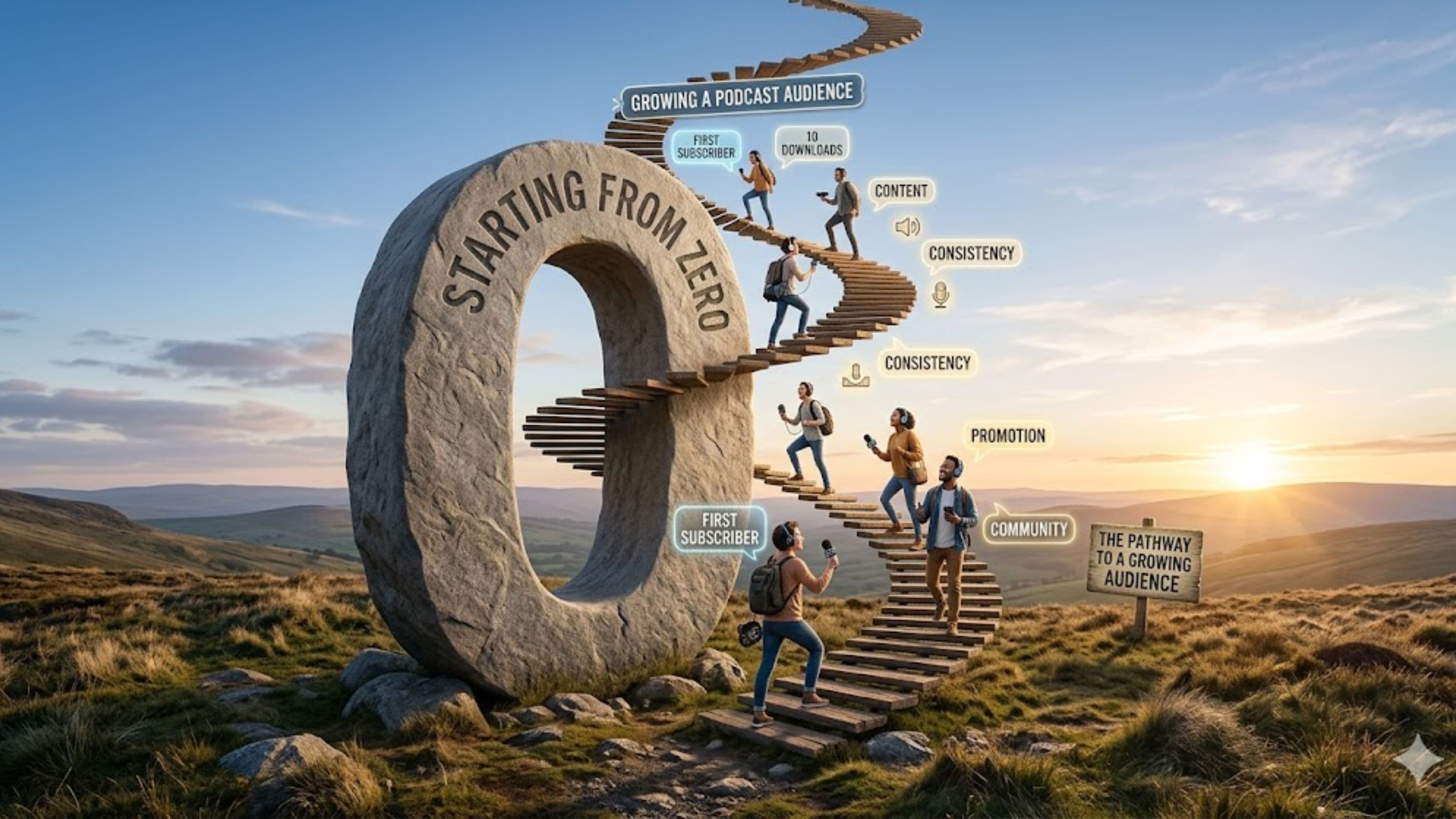
Is spatial audio worth it for a beginner podcaster? Not as a first priority. Strong microphone technique, clean audio recording, good editing, and consistent publishing matter far more for growth at the beginner stage. Spatial audio is a production refinement worth exploring once the foundations are solid and your format is established enough to know whether it would benefit.
Which podcast platforms currently support spatial audio? Apple Podcasts supports Dolby Atmos delivery currently. Spotify has been actively developing spatial audio capabilities and has spatial content available in music; podcast-specific support is developing. The infrastructure is moving quickly, but Apple Podcasts currently has the most defined creator pipeline for spatial audio delivery.
Does spatial audio affect file size or hosting costs? A Dolby Atmos mix (delivered as an ADM BWF or as an EC-3 encoded file) is larger than a standard MP3. The exact size depends on encoding settings and duration, but creators should expect file sizes roughly 1.5–3x a standard stereo MP3 at comparable quality. Most podcast hosting platforms price by storage and bandwidth, so larger files have a cost implication worth factoring in – especially at scale or with a high episode volume.
📚 Sources
Dolby – Dolby Atmos for Content Creators: https://professional.dolby.com/music/dolby-atmos-for-music/
Apple – Spatial Audio and Dolby Atmos on Apple Podcasts: https://podcasters.apple.com/support/5023-dolby-atmos-for-podcasts
Sennheiser – AMBEO Orbit Plugin Overview: https://en-us.sennheiser.com/ambeo-orbit
Dear Reality – DearVR Pro Spatial Audio Plugin: https://www.dear-reality.com/products/dearvr-pro
Nielsen – Share of Ear Report – Podcast and Audio Listening Trends: https://www.nielsen.com/insights/2023/share-of-ear/