
Most independent artists underestimate their leverage in sync negotiations and accept the first offer they receive. That's a mistake worth understanding before you get your first inquiry.
Understanding What a Sync License Actually Is
A sync license grants someone the right to synchronize your music with visual content – a film, TV show, advertisement, video game, YouTube video, podcast, or any other moving image. The "sync" refers to the synchronization of audio to picture, and it's a specific right that sits within your broader copyright as a songwriter and recording artist.
There are typically two separate licenses involved in any sync deal: the sync license (covering the underlying composition – the melody and lyrics) and the master license (covering the specific recording of that composition). If you wrote the song and recorded it yourself, you own both and can license both in a single negotiation. If you co-wrote the song, both you and your co-writers need to agree to any licensing terms. If a label owns your master recordings, they control that side of the deal regardless of whether you wrote the song. Understanding which rights you actually own before any negotiation starts is the necessary first step.
Know Your Rights Before You Talk to Anyone
Before responding to a sync inquiry, you need to be clear on three things: who owns the composition copyright, who owns the master recording, and whether you've signed any agreements that affect your ability to license either independently.
If you're a fully independent artist who writes your own music and records it yourself – no label deal, no publishing deal, no co-writers – you own 100% of both rights and can negotiate freely. This is the cleanest position to be in and gives you maximum flexibility.
If you've signed with a music publisher or have a publishing administrator, they likely control some or all of your publishing rights and handle licensing on your behalf. In this case, you may not be the right person to negotiate the sync license directly – the publisher is. Know what your contract says before you start a conversation that your publisher should be having.
If you have a co-writer on the track, you need their agreement before you can license the composition. A sync licensee needs all copyright holders to agree to the terms. One co-writer blocking a deal can kill an otherwise strong opportunity, so it's worth having alignment conversations with collaborators before placements become active possibilities.
Step 1: Evaluate the Opportunity Before Quoting a Price
Not all sync opportunities are equal, and the size and type of placement should directly inform your negotiation strategy. A national TV commercial for a major consumer brand is a very different opportunity from a student film festival submission or a mid-size YouTube creator's video. The budget available varies enormously across these contexts, and starting from a realistic understanding of what the placement is worth to the licensee helps you anchor the conversation productively.
When a sync inquiry comes in, gather information before you talk money. What is the project? Who is the brand or production? What medium is it for – TV, film, advertising, social media, video game? What territory will it cover – just the US, or worldwide? For how long – a one-year license, three years, or in perpetuity? How will the music be used – featured prominently in the content, played in the background, used as a theme? Is it exclusive or non-exclusive?
These variables are the inputs that determine the value of the license. A worldwide, perpetual, exclusive license for a prominent placement in a major brand's national TV campaign is worth significantly more than a one-year, non-exclusive, background placement in a regional online video. You can't quote a fair price – or evaluate whether an offer is fair – without knowing the full scope of what's being requested.
Step 2: Understand Fee Structures and Typical Ranges
Sync fees vary enormously by context, but having a rough sense of market ranges helps you recognize when an offer is reasonable, generous, or insulting. These are not fixed rules – they're general reference points based on how the market typically operates.
For indie film placements, fees commonly range from a few hundred dollars to a few thousand for the combined sync and master license, depending on the profile of the film and how the music is used. Student films are often zero-pay or very low pay with credit – worth considering for exposure in early career stages, not worth taking indefinitely.
For advertising, the range is dramatic. A local radio or regional digital ad campaign might offer $500 to $2,000. A national TV campaign from a major brand can pay $10,000 to $100,000 or more for a well-placed track. The brand, the campaign scale, and whether the music is featured or background are the primary drivers.
For TV placements (scripted shows, documentaries, reality TV), fees typically range from a few hundred dollars for a brief background use on a small network to several thousand for a prominent feature use on a major streaming platform. Backend performance royalties – paid through your PRO when the content airs – are a separate income stream that runs alongside the upfront sync fee.
For sync libraries and music licensing platforms, the model is often lower upfront fees with ongoing royalty sharing. Some platforms take a significant cut (30–50%) in exchange for pitching your music actively to supervisors. Understand the revenue split and exclusivity terms carefully before signing with any library.
Step 3: Know What to Push For and What to Let Go
Once you understand the scope of the placement and have a sense of what the market pays, you're in a position to negotiate intelligently. A few variables where independent artists most commonly leave money or rights on the table:
Exclusivity. A licensee asking for an exclusive license – meaning you can't place the same song with any other project during the license term – is asking for something valuable and should pay for it. Non-exclusive licenses are cheaper to grant because you can continue licensing the track elsewhere. If exclusivity is requested, price it higher. If a licensee wants both exclusivity and a low fee, those are competing asks and you should push back.
Term length. A perpetual license (forever) is worth more than a time-limited one. If a company wants to use your track in content that lives indefinitely online, that's a different ask than a one-year license. Push for shorter terms when possible – a renewable license after one or three years keeps the relationship ongoing and gives you an opportunity to renegotiate as your profile grows.
Territory. Worldwide licenses are worth more than single-territory licenses. If the licensee only needs US rights, don't hand over worldwide rights without additional compensation. Territory-limited licenses are also easier to renegotiate later if the content performs well.
Back-end royalties. For TV and film placements specifically, your PRO (ASCAP, BMI, or SESAC in the US) collects performance royalties every time the licensed content airs. This income is separate from the upfront sync fee and happens automatically as long as your music is properly registered with your PRO. Make sure your music is registered before the placement airs – you can't retroactively collect royalties you weren't registered for.
Credit. Always ask for screen credit or metadata credit where applicable. This isn't just ego – it's discoverability. Listeners who hear your music in a film or show and want to find you need a way to do that.
Step 4: Get It in Writing
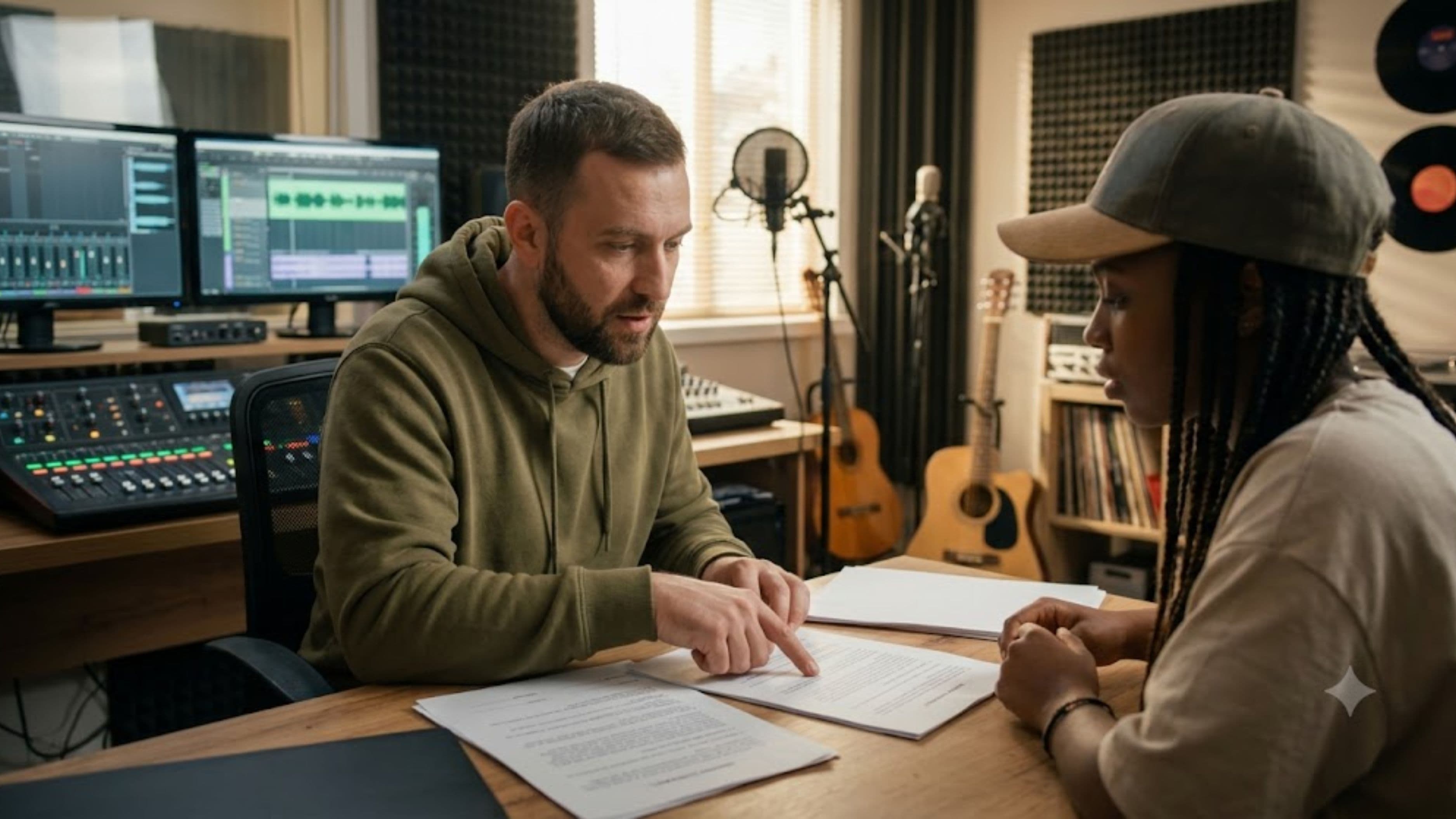
Verbal agreements in sync licensing are not agreements – they're conversations. Everything needs to be documented in a written license agreement that specifies: the licensor (you) and licensee (them), the specific recording and composition being licensed, the exact rights granted (sync and/or master), the territory, the term, whether it's exclusive or non-exclusive, the fee and payment terms, and any credit obligations.
If the licensee sends you a contract, read it carefully before signing. Contracts often contain clauses that are standard boilerplate but worth understanding – warranties that you own what you say you own, indemnification clauses that make you liable if a third party claims rights in the music, and "most favored nation" clauses that link your fee to any other rights holder's fee for the same placement.
For significant deals, having an entertainment lawyer review the contract before you sign is worth the cost. A one-hour consultation with an entertainment attorney typically runs $200–$400 and can identify terms that would otherwise cost you more than that to undo. Music industry organizations like the Future of Music Coalition and Volunteer Lawyers for the Arts can help connect independent artists with affordable legal resources.
Step 5: Follow Up and Stay on the Radar
A successful sync placement is not just a one-time transaction – it's a relationship. Supervisors who find music they like tend to come back to the same artists when future projects come up. Following up after a placement to confirm the music was used correctly, ensuring your PRO registration is in order, and staying in touch professionally keeps you on the radar for future opportunities.
Music supervisors are also worth cultivating as contacts independent of any specific deal. Following their public work, engaging thoughtfully on professional networks, and attending industry events where supervisors speak or participate builds the kind of low-pressure familiarity that makes them more likely to think of you when a brief comes across their desk.
What to Watch Out For
Offers that ask for all rights in perpetuity for a flat fee. Some "sync" agreements are structured to transfer your copyright entirely under the framing of a licensing deal. Read anything that mentions "work for hire," "assignment of copyright," or "all rights worldwide in perpetuity" very carefully. Those are not license terms – they're transfers of ownership.
Sync libraries that require exclusivity without paying for it. A library that wants exclusive rights to pitch your catalog but pays you only if a placement happens is asking for significant value in exchange for potential value. Non-exclusive arrangements with multiple libraries are often better for independent artists until you have a relationship with a library that actively generates placements.
Slow or delayed payment terms. Sync fees should be paid on or before the license start date, or within a clearly defined short window (net 30 is standard). Agreements that pay "upon first use" or have vague payment triggers can result in significant delays. Nail down payment terms in the contract.
Unregistered music. If your compositions and recordings aren't registered with your PRO and with the US Copyright Office (for US artists), you may not be able to collect back-end royalties or enforce your copyright in a dispute. Register everything before you start pitching for sync.
FAQ
Do I need a music publisher to get sync placements? No – many independent artists license directly to supervisors, production companies, and brands without a publisher. A publisher or sync agent can be useful for pitching your catalog at scale, but they take a percentage (typically 25–50% of sync income) and often require exclusivity. Independent licensing is more work but keeps more money and more control with you.
What is a music supervisor and how do I reach them? A music supervisor selects and clears music for film, TV, advertising, and other media projects. They're typically employees of production companies, ad agencies, or independent contractors hired per project. IMDbPro lists supervisors on specific projects. Organizations like the Guild of Music Supervisors have public directories. Reaching out cold is possible but a warm introduction through a mutual contact, a sync conference, or a music licensing platform is more effective.
What does my PRO actually cover in a sync deal? Your PRO (ASCAP, BMI, SESAC) collects performance royalties when licensed content airs publicly – on broadcast TV, cable, streaming platforms that report to PROs, and in some public venues. They do not collect the upfront sync fee, which is negotiated directly between you and the licensee. The sync fee and the performance royalty are two separate income streams.
Is it worth licensing music for free to build a portfolio? Occasionally, in early career stages, a zero-fee or reduced-fee placement in a high-profile project can provide genuine exposure and a credit worth having. The calculus depends on the profile of the project and what you get in return. Making a habit of free licensing devalues your catalog and sets a precedent in any ongoing relationship with that licensee. If you're going to license for free, make sure what you're getting in return – credit, exposure, relationship – is genuinely valuable and clearly agreed upon in writing.
📚 Sources
ASCAP – Sync Licensing Basics for Songwriters: https://www.ascap.com/help/money-and-licensing/sync-licensing
BMI – Understanding Sync Licensing: https://www.bmi.com/licensing/synchronization
Future of Music Coalition – Music Licensing and Copyright: https://futureofmusic.org/article/fact-sheet-musician-revenue-streams
Guild of Music Supervisors – About Sync Licensing: https://www.guildofmusicsupervisors.com/about
US Copyright Office – Copyright Registration for Musicians: https://www.copyright.gov/registration/
Volunteer Lawyers for the Arts – Legal Resources for Artists: https://vlany.org/