

Video game music sync licensing sits at the intersection of Hollywood-style sync deals and software product licensing. A song licensed for a cinematic trailer does not automatically cover interactive loops, user-generated content layers, or esports broadcast stacks. Game audio directors and music supervisors negotiate bundles that account for platform scale, genre expectations, and whether players can mod or stream the experience.
This article is educational information, not legal advice. Consult qualified counsel for your specific game project or catalog deal.
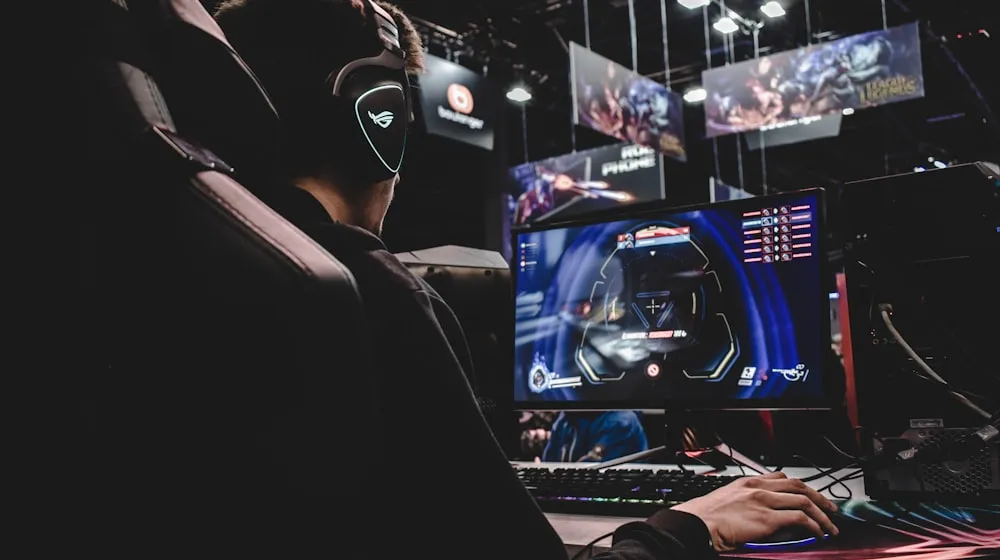
Game sync deals bundle media rights with interactive use cases film licenses rarely cover.
How Game Sync Differs From Film
Film licenses typically grant synchronization for fixed picture. Games add looping, stem swaps, dynamic intensity layers, platform-specific builds, patch updates, and monetization through DLC. Video game music sync licensing must enumerate interactive rights explicitly or composers risk granting film terms at game scale.
According to music in video games history, interactive use has expanded from static console cartridges to persistent online worlds—licensing templates lag technology.
Who Sits at the Table
Negotiations involve game publisher audio director, business affairs counsel, external music supervisor (on AAA titles), composition rights holders (publishers/songwriters), and master owners (labels or artists). Indie studios may compress roles, but rights structure stays identical.
Developers without music business staff should hire experienced sync counsel early—saving on license mistakes beats saving on legal hours.
Fee Band Table
| Game Scope | Sync + Master (Indie) | Sync + Master (AA/AAA) | Term Drivers |
|---|---|---|---|
| Mobile casual / hyper-casual | $2,000 – $15,000 | $15,000 – $75,000 | Loop prominence, brand tie-in, territory |
| Indie PC / console | $5,000 – $40,000 | $40,000 – $200,000 | Trailer + in-game, platform count |
| Live-service / seasonal | $10,000 – $60,000 / season | $100,000 – $500,000+ | Renewal options, exclusivity category |
| Esports broadcast package | $3,000 – $25,000 add-on | $50,000 – $300,000 add-on | Tournament scale, VOD rights |
| Trailer-only (no interactive) | $3,000 – $20,000 | $25,000 – $150,000 | Media buy, theatrical vs digital |
| Heritage catalog premium | 2× – 10× above row ranges | Brand recognition, artist participation | |
Bands assume non-exclusive interactive use unless stated. Exclusivity in genre or artist category moves quotes to premium tiers fast.
Negotiation Stages Diagram
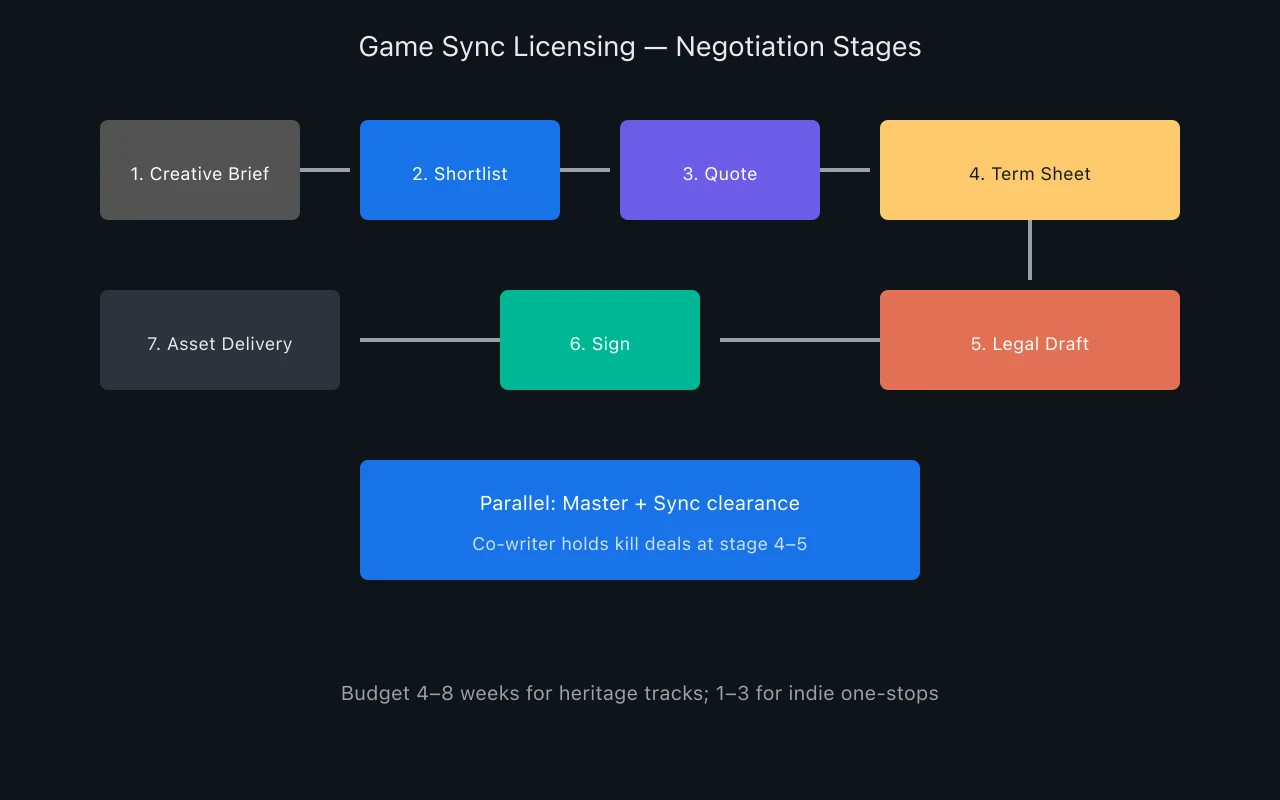
Video game music sync licensing negotiation stages
Stages 4–5 consume most calendar time. Arrive with interactive rights checklist before requesting quotes—supervisors interpret vague briefs as low-budget.
Interactive vs Linear Rights
Linear rights cover cinematics, cutscenes, and fixed trailers—closest to traditional sync. Interactive rights cover gameplay loops, adaptive audio, user-triggered playback, and sometimes player proximity systems.
Interactive Rights Components
Define: loop count limits, dynamic remix permission, stem usage for adaptive middleware (Wwise/FMOD), and whether audio ships in unencrypted builds for mod support.
Linear Rights Components
Define: cutscene duration caps, marketing trailer window, and whether linear uses may be excerpted in social campaigns separately from game launch.
Exclusivity Clause Notes
Game exclusivity rarely means global all-media silence. Common structures:
- Genre exclusivity: no competing rhythm-game placement for 24 months
- Artist likeness: artist name not used in competing title marketing
- Category exclusivity: no automotive brands in same quarter as licensed racing game
- Platform carve-outs: console exclusive vs mobile free-to-play
Overbroad exclusivity inflates fees and limits songwriter sync income. Publishers push back on perpetual genre bans—negotiate sunset dates tied to game lifecycle.
Document exclusivity in metadata flags so future pitch teams do not accidentally violate granted terms.
Platform and Distribution Grants
Licenses must list platforms: Steam, PlayStation, Xbox, Nintendo, iOS, Android, cloud streaming (GeForce Now, etc.). Cloud streaming rights are increasingly contested—some publishers treat as separate media.
PC early-access phases need term clarity. Does license start at early access or 1.0? Early-access ambiguity causes royalty true-ups later.
User-Generated Content and Streaming
Games enabling streamers or UGC maps need broadcast and performance clarity. Composition sync does not replace Twitch broadcast permissions when recorded game audio bleeds into streams.
Some deals include streamer-safe flags—marketing gold for live-service titles. Rights holders may demand escalated fees for esports broadcast packages.
DLC, Expansions, and Sequel Rights
Option periods for DLC reuse avoid renegotiating every season. Structure: initial grant covers base game; options for expansions at pre-set fees or percentage bumps.
Sequel and remake rights are separate. A hit license for Game I does not cover Game II without step-up payment.
Territory and Language Versions
Worldwide grants are standard for digital distribution, but some licensors exclude China or Russia for policy reasons. Localized builds with dubbed VO may still use licensed music—confirm language-version coverage.
Attribution and Marketing Obligations
Rights holders may require credit placement in settings menus, end credits, or marketing co-branding. Marketing approvals can restrict juxtaposition with violence or gambling mechanics in trailers.
Build approval timelines into production schedule—last-minute trailer kills delay launch beats.
Indie Dev Budget Strategy
Indie studios should shortlist one-stop catalogs and composer-owned works before chasing heritage masters. Re-records with strong sync-only deals cut costs 60–80% when recognition is not essential.
Bundle trailer + interactive rights in first quote—adding interactive later re-triggers negotiation from scratch.
Build a music line item in production budget before vertical slice milestone—zero placeholders become panic spend at gold master.
AAA Supervisor Workflow
AAA titles engage music supervisors to align licensed tracks with original score. Supervisors request alt mixes, explicit clean versions, and stem packs synchronized to cinematics.
According to music supervisor practice on games, day-rate supervisors save six-figure mistakes by flagging exclusivity conflicts before audio implementation.
Master and Sync Parity
Video game music sync licensing requires both composition and master clearance for commercial recordings. Labels may package both; indie artists may one-stop. Verify each co-writer publisher signs sync even when label offers master.
Payment Schedules and Milestones
Fees often split: 50% on signing, 25% on asset delivery, 25% on game launch. Option fees for DLC due at option exercise—not on signing. Late payments can void interactive grant—counsel should align with production milestones.
Rev-Share and Backend
Most game sync deals are flat-fee buyouts for stated uses. Rev-share on game sales is rare for licensed third-party tracks but appears in composer work-for-hire contracts—do not confuse the two structures.
Union and Session Musician Reuse
Masters involving union session players may trigger new-use fees for interactive media. Labels sometimes absorb; sometimes pass through. Ask before budgeting.
Case Study: Rhythm Game Exclusivity
A publisher licensed an indie dance track for a mobile rhythm title with 18-month genre exclusivity (no other rhythm games). Fee: $28,000 sync + master one-stop. Songwriter later declined a $45,000 film trailer because trailer included interactive social filter—deemed conflicting category. Narrow exclusivity drafting would have preserved trailer income.
Case Study: Live-Service Seasonal
A live-service shooter renewed licensed tracks per eight-month season at $35,000 per season with option discount on renewal vs new track onboarding. Saved $120,000 over three seasons vs licensing fresh heritage tracks each drop.
Seasonal option memos referenced the same metadata IDs each renewal—supervisors and publishers skipped re-verification delays.
Licensing Checklist for Developers
- Enumerate all interactive and linear use cases in writing
- List platforms including cloud streaming
- Define DLC and sequel option economics
- Specify exclusivity category, not blanket silence
- Confirm UGC/streamer broadcast permissions
- Align payment milestones to dev schedule
- Secure stems and loop-friendly edits in delivery spec
- Store executed licenses in build pipeline repo
Licensing Checklist for Rights Holders
- Verify co-writer sign-off thresholds before quoting
- Flag existing exclusives in CRM
- Quote interactive and linear as line items
- Include attribution and approval rights explicitly
- Set sunset dates on genre exclusivity
- Deliver ISRC-tagged masters and instrumentals
Adaptive Audio and Implementation
Modern games use middleware like Wwise and FMOD for dynamic intensity. Licensed tracks may need stem deliveries—drums-only, bass-only, vocal-free—so audio directors can layer intensity without violating master integrity. Specify stem format, sample rate, and naming in delivery specs.
Implementation timelines should account for audio engineering labor, not just legal execution. A signed license without stems in hand blocks milestone builds.
Patch Updates and Live-Ops
Live games ship patches for years. Licenses should clarify whether post-launch patches, balance updates, and seasonal events continue covered uses or trigger renegotiation. Rights holders sometimes assume patch deployment equals new product requiring step-up fee.
Define patch coverage explicitly: "patches and updates within original game SKU" vs "new standalone SKU." Ambiguity here generates midnight counsel calls.
Marketing Cutdowns and Social
Game marketing spans TikTok teasers, influencer early access streams, and fifteen-second vertical cutdowns. Linear trailer rights may not cover social derivatives. Negotiate social cutdown grants with duration caps and platform lists.
User-facing music attribution in social posts may be contractually required—marketing teams need license PDF excerpts, not guesses.
Indie Publisher vs AAA Legal
Indie studios sometimes use template sync licenses from film without game riders. AAA publishers employ game-specialized counsel who recognize interactive carve-outs. Rights holders quoting against film templates should insist on game-specific schedules before discounting.
Educate indie developers on interactive rights gaps—they often assume film-style grants cover gameplay because "the game has cutscenes."
Cover Tracks and Soundalikes in Games
Budget-conscious titles license sync for compositions and re-record masters, or use soundalike production music. Video game music sync licensing for covers still requires composition clearance—public domain excepted—and honest labeling in pitch materials.
Soundalikes reduce heritage master costs but may fail when marketing demands recognizable hook recognition in trailer.
Performance Royalties in Games
Interactive streaming of game soundtrack on Spotify generates performance royalties separate from sync buyout. In-game use sync fees are typically upfront buyouts; downstream Spotify performance still flows through PROs to songwriters. Do not conflate sync invoice with all future income.
NFT and Blockchain Game Riders
Games tying music to NFTs or blockchain assets need explicit grants—most standard sync licenses prohibit tokenization. If Web3 mechanics touch licensed audio, negotiate rider before implementation, not after community mint sells out.
Voice Chat and User Music
Games with voice chat or user-curated playlists create adjacent rights questions. Licensed soundtrack does not cover users playing their own Spotify in voice channels. Legal and product teams should separate first-party licensed audio from third-party user behavior in rights memos.
Product counsel and music counsel should review voice-chat architecture together before beta—retroactive fixes are expensive and player-facing.
Demo and Vertical Slice Use
Studios use licensed music in vertical slices shown to publishers and investors before full clearance budgets exist. Option licenses or demo-use riders prevent retroactive claims when showcase tracks differ from final soundtrack.
Budget demo-use fees separately in production spreadsheets—treating them as zero-cost placeholders forces rushed full licenses later at premium urgency pricing.
Composer Work-for-Hire Alternative
When sync licensing costs exceed budget, work-for-hire original score transfers ownership to developer—no per-track sync fees, but upfront composer cost and creative tradeoffs. Compare total cost of ownership across twelve tracks before defaulting to heritage sync.
Regional Rating and Content
Games rated differently across regions—ESRB, PEGI, CERO—may use alternate builds. Confirm licensed music covers all SKU variants sold in licensed territories, including censored builds with edited content that still contain the track.
Archival and Franchise Re-Releases
Remastered collections and franchise bundles re-release old games with licensed music whose terms may have expired. Track license sunset dates in franchise bibles; step-up fees for remasters are negotiable before fans expect the same soundtrack.
Educational and Serious Games
Educational games and training simulations negotiate lower fee bands but still need interactive rights spelled out. Institutional buyers assume music is included in work-for-hire production—verify whether your composer contract actually assigned sync rights for training modules shipped to enterprise clients.
Enterprise serious-game budgets look large to indie composers but shrink fast when multiple heritage tracks need full interactive grants.
FAQ: Video Game Music Sync Licensing
Is game sync different from film sync?
Yes. Games need interactive rights—loops, adaptive audio, platform builds—not just fixed picture synchronization.
What does a typical indie game license cost?
Licensed tracks for indie PC/console often run $5,000–$40,000 combined sync and master for moderate prominence. Mobile and heritage titles vary widely.
Do I need both sync and master?
For commercial recordings, yes—unless you use a re-record or work-for-hire composition you fully own.
What does streamer-safe mean?
Licensed game audio cleared for broadcast on Twitch/YouTube live streams without muting—often a negotiated add-on.
Can I reuse a track in DLC without renegotiating?
Only if the original license or an exercised option covers expansions. Otherwise negotiate a step-up.
How long does negotiation take?
One-stop indie tracks: 1–3 weeks. Heritage catalog with multiple publishers: 4–8+ weeks.
Game Sync Bottom Line
Video game music sync licensing rewards precision. Use fee bands as anchors, map negotiation stages early, separate interactive from linear rights, and treat exclusivity as surgical—not nuclear. Developers and rights holders who document platform scope, DLC options, and streaming permissions avoid rebuilds, takedowns, and burned relationships when the game ships.
Start every game music conversation with an interactive rights checklist—not a film sync template—and negotiate from informed positions on both sides of the table.
Games are interactive products; licenses that ignore interactivity are unfinished business.
Document negotiation stages, fee bands, and exclusivity limits in your production wiki before audio implementation begins.


