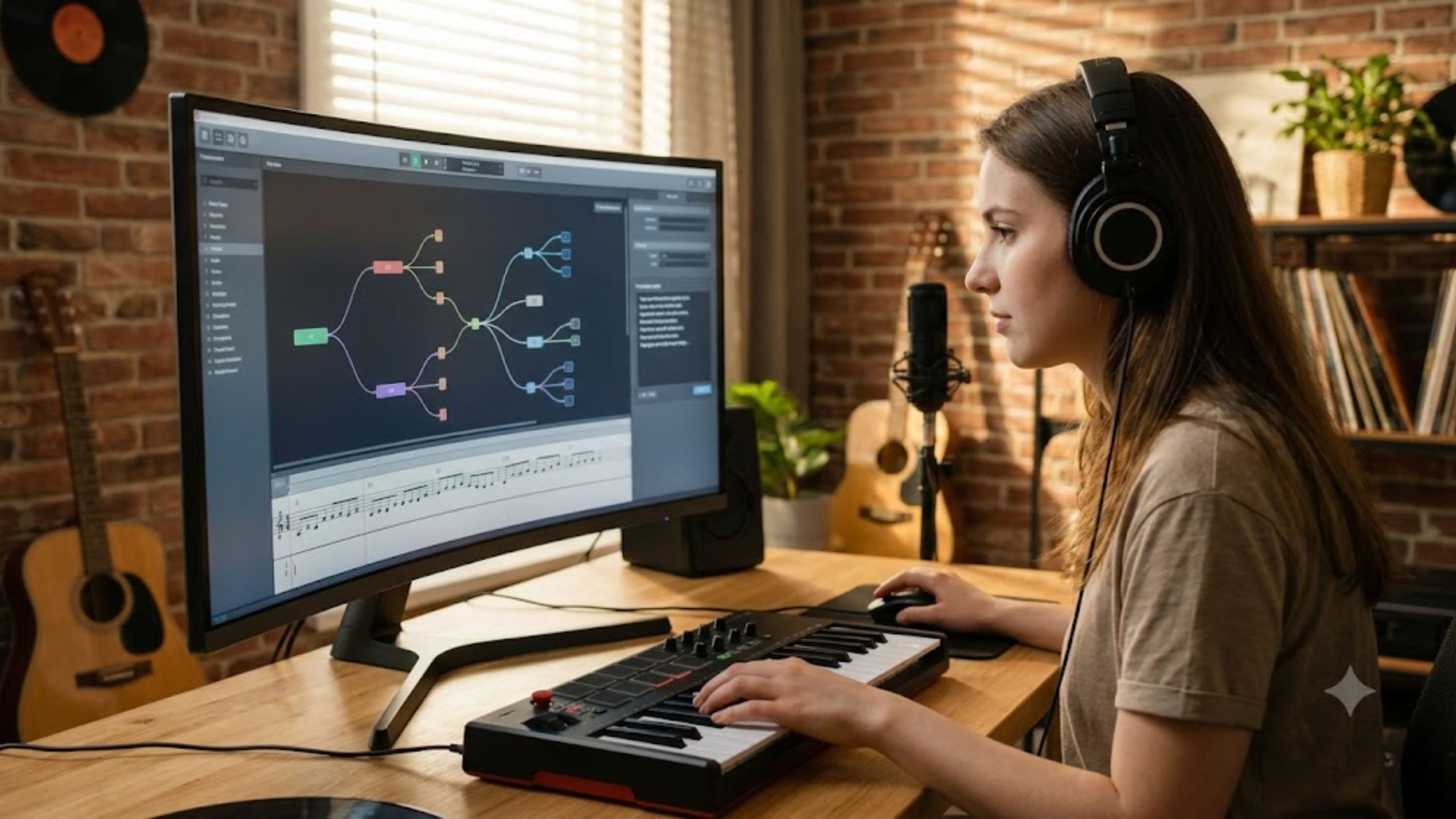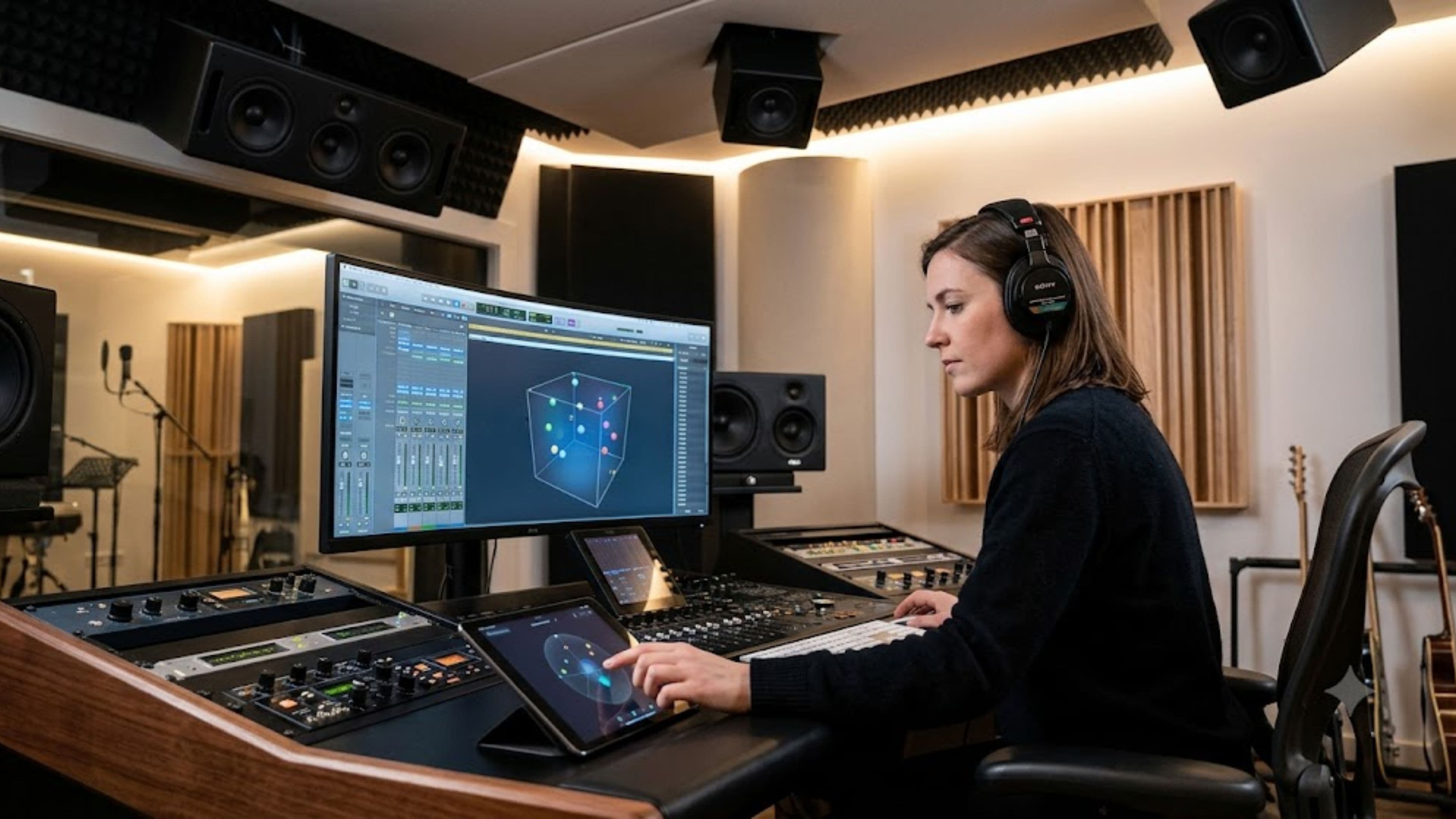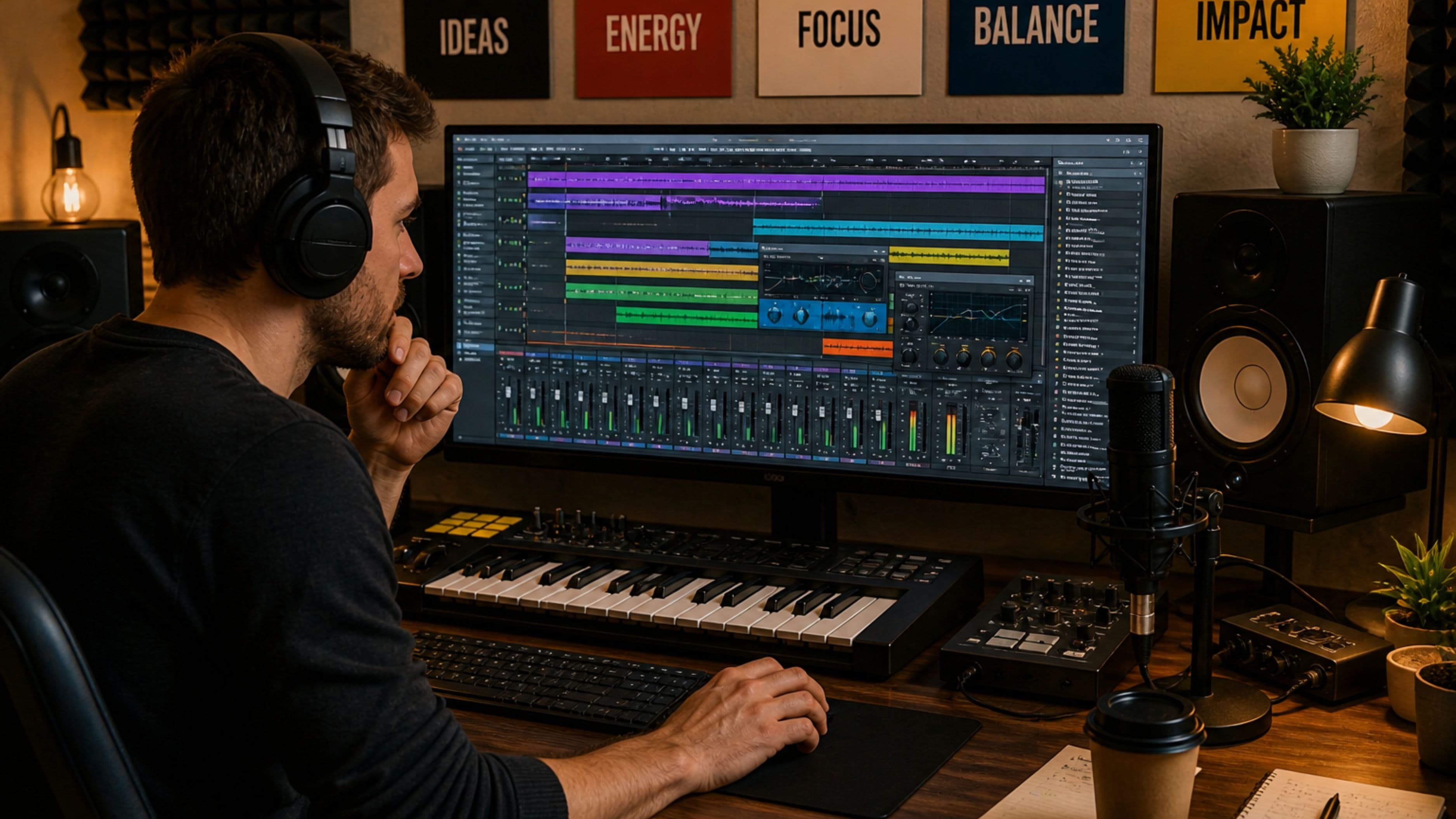
Vintage synth emulation has moved from a novelty to a production standard in a remarkably short window. The quality gap between hardware and software has narrowed to the point where the conversation among serious producers is no longer "does software sound as good" but "how much does it actually matter, and for what." For independent producers building entire sessions on a laptop, that shift is significant.
What's Actually Driving the Trend
The nostalgia angle is real but overplayed as an explanation. Yes, producers are drawn to the sounds of the 70s, 80s, and 90s – but the more durable driver is that those sounds work. The warmth, the harmonic complexity, the slight unpredictability of analog circuitry produces a character that cuts through modern mixes in ways that cleaner, more clinical digital synthesis often doesn't. Listeners may not be able to identify a Moog filter sweep by name, but they respond to what it does to a sound.
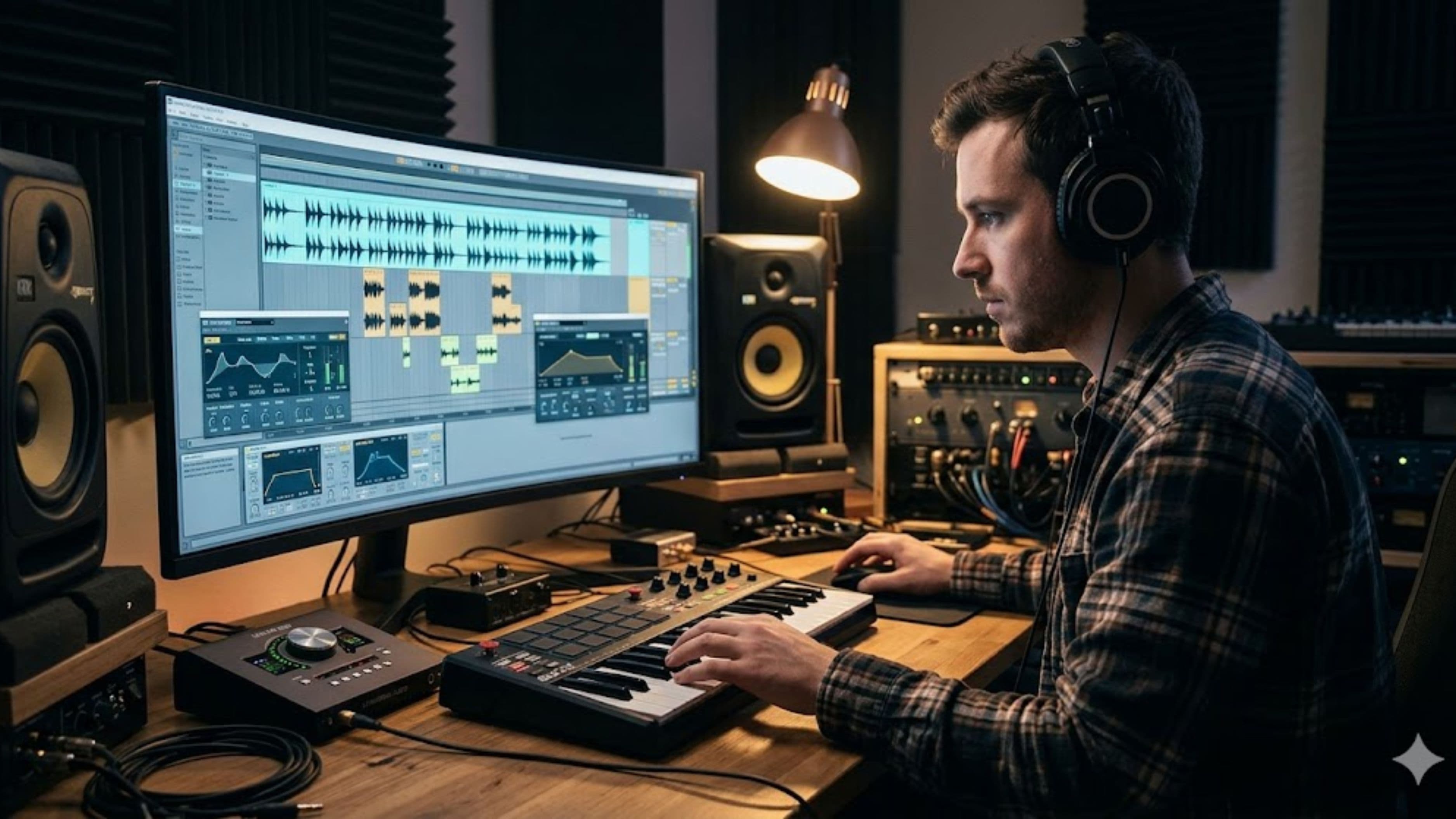
The other driver is accessibility. Twenty years ago, a producer who wanted authentic vintage synth sounds either needed the hardware, the studio budget to rent it, or a sample library that captured a fraction of what the instrument could do. Today, a producer on a $30/month plugin subscription can load a Juno-106 emulation, play it live, automate it, and process it through a vintage console emulation – all within the same session. The barrier between a bedroom producer and a major-label session is increasingly about talent and taste rather than equipment access.
The Technology That Made It Possible
The quality jump in modern synth emulation comes from a combination of modeling approaches that weren't practical at consumer price points until relatively recently.
Virtual Analog (VA) synthesis has been around since the late 1990s, but early implementations were criticized for sounding sterile compared to the hardware they were modeled on. The complaint was legitimate – simplified circuit models missed the subtle nonlinearities, component tolerances, and thermal drift that give analog hardware its character. Modern VA engines have addressed much of this by modeling circuits at significantly greater depth, including the behavior of individual transistors and the interaction between circuit stages.
Component-level modeling is the more ambitious approach, used by developers like Arturia (with their V Collection) and Softube in their hardware collaborations. Rather than modeling a synth's overall behavior, component-level modeling simulates each transistor, capacitor, and resistor in the circuit and computes how they interact. The computational cost is high – these plugins are among the more CPU-intensive in any producer's library – but the accuracy is correspondingly better, particularly in the way filters saturate, in subtle tuning drift between oscillators, and in the response to CV-style automation curves.
Physical modeling takes a different approach entirely, simulating the physics of how a sound is produced rather than the specific circuit that produces it. It's more common in acoustic instrument emulation but has found applications in synth modeling for certain categories of sounds.
What's changed most dramatically in the last five years isn't the theory behind these approaches – it's the processing power available to run them. A plugin that would have brought a mid-2010s computer to its knees runs smoothly on a current-generation laptop.
The Plugins That Have Defined the Category
A few developers have pulled significantly ahead of the field, and their tools have become standard references in professional production environments.
Arturia V Collection is probably the most comprehensive single library in this space. It includes emulations of the Minimoog, Prophet-5, Oberheim SEM and OB-Xa, ARP 2600, CS-80, Juno-106, Jupiter-8, and dozens of others. The quality across the collection is uneven – some emulations are considered excellent, others merely good – but the breadth makes it the go-to starting point for producers who want access to a wide range of vintage sounds without buying individual plugins. The Minimoog V and the Jun-6 V (Juno-106 emulation) are consistently cited as highlights.
Moog's own software synthesizers, particularly the Model D and the Minimoog Voyager software releases, carry obvious authenticity credentials. Moog collaborated closely with developers on these, and the Model D plugin is widely regarded as the most accurate Minimoog emulation available. It's also CPU-efficient relative to its quality, which matters for producers running large session stacks.
Korg's Collection (formerly the Legacy Collection, now expanded) includes the M1, the Polysix, the MS-20, and several other instruments core to the Korg catalog. The MS-20 in particular – a semi-modular analog synth from 1978 with a distinctive and aggressive filter – has become a cornerstone of bass and lead sound design in electronic and hip-hop production. The Korg software version gives producers access to the MS-20 sound and architecture without the hardware's quirks and maintenance requirements.
U-he Repro is the independent developer answer to the major synth emulations. U-he built Repro-5 and Repro-1 as explicit emulations of the Sequential Prophet-5 and Prophet-1, modeling the circuit architecture with enough precision that the software captures the filter overdrive, the polyphonic voice inconsistencies, and the oscillator drift behavior that make the original hardware instruments distinctive. U-he's reputation for technical accuracy is particularly strong among producers who've used both hardware and software versions of the instruments.
Cherry Audio has built a catalog of lower-priced but high-quality emulations – the Minimoog, the Roland SH-101, and several others – at price points ($29–$49) that have made the category accessible to producers who couldn't justify premium plugin spend. The quality-to-cost ratio has drawn significant attention, and Cherry Audio has become a meaningful force in democratizing access to vintage synth sounds.
How Producers Are Actually Using These Tools
The creative application patterns have shifted alongside the quality improvements. A few approaches are worth understanding.
Layering with modern synthesis. Rather than using vintage emulations as straight replacements for hardware, many producers layer them with modern synthesizers to achieve sounds that couldn't have existed with either alone. A Moog bass with a Serum supersawwave layered behind it, for example, combines the harmonic density and low-end weight of the Moog with the contemporary brightness of wavetable synthesis in a way that's become characteristic of a particular strain of modern pop and R&B production.
Using the emulation's imperfections as the feature. Vintage hardware is imprecise by modern standards – oscillators drift, filters respond nonlinearly, voices don't track perfectly. High-quality emulations model these behaviors, and producers are increasingly using them deliberately. The slight tuning inconsistency between oscillators on a Prophet-5 emulation creates a chorusing effect without a chorus plugin. The filter saturation on a Moog emulation pushed hard adds harmonic content that functions as its own form of distortion.
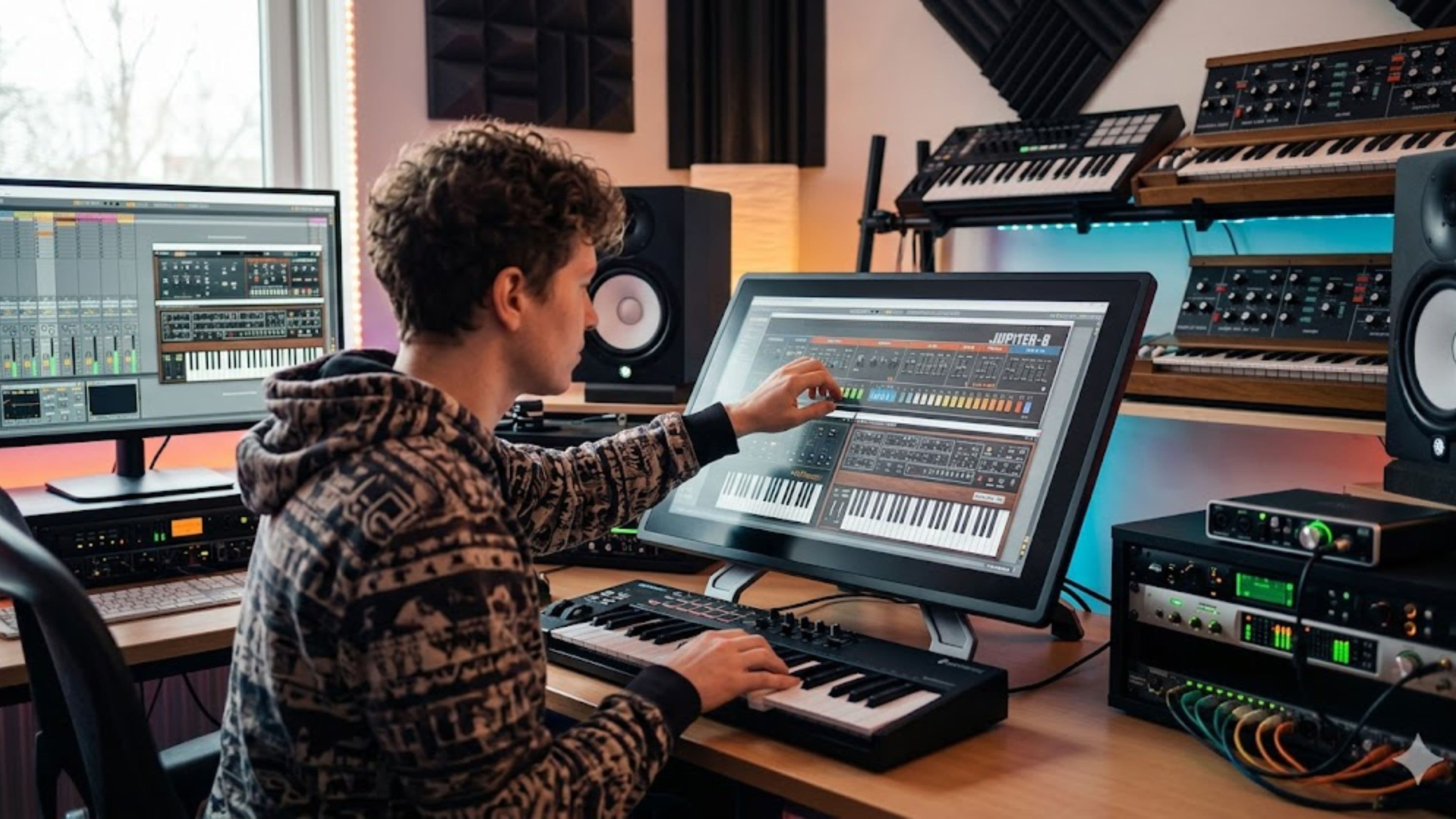
Processing chains inspired by era-specific signal paths. The vintage synth revival has brought with it a parallel interest in vintage console emulations, tape saturation, and analog-style compression. Producers running a Jupiter-8 emulation through a desk console emulation and an EMT plate reverb are chasing signal chain authenticity as much as instrument authenticity – capturing the way sounds were treated in the studio environments where these instruments were originally used.
The Debate That Won't Quite Die
The hardware vs. software question generates more heat in production forums than almost any other topic, and it deserves an honest summary rather than a dismissal.
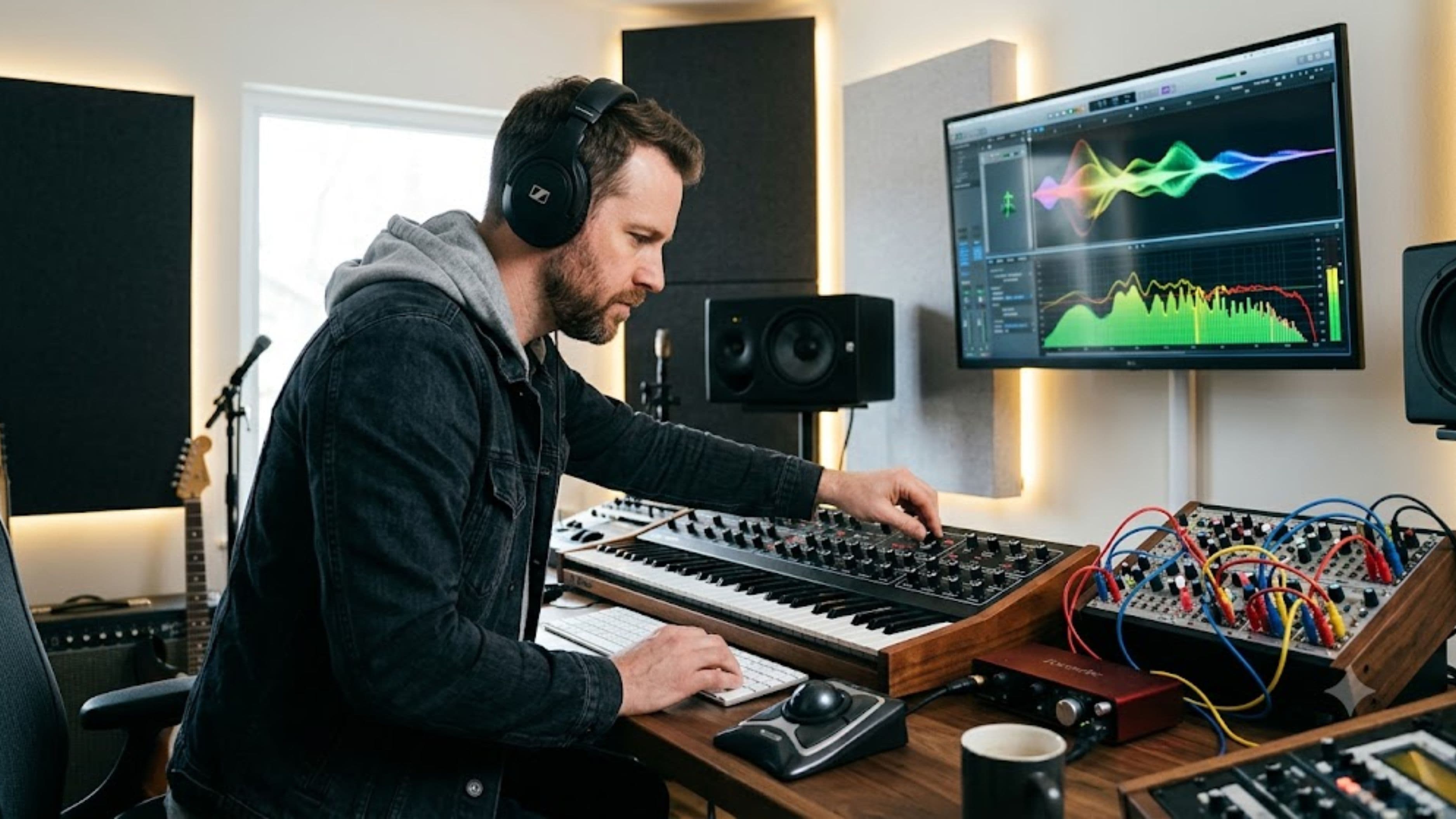
The strongest hardware argument is tactile. Playing a physical instrument, adjusting knobs in real time, feeling the resistance and response of analog controls – this affects creative decisions in ways that software, despite its accuracy, doesn't fully replicate. Many producers find they make different creative choices on hardware than software, and not always better ones. The physical interaction with an instrument shapes the music in subtle ways that are real even if they're hard to quantify.
The strongest software argument is everything else. Recall is perfect – you can save a patch and load it identically a year later. Polyphony is unlimited. CPU permitting, you can run multiple instances. You can automate every parameter. You never have to track down a service technician when something breaks. And for most listening contexts – including streaming, which is how most music is consumed – the audible difference between a well-made emulation and the original hardware is smaller than most of the other variables in the chain.
For independent producers working primarily in-the-box, the practical answer is software. For producers who find the hardware interaction genuinely changes how they create, both have a place.
What to Watch Out For
CPU load can be significant. Component-level modeling plugins – Arturia's more complex emulations, U-he's catalog, Softube's hardware collaborations – are computationally expensive. Running multiple instances simultaneously can strain even high-spec machines. Freezing tracks and managing your plugin load becomes more important the more heavily you rely on modeling-intensive plugins.
GAS (Gear Acquisition Syndrome) extends to software. The accessibility and lower price point of software doesn't eliminate the temptation to acquire more tools than you use. A producer with ten vintage synth emulations they've barely explored will generally make better music than one who's constantly chasing the next plugin. Depth of familiarity with a few instruments consistently outperforms breadth of ownership with many.
Not all emulations are equal. The category includes everything from exceptional modeling to thin, unconvincing approximations sold on the strength of the name they're emulating. Community feedback in production forums – Gearspace, Reddit's r/edmproduction, the Airwindows community – is generally more reliable than developer marketing materials for evaluating real-world quality.
Authenticity isn't always the goal. The Minimoog was designed in the early 1970s. The design decisions that gave it its sound were made within the constraints of what was possible then. Using a Minimoog emulation "correctly" – as the instrument was intended to be used – produces sounds that were contemporary 50 years ago. The more interesting creative territory is often using the emulation in ways the original hardware couldn't accommodate: modulation depths beyond what was physically possible, polyphony on instruments that were monophonic, processing that didn't exist when the instrument was designed.
The Practical Takeaway
If you're a producer who hasn't explored this category seriously, the current state of vintage synth emulation is worth your attention. The gap between what's available in software and what's available in hardware has narrowed to the point where investment in hardware is better justified by creative process preferences than sonic necessity for most applications.
A reasonable starting point: Cherry Audio's catalog for budget-accessible entry points, Arturia V Collection if you want broad coverage from a single subscription or purchase, and U-he Repro or Moog's own plugins if the specific sounds of the Prophet-5 or Minimoog are central to your work. Demo everything – the quality differences between emulations are audible, and what sounds right is ultimately a subjective judgment about which model of a specific imperfect instrument matches what you hear in your head.
Frequently Asked Questions
Do vintage synth plugins sound as good as the hardware? For many listeners and many production contexts, yes – particularly in a finished mix where the tracks are processed and placed within a frequency spectrum. The differences are more perceptible when comparing in isolation, in a studio environment, with a careful ear. The practical answer for most producers is that the emulations are good enough that other factors – arrangement, processing, mixing – will have more impact on the final result than the hardware vs. software choice.
Are cheaper plugins worth using, or should I invest in premium emulations? Cherry Audio's catalog sits in the $29–$49 range and is genuinely competitive with plugins twice the price. The correlation between cost and quality in this category is real but imperfect. Demo before purchasing and trust your ears over price tier.
Can I use vintage synth plugins on a budget laptop? Most vintage synth emulations run acceptably on mid-range hardware, though component-level modeling plugins will stress older or lower-spec machines. Cherry Audio and many of Arturia's lighter emulations are less CPU-intensive than U-he's catalog or Softube's hardware collaborations. If processing power is a concern, check minimum system requirements and community feedback on CPU load before purchasing.
Do I need MIDI hardware to get the most out of these plugins? You'll get more out of them with a MIDI controller or keyboard, particularly for plugins where pitch bend, aftertouch, and modulation wheel behavior are core to the instrument's character. That said, all of these plugins can be programmed and automated entirely within a DAW without hardware input.
📚 Sources
Sound on Sound – The Return of Analog: Vintage Synth Emulation in Modern Production: https://www.soundonsound.com/techniques/vintage-synth-emulation
Arturia – V Collection Overview and Technical Approach: https://www.arturia.com/products/software-instruments/v-collection/overview
U-he – Repro Technical Documentation: https://u-he.com/products/repro
Cherry Audio – Synthesizer Plugin Catalog: https://cherryaudio.com/products
Moog Music – Model D Software Synthesizer: https://www.moogmusic.com/products/model-d
MusicRadar – Best Vintage Synth Plugins 2024: https://www.musicradar.com/buying-advice/best-vintage-synth-plugins